Korean literature needs translator autonomy to reach global readers
INCHEON — Korean literature’s growing international recognition must be matched by sustained translation funding and greater autonomy, translators said Thursday, warning that global success cannot rest on individual passion. Speaking at “Translation: Text in Transit,” an international colloquium organized by the National Museum of World Writing Systems, Debora Smith, Anton Hur and Choi Mi-kyung…
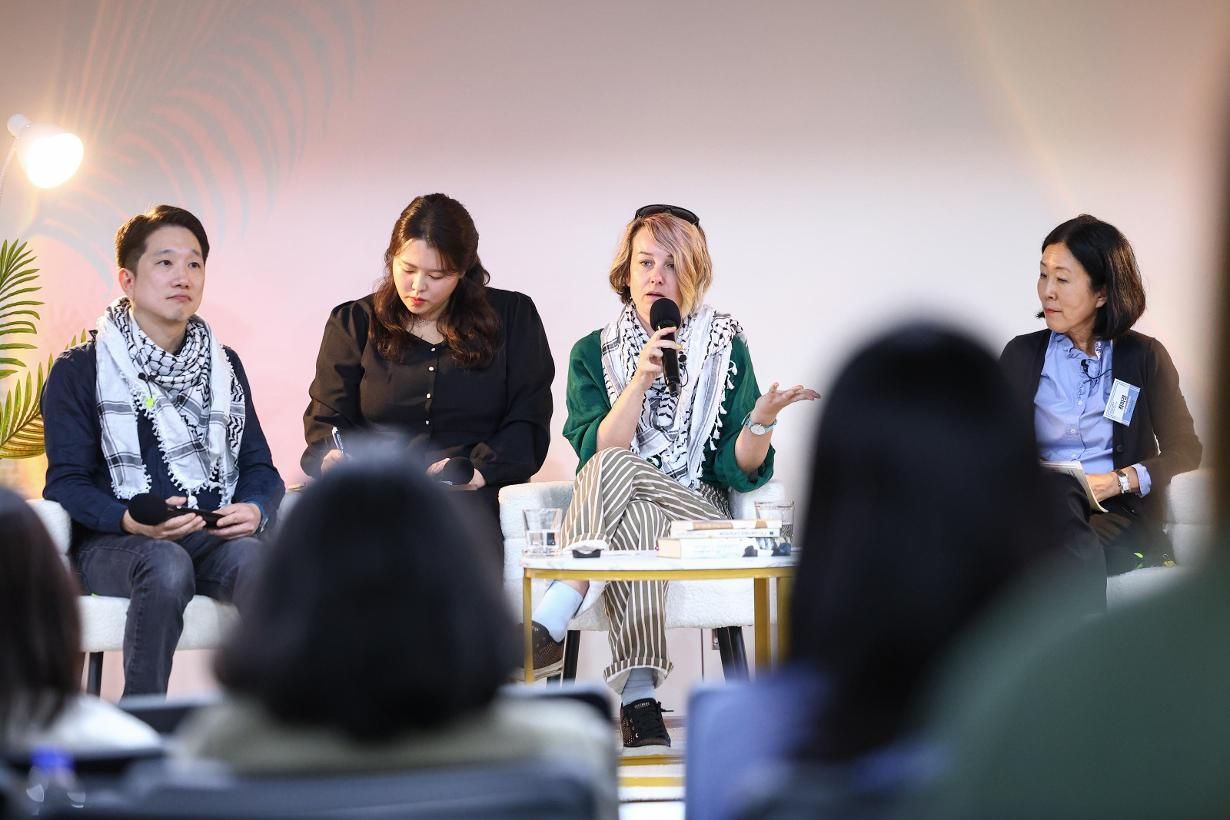
Incheon — Korean literature is garnering increasing international acclaim, but translators argue that it requires more than just individual passion to reach global readers. Speaking at the "Translation: Text in Transit" international colloquium organized by the National Museum of World Writing Systems, three translators urged for sustained translation funding and greater autonomy to uncover overlooked works and uphold the importance of human judgment in literary translation.
Debora Smith, known for translating Han Kang's "The Vegetarian" (2016) which won the Man Booker International Prize, recalled her own journey of learning Korean as the country's literature became more accessible. "Now it's a completely different story. I see Korean literature and translation everywhere," she remarked. Both Smith and Anton Hur stressed that this surge in recognition is the result of years of collective effort by translators across various languages, rather than stemming from a single award or author.
As Hur noted, the Nobel Prize that honored Han Kang arrived as part of a growing recognition of Korean literature, not in anticipation of it.
Written by urgent.news from The Korea Times's reporting — not their text. Machine-written — may contain errors; check the original before relying on it.
Also reported by 1 other outlet
- Korean literature needs translator autonomy to reach global readers koreatimes.co.kr