Defense companies accelerate developing systems integrating manned, unmanned weapons
Korean defense companies are advancing manned-and-unmanned teaming (MUM-T) in response to the changing nature of modern warfare. Recent wars have shown a shift toward using unmanned systems for high-risk operations, while manned systems take on command and control as well as precision strikes from the rear. Hyundai Rotem, which led the modernization of Korea’s ground forces by completing the…
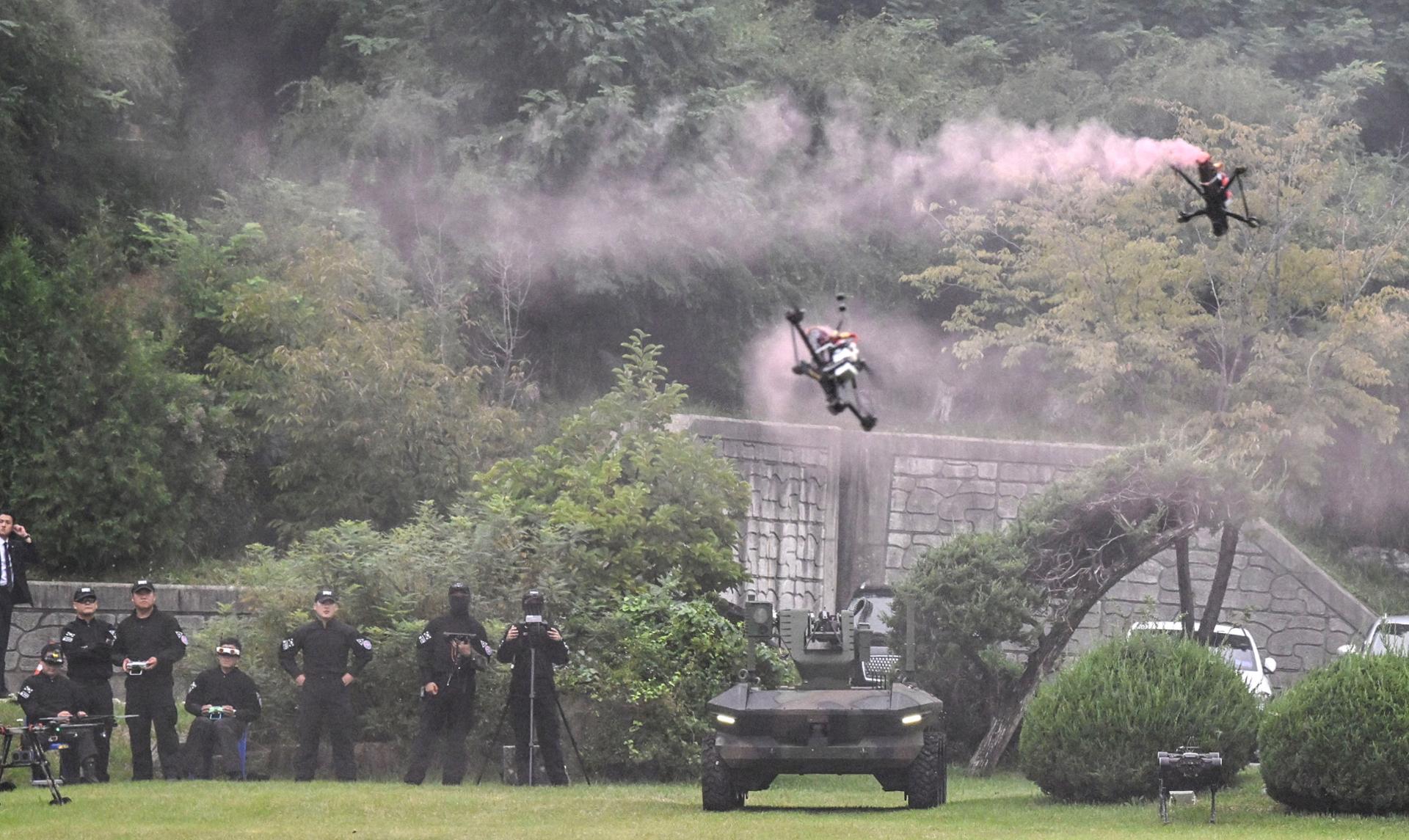
Korean defense companies are rapidly advancing the development of systems that integrate manned and unmanned weapons, known as MUM-T, in response to the evolving nature of modern warfare. In recent conflicts, a greater reliance has been placed on unmanned systems for hazardous missions, while manned systems have assumed command and control functions, as well as providing precision strikes from a distance.
Hyundai Rotem, a key player in modernizing Korea's ground forces through the completion of the K2 tank in 2008, is currently developing a next-generation MUM-T tank that aligns with this trend. According to Kim Myeong-geun, Hyundai Rotem's vice president, the company plans to enhance battlefield situational awareness through the integration of various sensors and the addition of artificial intelligence (AI) capabilities.
These enhancements will enable AI-based command and fire control, allowing the tank to operate in cooperation with both manned and unmanned systems, as well as units at the formation level.
The development of this MUM-T tank system is anticipated to take place during the early to mid-2030s. Hyundai Rotem is not the only entity accelerating the development of MUM-T capabilities in Korea. Korea Aerospace Industries (KAI) is also making significant strides in this area, contributing to the nation's efforts to stay ahead in the rapidly changing landscape of military technology.
Written by urgent.news from The Korea Times's reporting — not their text. Machine-written — may contain errors; check the original before relying on it.