Can you trust Meta’s Muse or OpenAI’s Dots to run your life?
My Decoder guest today is Hayden Field, The Verge’s senior AI reporter, and we’re discussing the new wave of consumer-friendly AI agents. If you’ve been paying attention to this space, you know AI enthusiasts have been using agents for a minute now — homebrew OpenClaw setups led to a surge in Mac Mini sales earlier […]
My guest today is Hayden Field, The Verge's senior AI reporter, and we're diving into the latest wave of consumer-friendly AI agents. If you've been following the AI space, you know that enthusiasts have been using agents for some time now, with homebrew OpenClaw setups even boosting Mac Mini sales earlier this year. However, the recent launches of Meta's Muse, OpenAI's Dots, and xAI's Grok bot have brought these easily usable agents to millions.
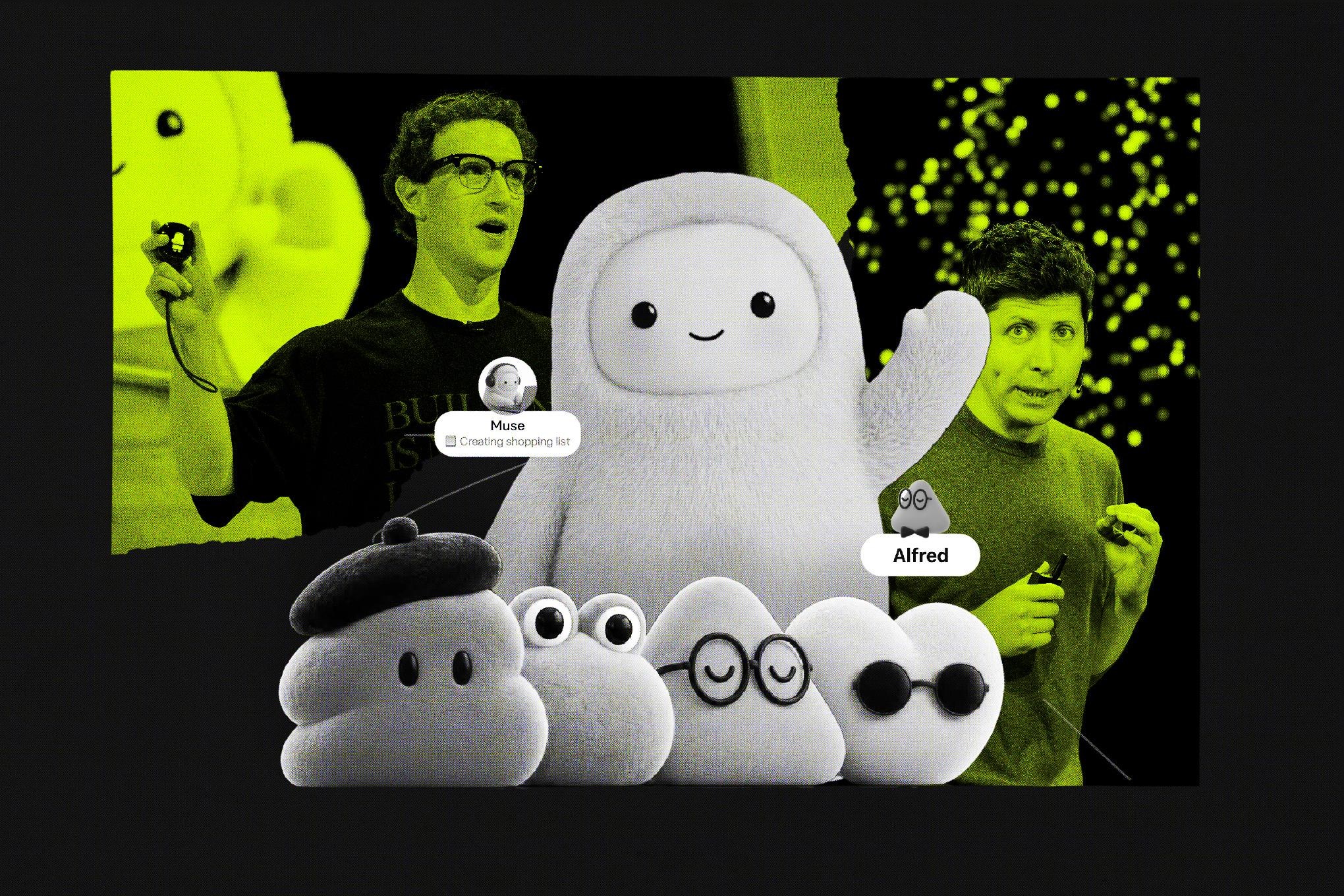
Meta's Muse and OpenAI's Dots have both had high-profile product launches, and it's fascinating to compare them. Both companies have decided to market these agents to mainstream users and businesses through adorable, animated mascots. For those subscribed to The Verge's Decoder podcast, you get exclusive access to ad-free content. If you're not a subscriber, you can sign up here.
These agents can handle a range of tasks, from mundane activities like restaurant reservations and inbox triage to more complex tasks such as marketing, legal work, and accounting. Muse is free, while Dots come at a cost. As we discuss with Hayden, Meta, which still lacks a frontier model of its own, might have a significant advantage here due to its expertise in producing and distributing consumer products.
There's also a significant tension in the agent race, as we debate what AI is capable of today, what it still can't do, and the privacy and security implications of entrusting sensitive data to an AI that might assist us without requiring constant app interaction or manual intervention. This could potentially be the future of all computing, but it's not clear if most people are willing to share their data to make it happen.
Welcome back to Decoder, Hayden. Thanks for joining me. This time, there's no wild interpersonal drama. Elon Musk tried to stir some trouble and didn't quite make it, and Alexandr Wang from Meta had a few sharp words. But the soap opera antics seem to have cooled down for now, leaving us with some good old-fashioned product competition in the marketplace.
Let's see who comes out on top and who loses out. For now, though, let's talk about these cute mascots. There's a lot to unpack here. Hayden, you were at OpenAI DevDay in San Francisco, where the company announced Dots, their new agent platform. This came just a few weeks after Meta Connect, where Meta introduced Muse, their agent platform.
Can you give us an overview of the current state of the industry? Everyone's buzzing about agents these days. What's driving this excitement? It's interesting to note that I've been covering agents for quite some time now. In 2022, it was all about ideation - brainstorming what AI agents could look like. They often referred to Jarvis from the Marvel Universe.
In 2023, we saw the shift to deployment, with many companies testing their ideas and learning from failures. 2024 and 2025 were somewhat underwhelming, but agents were still far from perfect. However, I believe 2026 marks the beginning of AI agents becoming truly useful for consumers, with always-on autonomous agents becoming a reality.
OpenAI started this trend with OpenClaw, an always-on tool, despite its privacy issues. Its success inspired other companies to up their game. OpenAI hired the creator of OpenClaw, leading to the launch of Dots, while Meta released its own version, Muse, earlier this year. Both companies present these agents as personal assistants for various tasks, from booking flights to managing work-related responsibilities. The key difference lies in their approach and the specific tasks they aim to handle.
Written by urgent.news from The Verge's reporting — not their text. Machine-written — may contain errors; check the original before relying on it.