Beyond the summit: how US-China relations could still unravel
This year’s Chinese National Day reception in Washington felt noticeably jollier than those I have attended in recent years. The mood was more relaxed and Chinese Ambassador Xie Feng’s opening speech was upbeat. He even joked about the panda ambassadors at his own expense. The cheerful tone followed President Xi Jinping’s short but successful state visit to the US, during which his counterpart,…
The Chinese National Day reception in Washington this year was notably more amiable than previous gatherings. Ambassador Xie Feng's opening remarks and even a lighthearted joke about panda ambassadors signaled a more relaxed atmosphere. Following President Xi Jinping's successful visit to the US, President Donald Trump granted him an unprecedented reception.
However, the mood outside the embassy was markedly different. Critics, including opposition Democrats, accused Trump of cozying up to "communist" China, which they saw as betraying American allies and national interests. The mainstream media, in a feud with Trump over media access to the White House, either downplayed the visit or focused on its lack of tangible progress.
Even Trump's allies privately admitted that the timing was not opportune for a major breakthrough, given the upcoming midterm elections and deepening political polarization in the US.
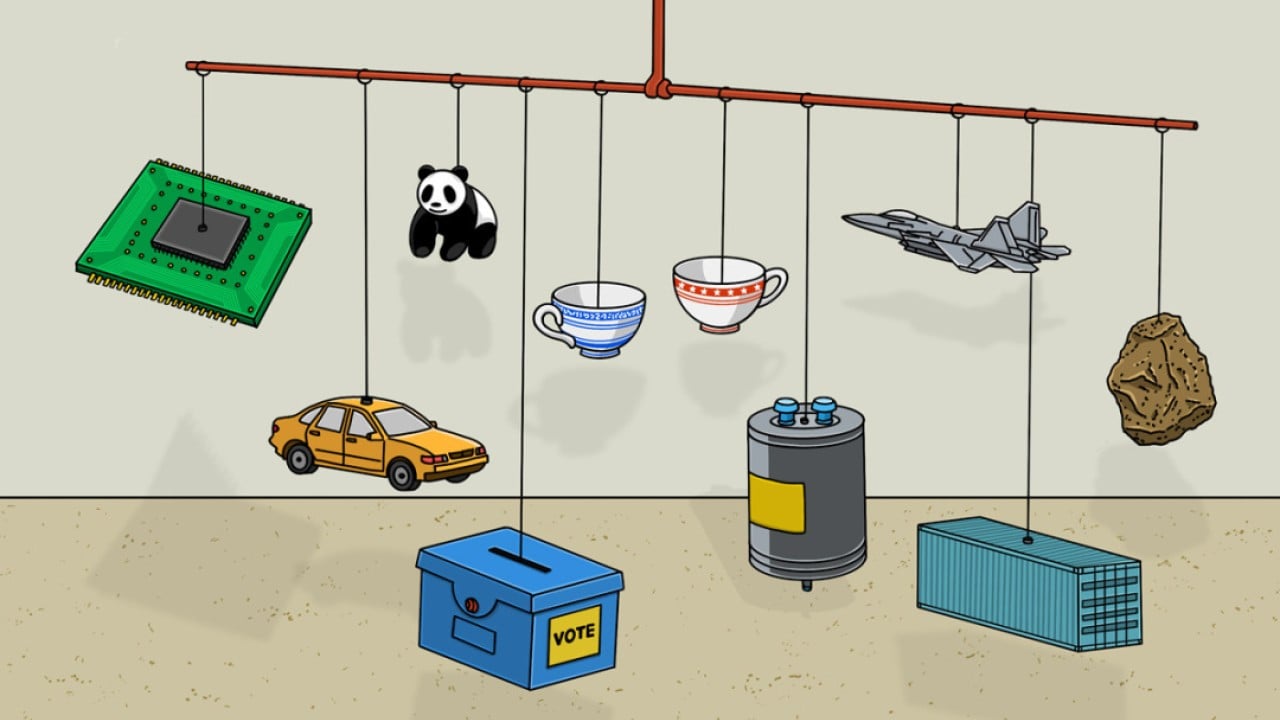
The US's stance on dealing with China remains fragmented. While there is agreement on lifting rare earth export controls, there is no consensus on what concessions to offer. Relaxing restrictions on advanced chips is met with strong opposition, as some argue it may accelerate China's chip development, while others believe it could maintain US "chip dependency".
Similarly, there is no agreement on regulating AI, or "superintelligence", with advocates divided on whether regulation should be a power grab or ensure standards. The Chinese proposal to include chip controls in the bilateral AI dialogue further complicates matters.
The American business community is also divided. While some see potential in increased Chinese investment, others fear it could lead to technology loss. Ford CEO Jim Farley expressed caution, suggesting that admitting Chinese carmakers to the American market could become problematic, reminiscent of Europe's situation. The US has delayed the latest round of arms sales to Taiwan, partly due to supply shortages, but the extent to which the policy can be maintained remains uncertain.
Despite showing restraint on Taiwan during Xi's visit, Trump has delayed arms sales and may face pressure to act.
Xi's visit highlighted the strong rapport between the two leaders, potentially acting as a stabilizing force for the bilateral relationship. However, the future of US-China relations remains uncertain. While Trump has maintained a relationship with Xi, his policies can change rapidly. The upcoming G20 summit could provide an opportunity for US allies to push back on various issues, including trade imbalance and rare earth controls.
The outcome of the midterm elections is also uncertain, with predictions suggesting it could be a challenge for Trump. His potential reaction remains unclear, whether he would shift to domestic issues, adopt a conciliatory approach, or double down on his policies. Despite the positive outcomes of Xi's visit, it would be imprudent to assume stability in US-China relations.
Written by urgent.news from Reuters Business via SCMP's reporting — not their text. Machine-written — may contain errors; check the original before relying on it.
This story
This is one outlet's version. Read the fullest account.