As largest public employer, govt must set an example: SC
• Clear, predictable rules stressed for public servants • Administrative convenience can’t justify denying legitimate promotion, bench observes ISLAMABAD: The Supreme Court has emphasised that the government, being the largest public employer, must conduct itself as a model employer, as good governance requires clarity not only at the policy stage but also in rule-making and subsequent…
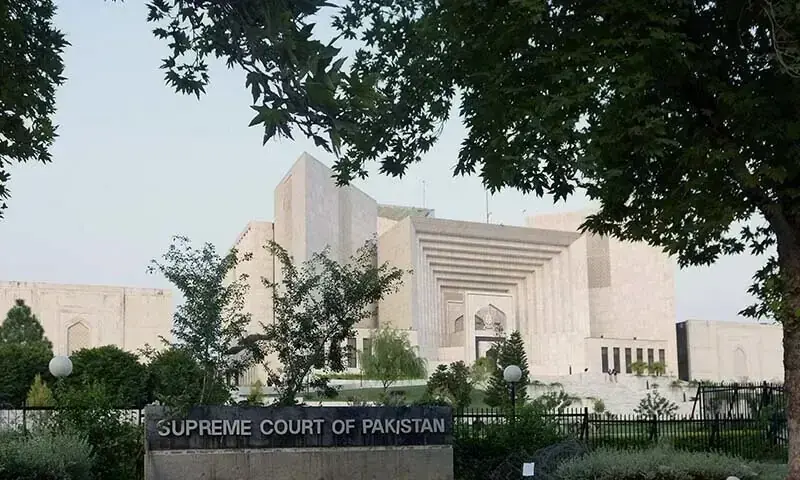
The Supreme Court has stressed that the government, as the largest public employer, must conduct itself as a model employer for good governance. Justice Ayesha A. Malik, who authored the six-page judgement, emphasized that clear, predictable rules are essential for public servants to understand their career paths, promotions, and conditions for advancement. When rules fail to provide clear promotional tracks, uncertainty arises, leading to governance failures.
The case involved Muhammad Shafiq, a former Elementary School Teacher (Physical Education), who challenged the withdrawal of his promotion to Assistant Education Officer. The Punjab Service Tribunal initially dismissed his plea but the Supreme Court set aside the withdrawal and restored his promotion. The promotion order had been withdrawn on May 24, 2023, after a note in the Punjab School Education Department (School Education) Service Rules, 2014, suggested that the AEO position would be filled from among School Service Teachers (SSTs) through transfer.
The judgement clarified that reliance on this note to deny the promotion was unjustified, as it contradicted the clear promotion criteria provided in the 2014 rules. The court criticized the department's interpretation as flawed, noting that structural gaps often result from policies developed without proper data, consultation, or understanding of the service's actual functioning.
Such gaps, when compounded by an administrative approach focused on why benefits should not be given, rather than whether they were due and how they could be fairly applied, exacerbated the issue.
The court stressed that administrative convenience cannot substitute for the law and that ambiguity should not be used to deny legitimate progression. It emphasized that good administration is measured by how fairly, consistently, and efficiently it determines what is due and delivers it. The wider consequence of such uncertainty is that the law cannot effectively regulate the conduct of those it governs, including public servants, if they cannot easily ascertain their rights and obligations. Legal certainty requires rules to be coherent, predictable, and capable of application.
The judgement concluded by highlighting that the burden of resolving service structure deficiencies lies with the State. Good administration requires policies and rules to be developed through a transparent process, considering all relevant factors, to ensure clarity, fairness, and accountability in governance.
Rewritten by urgent.news; may contain errors — check the original.
Source: dawn.com