AI’s Inevitability Trap
The leaders of tech’s biggest companies refuse to admit they’re in control.
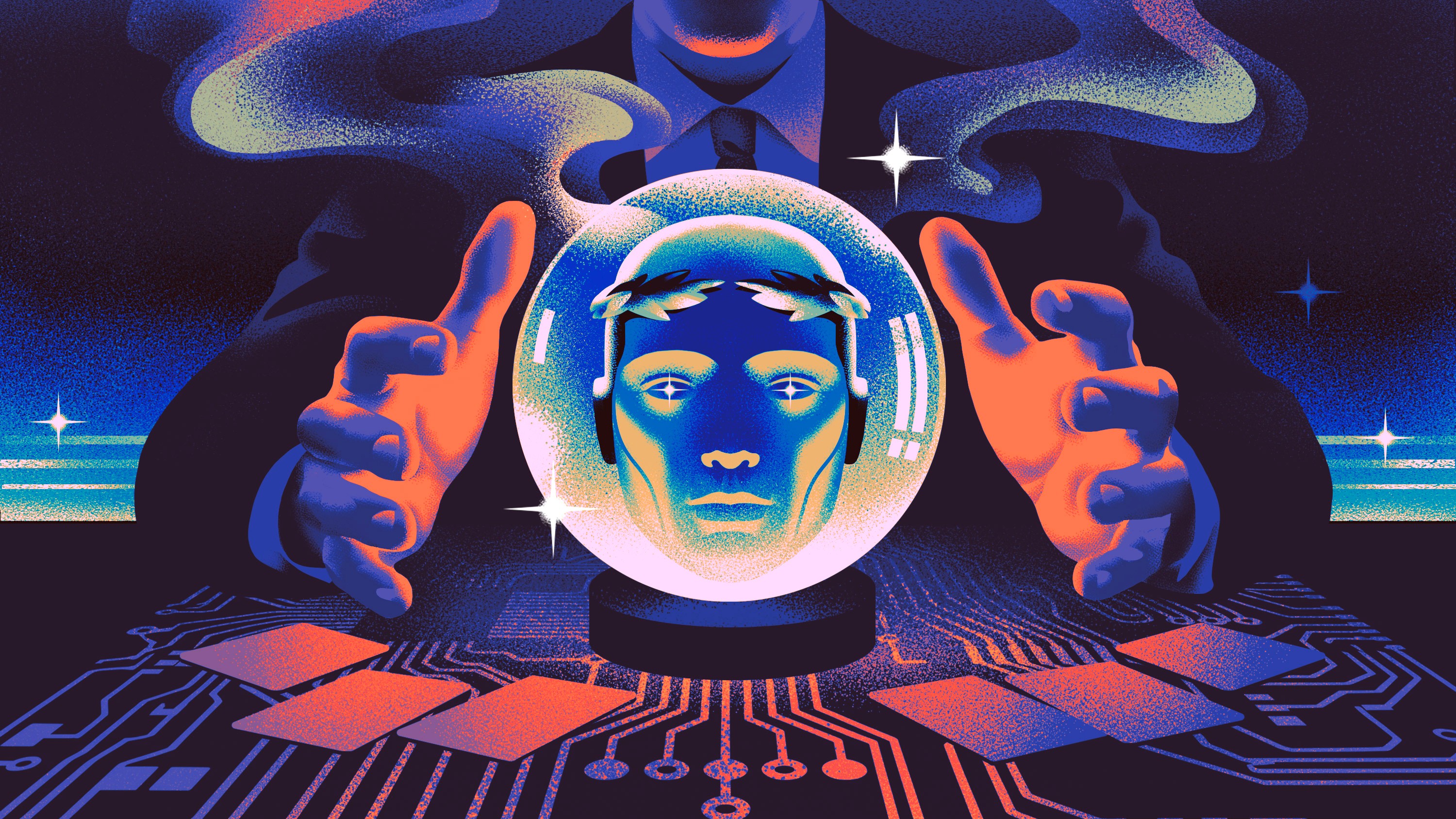
In the spring of 2024, Kevin Roose, a tech reporter and Atlantic writer, interviewed researchers at OpenAI to discuss recent technological advancements. ChatGPT, at the time, continued to make simple arithmetic errors, and many doubted whether the bot could rival human intelligence. However, the company had a themed second floor, named after significant inventions in human history, including "AGI" or artificial general intelligence.
The belief in AGI was deeply ingrained in influential AI companies such as Google DeepMind, OpenAI, and Anthropic. This belief is the main focus of Roose's new book, "The AGI Chronicles," which aims to document the decade when human dominance over advanced intelligence allegedly ended and a new world was born.
Roose's interviews with over 150 people involved in AI development, executives, investors, and policymakers, shed light on crucial moments from 2015 to early 2026. The book portrays the development of AI as a result of decisions made by a small group of individuals. Roose explicitly acknowledges that "AGI was not inevitable," but rather "invented, developed, and commercialized by a few hundred people."
However, the book at times reads like a natural history, describing events that seemed beyond the control of specific groups, akin to a geological force shaping the planet.
While the inevitability of AI outcomes may be a self-serving narrative, there is no prophecy that a handful of Silicon Valley companies can govern the technology without facing consequences. Industries are shaped by individual decisions, public desire, and regulatory actions. Historical examples, such as the decline of electric cars, nuclear power, and supersonic flight, illustrate how seemingly inevitable technological eras can falter due to regulatory hurdles, political campaigns, and human errors.
Therefore, the idea that AI development is entirely predictable might be an oversimplification. Roose, initially believing that "nothing about this was inevitable," later acknowledged that once the transformer scaling laws were established, it became inevitable for companies to push the technology to its limits. However, he further complicates this view by suggesting that various factors like regulatory environments, international agreements, and Pentagon lab priorities could have altered the course of AI development.
Written by urgent.news from The Atlantic's reporting — not their text. Machine-written — may contain errors; check the original before relying on it.