A Scientist Working on the ‘IceCube’ Neutrino Detector Explains the Nobel Prize–Winning Technology
“Detecting a neutrino is like looking for a needle in a haystack,” says Juan Carlos Díaz Vélez, who breaks down why researchers are looking for the cosmic particles under the Antarctic ice.
Juan Carlos Díaz Vélez, a scientist at the Wisconsin IceCube Particle Astrophysics Center at the University of Wisconsin–Madison, explains the Nobel Prize-winning technology behind the IceCube Neutrino Observatory. He emphasizes that neutrinos are subatomic particles that pass through matter with little interaction and are abundant in the universe, originating from Earth, the sun, and deep space.
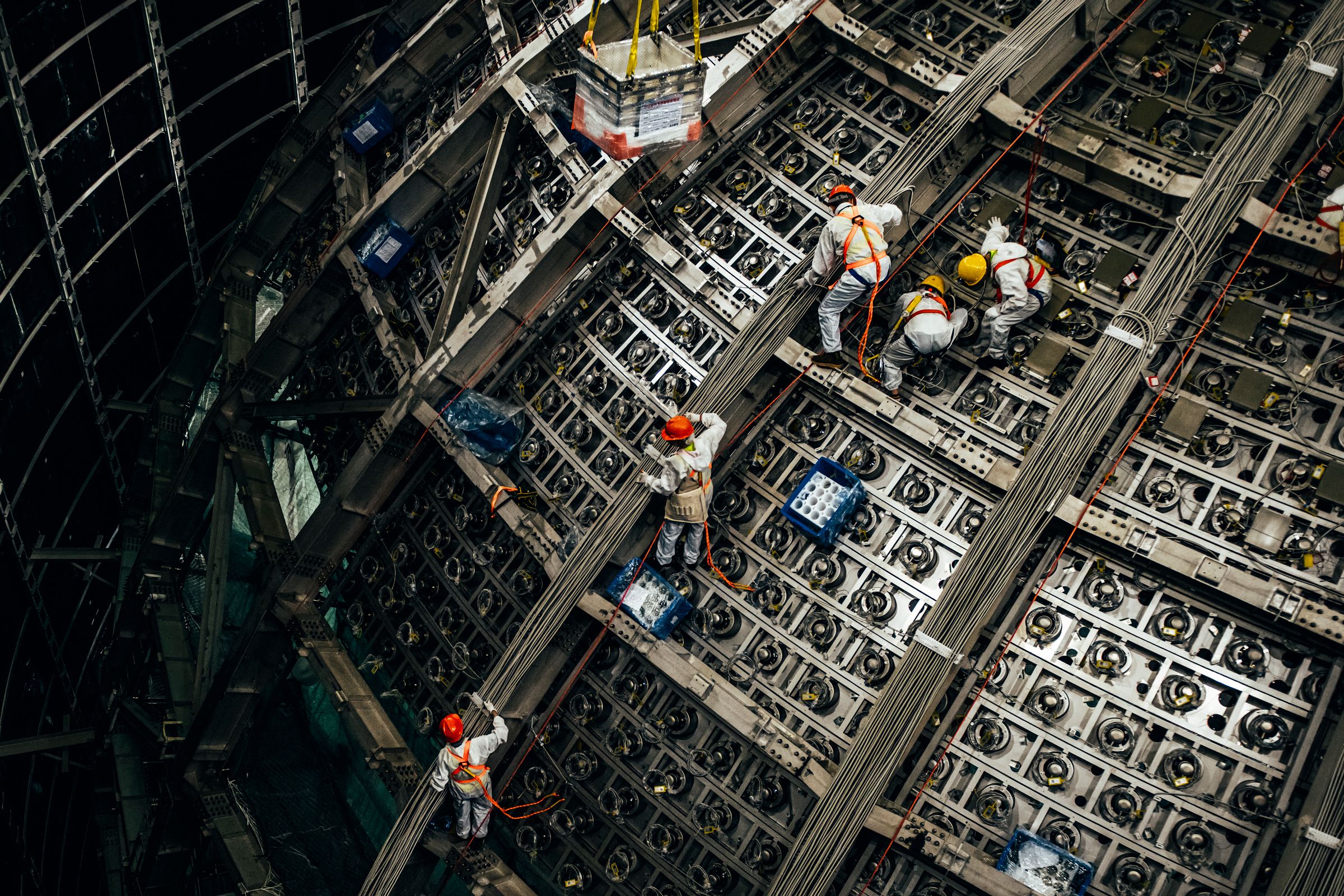
The IceCube Neutrino Observatory, located at the South Pole, is equipped with 5,160 optical sensors buried deep inside a cubic kilometer of ice. These sensors can detect light produced by rare interactions between neutrinos and ice atoms, known as muons. The observatory began operations in 2008 and has made significant discoveries, notably detecting high-energy neutrinos from astrophysical sources such as the blazar TXS 0506+056.
IceCube has also contributed to our understanding of neutrino transformations and cosmic rays. Neutrinos can change types as they travel, and IceCube has enabled precise measurements of this phenomenon. The observatory's data shows that cosmic rays are not uniformly distributed but come from specific directions, providing insights into their sources.
Operating as an international collaboration of 450 people at 58 institutions across 14 countries, IceCube relies on high-performance computing networks and involves many master's and doctoral students. While the Nobel Prize is awarded to Francis Halzen, Díaz Vélez highlights the collaborative nature of the project and credits Halzen's passion and dedication for its success.
Written by urgent.news from Wired Science's reporting — not their text. Machine-written — may contain errors; check the original before relying on it.