The Science Behind the Nobel-Winning Technology That Controls Neurons With Light
Optogenetics revolutionized neuroscience, but its origins come from an entirely brainless organism—an alga.
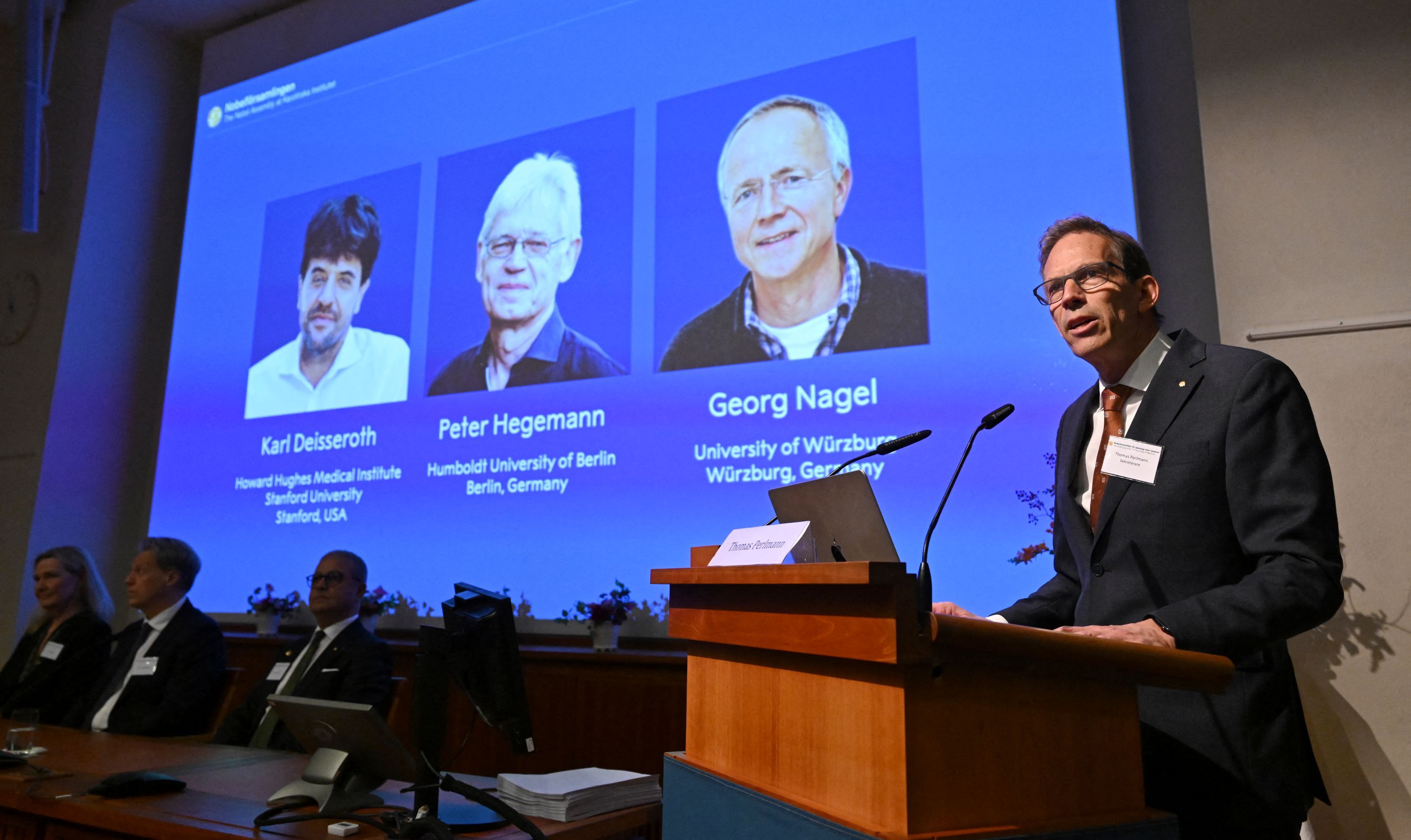
The Nobel Prize for Medicine honors optogenetics, a groundbreaking technology that allows scientists to control neurons with light. Per Svenningsson, chair of the Nobel Committee for Medicine, praised optogenetics for providing unparalleled insights into the workings of the brain. This achievement emerged from the convergence of microbiology, neuroscience, and genetics, with roots in the early 1990s when Peter Hegemann embarked on studying how the single-celled alga Chlamydomonas detects and reacts to light.
Hegemann's research revealed that light detection in the alga occurs 20 times faster than in the human eye, a response time that sparked controversy among scientists who doubted a light-sensitive protein could exist without a comparable ion channel. Japanese researchers later identified two genes responsible for producing proteins—channelrhodopsin-1 and channelrhodopsin-2—that responded to light by opening ion channels.
Georg Nagel verified these genes' functions by introducing them into frog eggs, which then generated electrical signals in response to light. When Nagel introduced these genes into mammalian cells, the cells also reacted to light, demonstrating their potential in controlling neurons. Karl Deisseroth built upon this discovery, seeking a way to selectively activate or deactivate specific nerve cells in living brains.
When Deisseroth obtained the DNA sequence for ChR2, he introduced it into rat nerve cells, which immediately generated electrical impulses when exposed to blue light—confirming ChR2's potential as a tool for neuroscience. Collaborating with Hegemann and Nagel, Deisseroth and others developed a suite of light-sensitive proteins that could control different types of neurons using specific wavelengths of light, leading to optogenetics.
This technique has profoundly impacted neuroscience, enabling the mapping of neural circuits and the study of memory, feelings, and behaviors linked to neurological disorders. In clinical medicine, optogenetics holds promise for treating visual impairments.
Written by urgent.news from Wired Science's reporting — not their text. Machine-written — may contain errors; check the original before relying on it.