Stunning early mammal fossil sheds light on the evolution of suckling
A predecessor of modern mammals that lived in the Jurassic has been found in China with its throat anatomy preserved, allowing researchers to examine the earliest evidence for the evolution of suckling
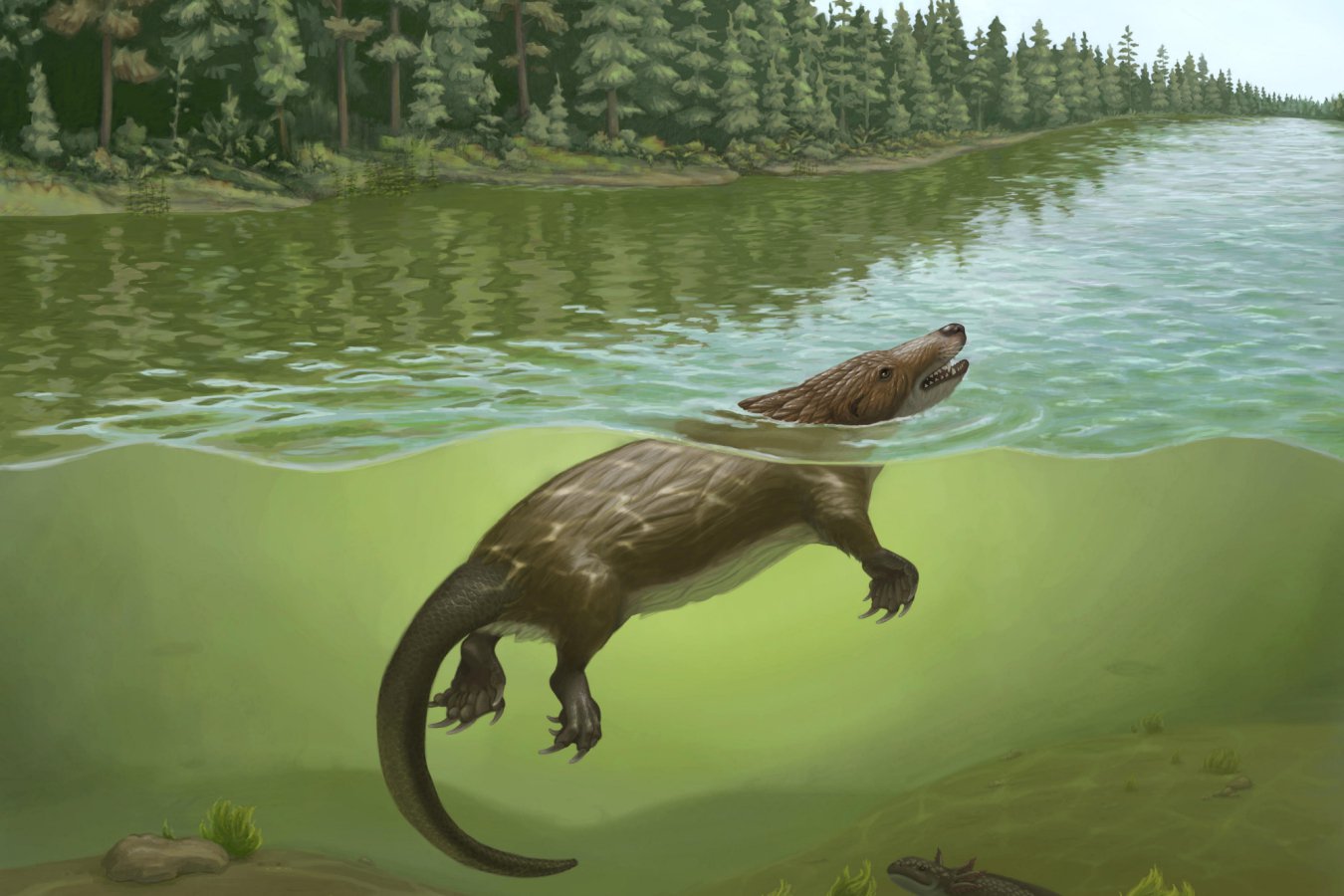
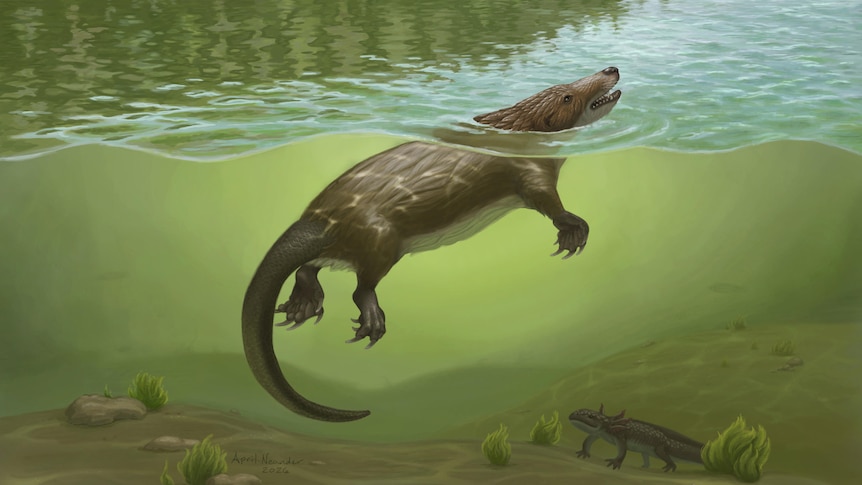
Artistic depiction reveals that a Jurassic-era mammal, Megacauda sungei, possessed the unique ability of suckling, according to researchers from the University of Chicago. This semi-aquatic ancestor to modern mammals, which coexisted with dinosaurs, marks the earliest known instance of a mammal that adopted a semi-aquatic lifestyle.
Discovered in the Daohugou area of Inner Mongolia, China, the fossil dates back between 163 million and 168 million years ago. The creature, weighing approximately 1 kilogram, exhibited a broad tail and the skull and teeth resembling river otters, while the back half bore a resemblance to the platypus. The fossil provides a comprehensive view of the animal's throat anatomy, including the pharyngeal and hyoid structures, which enable mammals to form a suction vacuum for milk and ingest chewed food and liquid.
These features were previously unknown in other mammaliforms, indicating that such adaptations originated before the rise of modern mammals. This discovery sheds light on the complex evolutionary history of mammals and their diverse lifestyles.
Written by urgent.news from New Scientist's reporting — not their text. Machine-written — may contain errors; check the original before relying on it.