China’s thorium-229 nuclear clock beats Vienna’s on stability, studies show
Initial results from the world’s first two working nuclear clocks indicate that China’s timepiece is about six times as stable as the one in Vienna, according to papers published this week by the journal Nature. The clocks were developed independently but both the Chinese team, led by Tsinghua University in Beijing, and the researchers at Vienna’s TU Wien used thorium-229 nuclei embedded in…
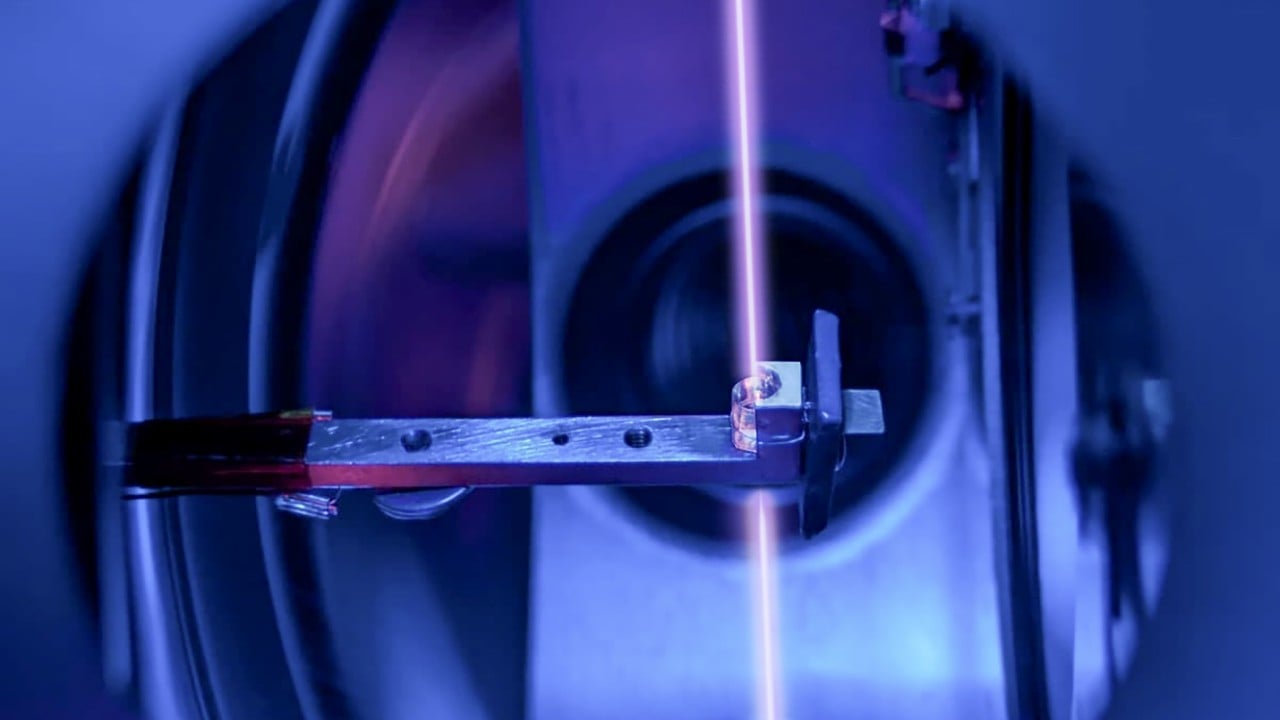
Two teams of researchers, one from China and one from Vienna, have developed nuclear clocks that are based on the behavior of thorium-229 nuclei rather than the more common method of using electrons. The Chinese team, led by Tsinghua University in Beijing, found that their clock was about six times more stable than the one in Vienna, according to a study published in the journal Nature.
The Chinese scientists believe that the smaller size and lower disturbance of the nucleus compared to electrons could lead to highly accurate nuclear clocks in the future. The Vienna team, on the other hand, used their clock to search for dark matter, but did not find any evidence of it. Both teams also noted that the thorium-229 nucleus responds to the laws of physics differently than electrons, which could help to reveal tiny shifts in the fundamental constants of nature.
While the new clocks are not as stable as the best atomic clocks, which have been the most precise timekeepers for over 70 years, the researchers believe that compact, robust, and more easily operated nuclear clocks could eventually be used in a wider range of applications.
Written by urgent.news from Reuters Business via SCMP's reporting — not their text. Machine-written — may contain errors; check the original before relying on it.