'Special' moment for researchers as rare fin whales photographed
Two elusive fin whales have been photographed by drone as the rare species migrate north along WA's South West coastline.
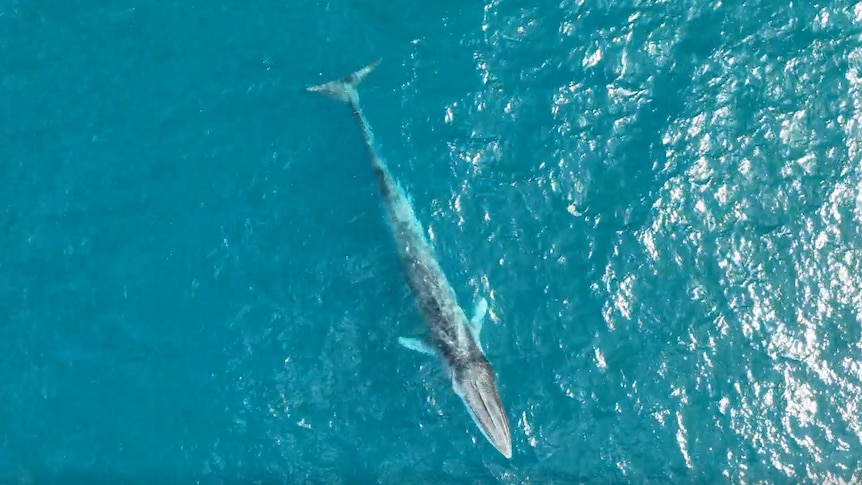
Two fin whales, a rare species, have been captured on camera by drone pilots as they migrate north along the Western Australian coast. Researchers and ocean enthusiasts are thrilled by the photographs, which provide valuable insights into the species, which is typically studied through audio recordings. The whale migration season is expected to continue until late October.
The drone pilots photographed the whales in Geographe Bay, located 220 kilometers south of Perth. Fin whales numbers are still recovering from the whaling industry's impact, which hunted them to near extinction in the 20th century, killing approximately 700,000 individuals. These whales can live up to 70 to 80 years when left undisturbed and typically give birth to a single calf at a time, making population growth a slow process.
Fin whales are second only to blue whales in length, with slender bodies that enable them to glide through the water at high speed, and they tend to stay below the surface, making sightings rare. Geographe Marine Research chair Capri Jolliffe noted that one of the sightings occurred within 50 meters of the land-based observation platform, in relatively shallow waters.
The second sighting was located approximately 2 kilometers offshore. Recorded sightings of fin whales are exceptionally rare, and much of what is known about them comes from passive acoustic data collected by submerging hydrophones in the ocean. In Australia, drone pilots are required to adhere to strict regulations when flying near marine mammals.
In Western Australia, drones must maintain a minimum distance of 60 meters, while in New South Wales, Queensland, South Australia, and Tasmania, the limit is 100, 300, 500, and 500 meters, respectively. Macquarie University marine scientist Vanessa Pirotta emphasized that citizen scientists who follow the rules are making valuable contributions to ocean research by documenting this threatened species.
Dr. Pirotta stated that the footage provides researchers with more than just a sighting; it may indicate potential movements that were previously only documented acoustically. Drone pilot Scott Baxter shared his experience of spotting the fin whales while on a family coastal drive. Initially, he thought he was filming a different species, but as he continued filming, he realized the whales were fin whales, a species known to exist in Geographe Bay.
Written by urgent.news from ABC News AU's reporting — not their text. Machine-written — may contain errors; check the original before relying on it.