Sleep, appetite, gene-editing experts contend for Nobel chemistry prize
STOCKHOLM, Oct 7 — Molecules that regulate sleep and appetite or methods for editing genes are some of the researc...
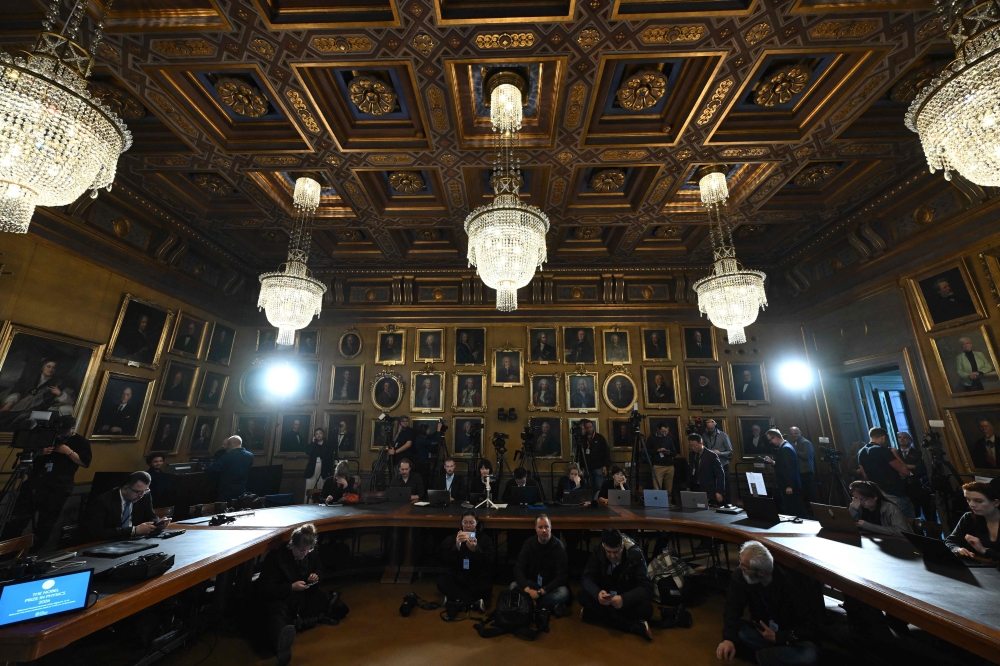
Stockholm, October 7 — The Nobel Prize in Chemistry, to be announced by the Royal Swedish Academy of Sciences, may be awarded to scientists researching molecules that regulate sleep and appetite or gene-editing techniques. Winners of the prestigious award are expected to be named at 11:45am (0945 GMT/5:45pm Malaysian time). In previous years, the prize was awarded to researchers who developed molecular design methods, including Japan's Susumu Kitagawa, UK-born Richard Robson and American-Jordanian Omar Yaghi.
This year, data analytics firm Clarivate has predicted that research on the hunger-regulating hormone GLP-1 (glucagon-like peptide 1) could be a contender for the Nobel Prize in Medicine, although the award went to neuroscientists last year. GLP-1 is used in weight-loss drugs such as Wegovy and Mounjaro. Three scientists are frequently mentioned for the Nobel in chemistry: Canadian endocrinologist Daniel Drucker, Danish physician Jens Juul Holst, and Yugoslav-born American chemist Svetlana Mojsov.
Clarivate also highlighted the development of "self-assembled monolayers (SAMs)" — molecular-scale coatings that scientists and engineers can use to tailor a surface's properties. US chemists David Allara and Ralph Nuzzo, along with Israel's Jacob Sagiv, are favored in this category.
Rewritten by urgent.news; may contain errors — check the original.
Also reported by 5 other outlets
- Nobel prize in chemistry awarded for work on mirror-image molecules theguardian.com
- French, Japanese scientists share Nobel Prize in Chemistry cbc.ca
- Nobel Prize in chemistry awarded to Kagan and Soai for developing 'spectacular' chemical reactions phys.org
- Chemistry Nobel 2026 awarded to Henri B. Kagan and Kenso Soai thehindu.com
- Chemistry Nobel awarded for solving mystery of life's asymmetry bbc.co.uk