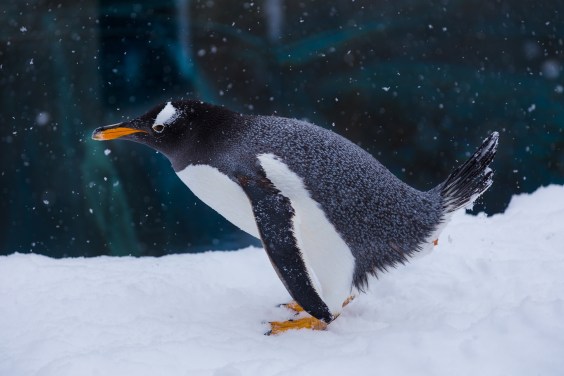
Penguin poop is melting Antarctic snow by keeping algae green
Penguin poop is fertilizing snow algae blooms along the Antarctic Peninsula, feeding dense green algae patches along the coastline, a new study shows. These expanding stretches of green snow melt faster than clean, white snow, potentially speeding up the spread of snow- and ice-free areas of Antarctica.

Gathering in dense huddles, penguins leave behind massive piles of guano on Antarctic ice, which can be seen on satellite images. A new study published in the Journal of Geophysical Research Biogeosciences reveals that these guano piles have a significant impact on the Antarctic landscape. The researchers traveled to the West Antarctic Peninsula, collecting samples of snow algae that grow on the surface.
Upon analyzing the samples in the lab, they discovered that green algae contain more phosphate, which is derived from penguin guano, enabling algae to load their cells with chlorophyll and enhance photosynthesis. Conversely, red algae have lower phosphate levels and derive their color from red pigments, which function as sunscreen when they become inactive due to nutrient scarcity.
Darker-colored snow, such as red and green snow, absorbs more heat than white snow, causing it to melt faster. Consequently, penguin guano is accelerating snowmelt, and as penguins migrate southward due to climate change, snow algae will become increasingly greener throughout their journey. The study authors emphasize that accounting for the biological darkening effects of penguin guano is crucial to accurately estimating the rate at which coastal snowpacks are melting and the expansion of ice-free terrain across Antarctica.
Written by urgent.news from Nautilus's reporting — not their text. Machine-written — may contain errors; check the original before relying on it.
This story
This is one outlet's version. Read the fullest account.
- Penguin Poop is Melting Antarctic Snow nautil.us