Nobel Prize in Chemistry goes to Henri Kagan and Kenso Soai
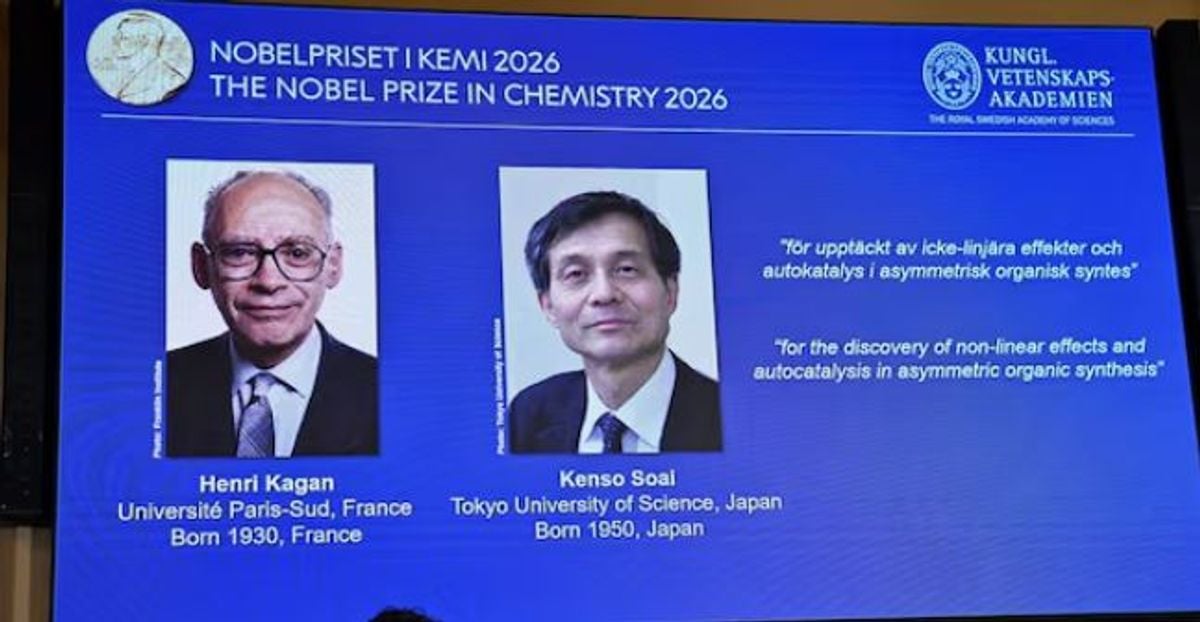
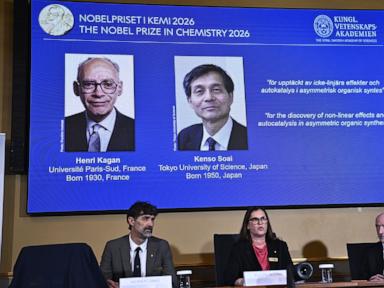
Stockholm: France's Henri Kagan and Japan's Kenso Soai on Wednesday won the Nobel chemistry prize for solving the mystery of why only one version of some molecules' mirror-image forms appears in nature, a discovery decisive for the development of pharmaceuticals. The pair were honoured "for the discovery of non-linear effects and autocatalysis in asymmetric organic synthesis", the jury said. Get…
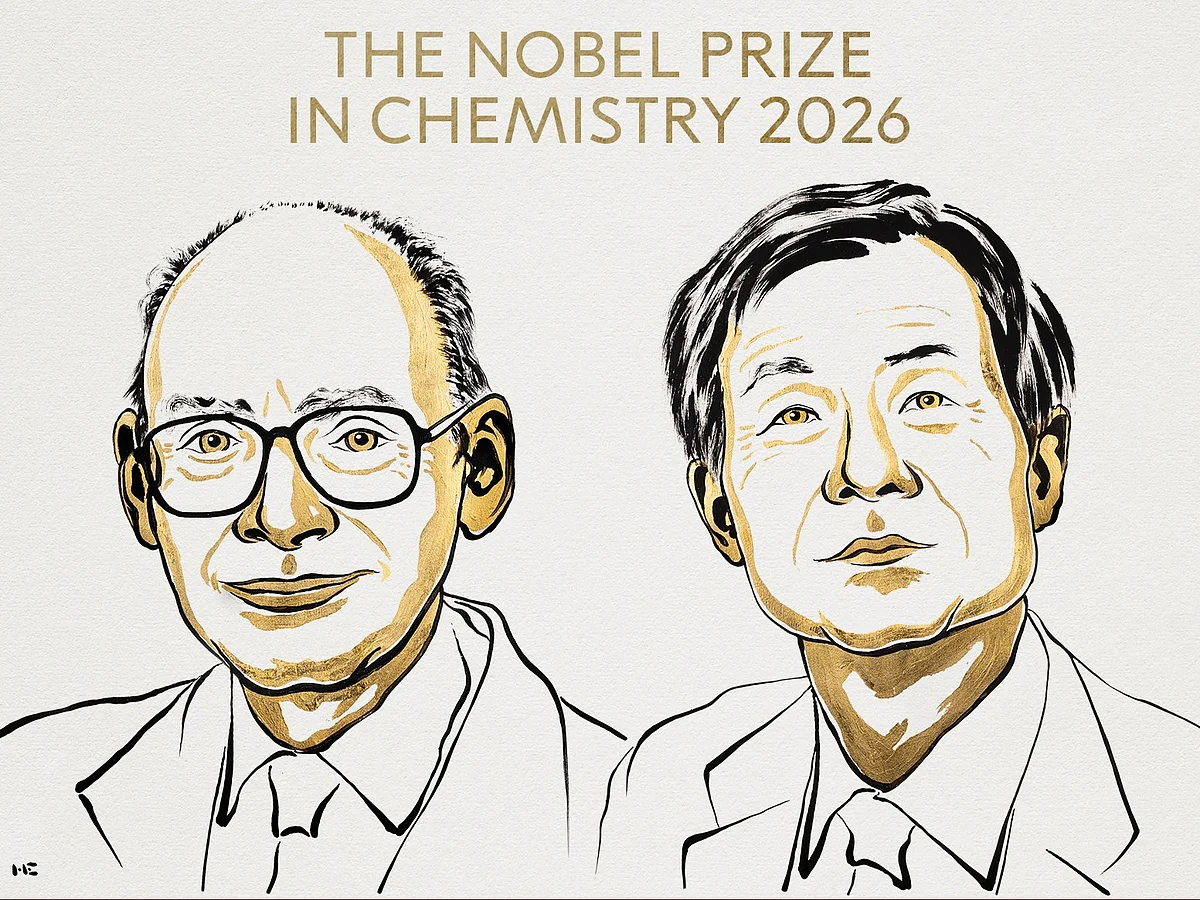
Henri Kagan and Kenso Soai have been awarded the Nobel Prize in Chemistry for their groundbreaking work in understanding the phenomenon of homochirality. This refers to the fact that all amino acids exist in two mirrored forms, but only one of them is found in the proteins of living organisms. The Royal Swedish Academy of Sciences explained that the other mirror image is rarely found in nature. Chemists have long puzzled over how this process occurs.
Kagan and Soai made significant discoveries in this field. Soai designed the first chemical reaction that could only produce one of the potential mirror images, a feat never achieved before. Kagan's discoveries allowed chemists to drive chemical reactions that lead to homochirality, a process crucial for the development of pharmaceuticals.
The Nobel Committee praised the pair's discoveries as decisive for chemists who design reactions for pharmaceutical manufacturing. Heiner Linke, chair of the Nobel Committee for Chemistry, noted that the chemical reactions developed by Kagan and Soai are spectacular. Their work has significantly advanced the field of chemistry and pharmaceuticals.
Written by urgent.news from Gulf News's reporting — not their text. Machine-written — may contain errors; check the original before relying on it.