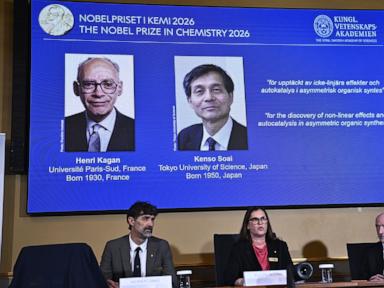
Nobel Prize in chemistry awarded to Kagan and Soai for research solving 'mirror image' mystery
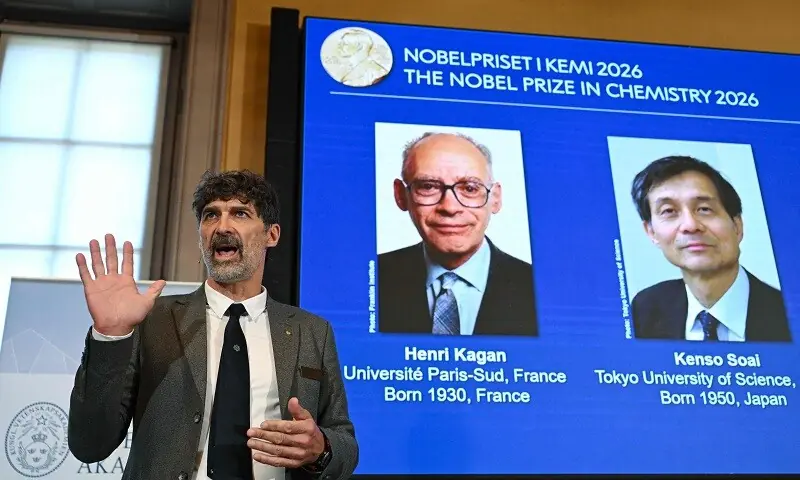
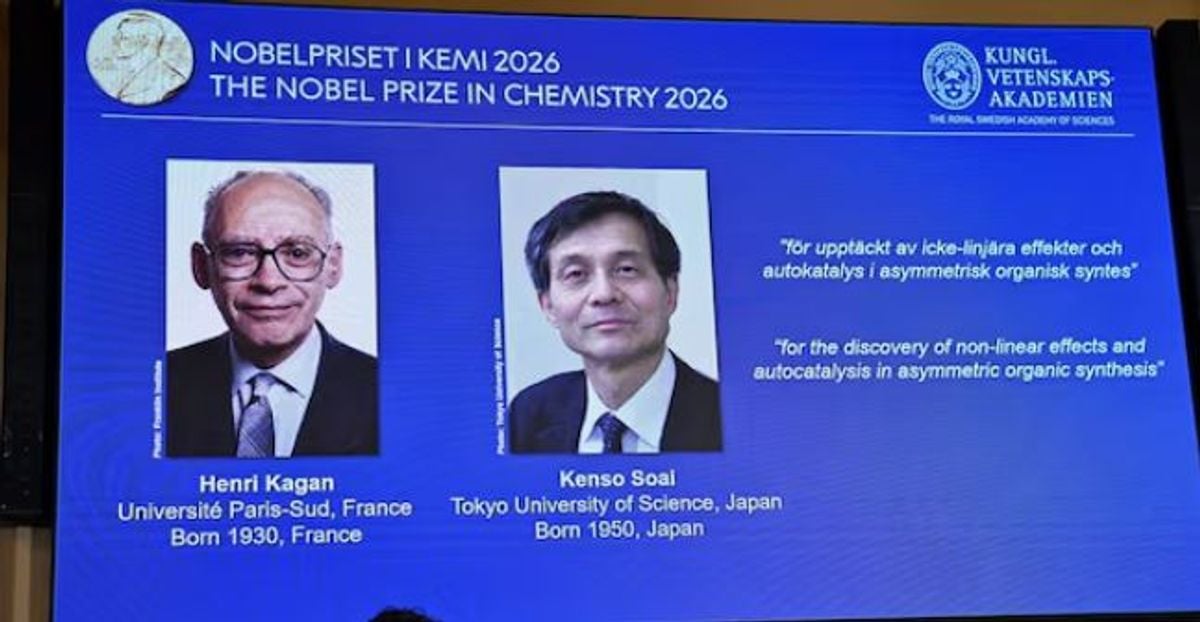
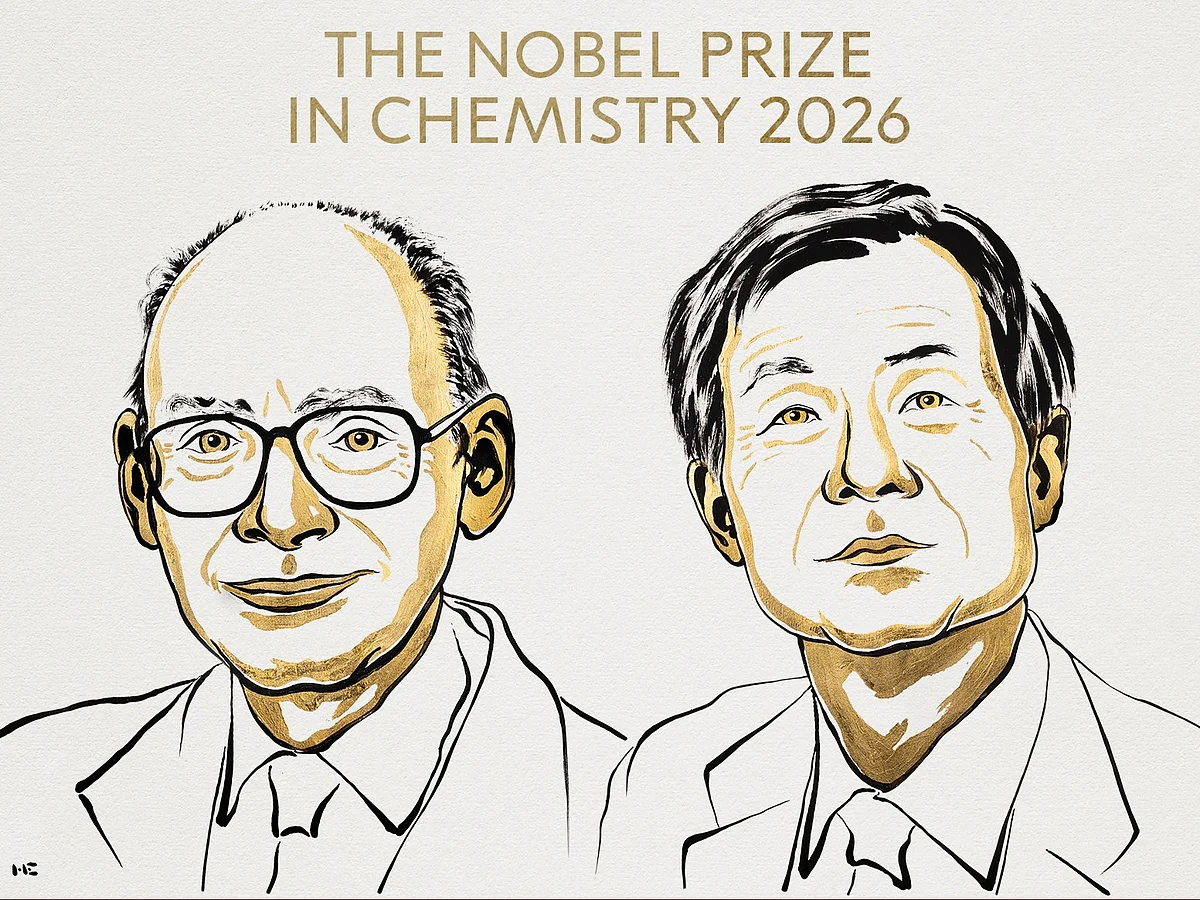
STOCKHOLM (AP) -- Henri B. Kagan and Kenso Soai won the Nobel Prize in chemistry Wednesday for their efforts to resolve mysterious mirror images in ch
Henri B. Kagan and Kenso Soai jointly won the Nobel Prize in Chemistry on Wednesday for their research that unravels the enigma of mirror images in chemical molecules. The Nobel Committee for Chemistry explained that the duo solved a century-old mystery about how homochirality, a phenomenon where living organisms exhibit a single form of chirality, can emerge spontaneously.
Heiner Linke, the chair of the Nobel Committee, shared this information in a press release. The groundbreaking chemical reactions developed by Kagan and Soai have been pivotal for chemists who design reactions for pharmaceutical manufacturing. Kagan, 95 years old and originally from France, is affiliated with Universite Paris-Sud in Orsay, France.
Soai, born in Japan, is connected to the Tokyo University of Science. The Royal Swedish Academy of Sciences announced the winners in Stockholm. Last year, the chemistry Nobel Prize was awarded to three scientists for their work on new molecular structures capable of trapping large amounts of gas, potentially aiding in reducing greenhouse gases or harvesting moisture from deserts.
This year's Nobel Prizes began with the medicine award on Monday, which recognized three scientists for developing a tool that uses light to understand brain functions. On Tuesday, the physics prize acknowledged a scientist for elucidating rare neutrinos. The literature prize is scheduled for Thursday, followed by the peace prize on Friday, after which the Nobel Memorial Prize in Economic Sciences will be announced on Monday.
This year's prize money amounts to 12 million Swedish kronor, approximately $1.2 million, for individuals, groups, or organizations.
Written by urgent.news from The Mainichi's reporting — not their text. Machine-written — may contain errors; check the original before relying on it.