Matsch & Schnee: Das sollten Sie über Winterreifen für Zweiräder wissen
Winterreifen sind bei entsprechenden Bedingungen für Autos Pflicht. Es gibt sie aber auch für Motorräder und sogar Fahrräder. Was im Straßenverkehr gilt - und worauf zu achten ist.
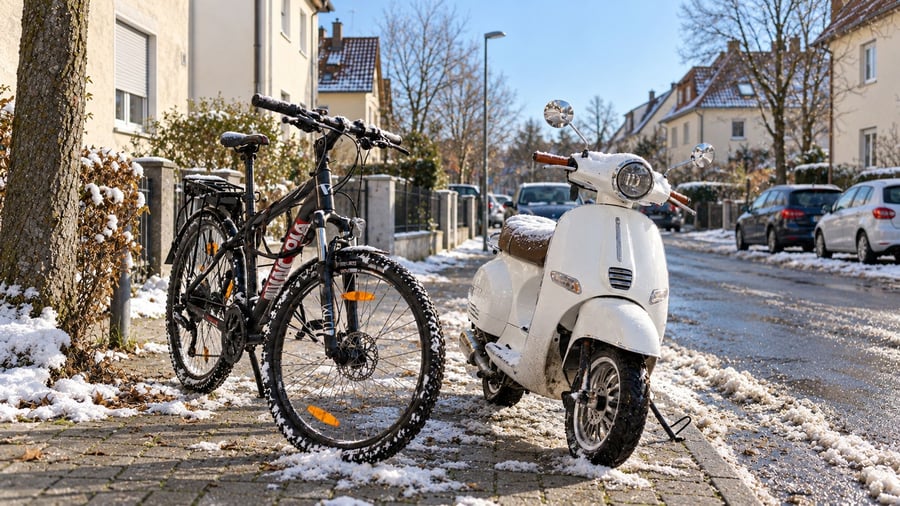
Winter is coming, and for those who still choose or need to ride their motorcycles, scooters, or bicycles, there are a few essential things to know about winter tires. According to the Society for Technical Inspection (GTÜ), single-track vehicles are particularly sensitive to smoothness, and even a small ice patch can cause a wheel to drift sideways due to insufficient grip.
Therefore, when planning to travel in snowy or icy conditions, it's crucial to think carefully and drive very carefully, slowly, and without any abrupt steering, braking, or acceleration maneuvers. For those who still want or need to ride a motorcycle, pedelec, or bicycle in winter, similar to cars, there are specialized winter tires available.
These are not only profiled differently but also have a unique rubber compound that is specifically designed for low temperatures, snow, and ice. A wider profile, cleats, or rougher tread blocks alone do not make a tire suitable for winter conditions, as stated by the GTÜ. However, they could improve grip on snow and unprepared surfaces.
Notably, winter tires for motorcycles and motor scooters do not need to carry the Alpine symbol, unlike those for cars, as they are not mandatory. However, the vehicle manufacturer's recommendations and requirements for load capacity and speed should always be considered when selecting tires. For bicycles and pedelecs, even spikes are permitted.
Unlike cars, there are winter-optimized tires with a road profile and even spike-equipped tires available for bicycles and regular pedelecs (commonly referred to as E-bikes). These can push small metal pins into the ice surface, increasing traction on icy surfaces, and perform well in braking and turning scenarios. The GTÜ mentions that they improve side handling, especially on packed snow and ice, and can excel in braking and turning.
The range of products spans from moderately spiked tires for daily commuting to heavily spiked specialized tires designed for the most icy conditions.
However, caution is advised when riding fast pedelecs, known as S-Pedelecs, which can support speeds up to 45 km/h. They are not considered bicycles but rather motor vehicles, so they cannot use ordinary bicycle spike tires. It's crucial to ensure that the tire of each individual vehicle complies with the legal requirements and meets the necessary dimensions, load capacity, and maximum speed regulations.
Despite having winter tires, it's essential to maintain a heightened level of caution and consideration during winter. The GTÜ advises extra caution and respect for other road users. Lastly, remember that winter tires do not eliminate the need for overall vehicle maintenance. A technically sound vehicle with functioning brakes and proper lighting is a must.
Though automobiles are required to adhere to the situational winter tire obligation in winter conditions, the GTÜ clarifies that this obligation does not apply to two-wheeled motor vehicles. They recommend rigorously assessing whether the journey is necessary and if the destination cannot be reached using alternative modes of transportation before setting off on winter roads. Furthermore, the safety distance must be at least half the speedometer reading in meters.
Written by urgent.news from Handelsblatt's reporting — not their text. Machine-written — may contain errors; check the original before relying on it.