'It looks like a chimera' — 168 million years ago, a strange platypus-like mammal relative lived in China alongside dinosaurs
A predatory mammal-like animal from the Jurassic seems to have characteristics of both a platypus and an otter.
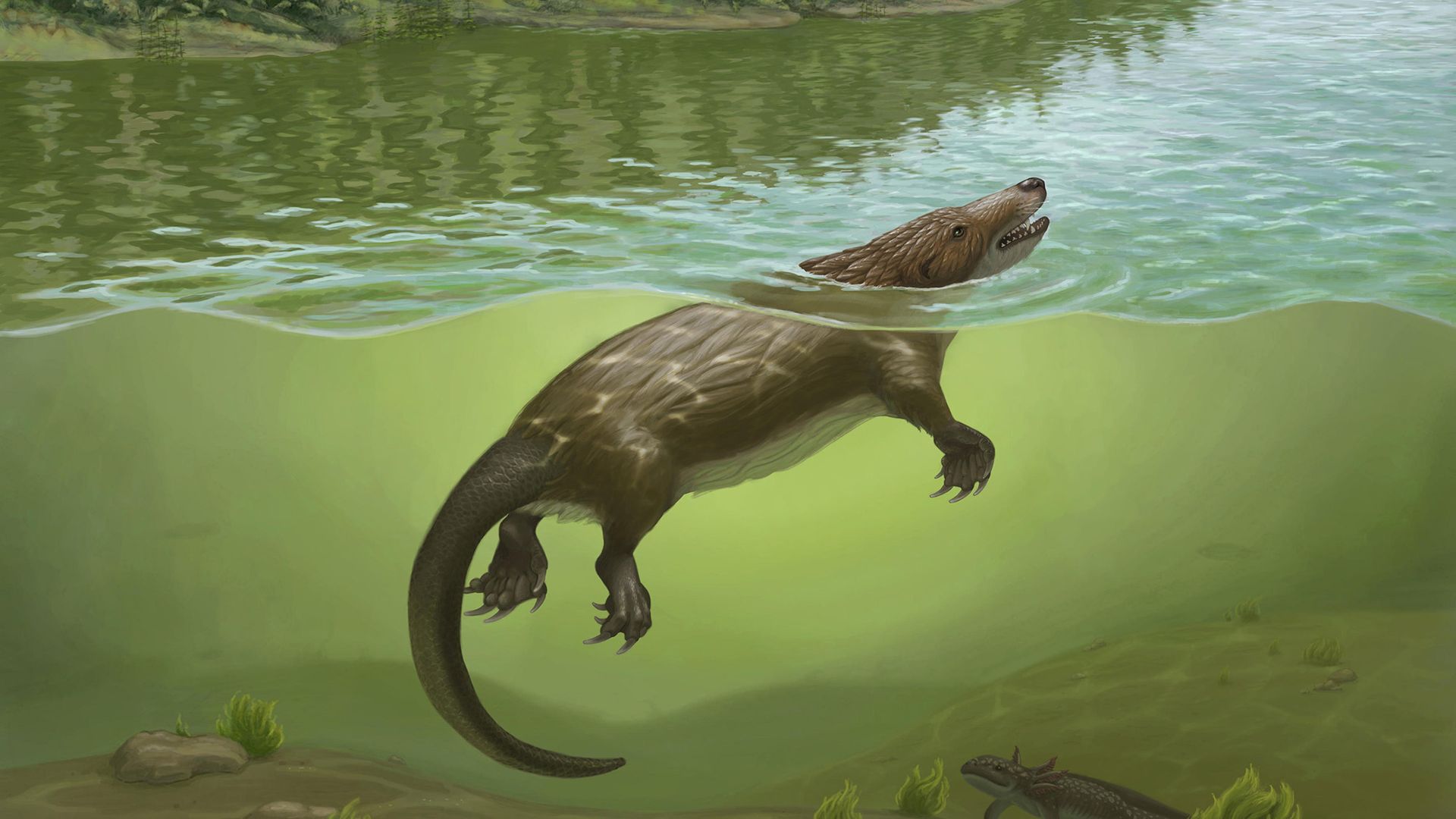
A surprisingly large platypus-like mammal that lived during the Jurassic period has been discovered in China, according to a new study. The creature, named Megacauda sungei, existed around 168 million to 163 million years ago and weighed only about 2.2 to 4.4 pounds (1 to 2 kilograms). This makes it the largest-known mammal relative from the entire Jurassic period.
Living in freshwater lakes and rivers in what is now Inner Mongolia, M. sungei was a semiaquatic predator that hunted salamanders. Its name comes from its unusually large tail, which was the main feature researchers found most striking. The animal's back half resembled a modern-day platypus, while its limbs were capable of swimming or digging tunnels in riverbanks. However, its teeth were more like those of a carnivorous mammal, featuring robust canines and shearing cheek-teeth designed for cutting and chewing meat.
The fossil, discovered in 2016, also revealed M. sungei's unique throat apparatus, which allowed it to swallow chunks of food, similar to modern mammals. This discovery pushes back the timeline of this evolutionary trait to at least 165 million years ago, before the divergence of marsupials and placental mammals. The study suggests that M. sungei's lineage, docodonts, were versatile creatures adapting to various habitats during the Jurassic and Cretaceous periods.
Written by urgent.news from Live Science's reporting — not their text. Machine-written — may contain errors; check the original before relying on it.