Antarctic Ice Opens A Stairway To Heavens
Awarded the Nobel Prize in Physics, Francis Halzen of the University of Wisconsin-Madison forever transformed how humanity explores the cosmos. For decades, traditional astronomy relied entirely on light, leaving the most violent, hidden regions of the universe, those extreme cosmic environments where matter, gravity, and energy are pushed to unimaginable limits, places completely blocked from…
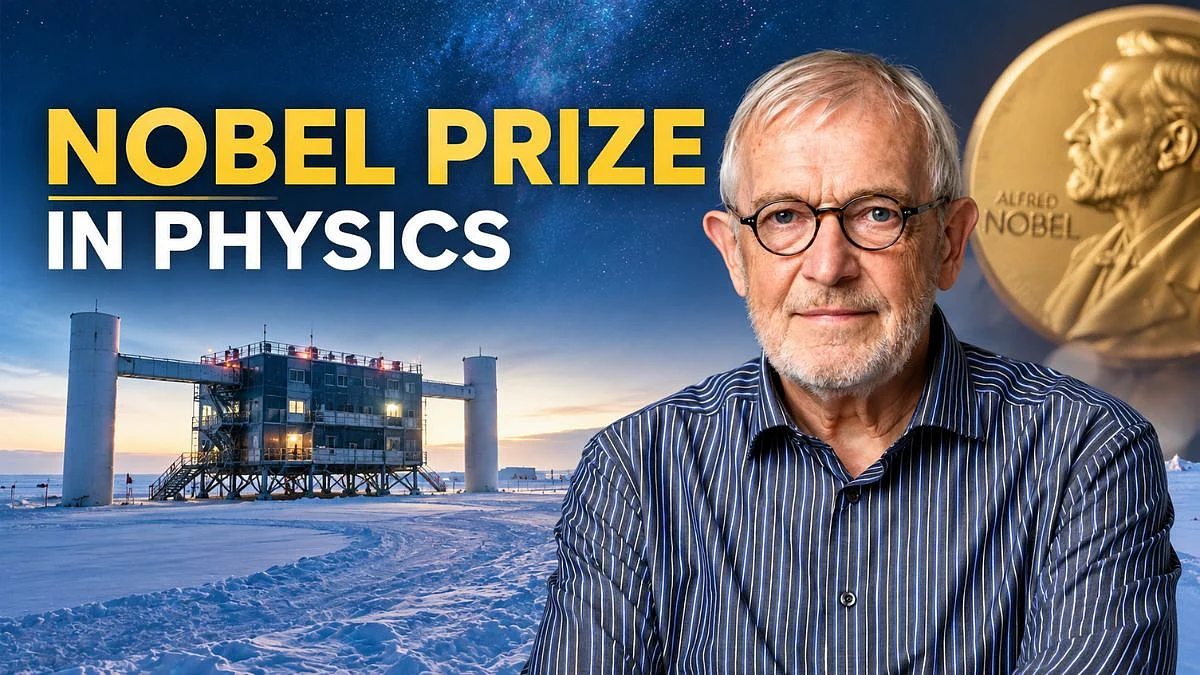
The Nobel Prize-winning physicist Francis Halzen of the University of Wisconsin-Madison has revolutionized our ability to explore the cosmos. For many years, conventional astronomy relied solely on observations of light, leaving completely unseen extreme cosmic environments that are under immense pressure. Halzen introduced a new method by harnessing neutrinos, which are subatomic particles that travel through space unhindered and carry invaluable information straight from distant black holes and cosmic explosions.
To realize this groundbreaking idea, Halzen led a forty-year project to construct the IceCube Neutrino Observatory. This colossal endeavor involved creating a large-scale particle detector deep beneath the South Pole, within a cubic kilometer of ancient ice. Utilizing high-pressure hot water, engineers drilled through the glacial layer to install thousands of delicate light sensors, which were buried at depths ranging from 1,450 to 2,450 meters. This ice shield effectively blocks out surface noise and unwanted particles from cosmic rays.
Today, a global team of around 450 physicists, engineers, and computer scientists from nearly sixty institutions maintains and enhances this remarkable facility. The IceCube Observatory represents a significant leap forward from particle physics discoveries that earned past Nobel Prizes. These foundations, including the detection of neutrinos and the discovery of neutrino oscillations, were pivotal in demonstrating that neutrinos could be used to study subatomic interactions at a cosmic scale.
By converting deep Antarctic ice into an enormous optical trap, Halzen integrated particle physics and deep-space astronomy in a transformative way. When high-energy particles interact with the ice, they emit faint blue light flashes, which serve as precise cosmic markers. These flashes allow scientists to trace the paths of ultra-high-energy cosmic rays back to their violent origins, thereby opening new avenues for understanding the universe.
This monumental achievement paves the way for future advancements in astronomy. As the observatory expands, researchers will be able to delve deeper into cosmic history, study active galactic nuclei, and map the elusive dark matter. By merging particle detections with traditional light observations and gravitational waves, humanity will enter a new era of multi-messenger astronomy, where the frozen landscape of Antarctica becomes a permanent gateway to the stars.
Written by urgent.news from Free Press Journal's reporting — not their text. Machine-written — may contain errors; check the original before relying on it.