Elisha Wiesel: American Jews Are 'Less Safe Than When My Father Was Alive'
Elie Wiesel’s son tells Newsweek why October 8 marked a turning point for antisemitism and why Holocaust education failed Jews.
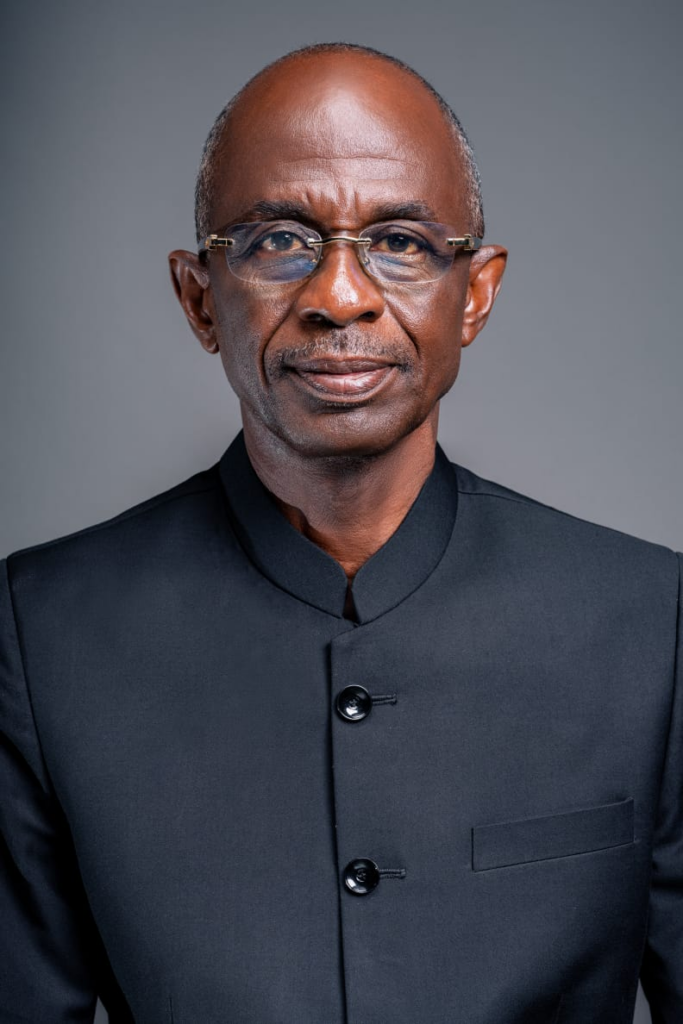
For Elisha Wiesel, son of Holocaust survivor and Nobel laureate Elie Wiesel, the date that marked a shift in Jewish life in America was not October 7, 2023; it was October 8. "I think, to me, October 8 is the real pivot in antisemitism in this country," Wiesel told Newsweek. "That’s the moment when all our friends and neighbors and people we thought were allies switched from understanding that Jews were under physical attack to seeing us as the enemy."
Wiesel spoke to Newsweek on the day before the 2026 Elie Wiesel Prize in Ethics Awards Ceremony, held at the Mandarin Oriental in New York City. The annual prize challenges young people to contemplate questions of conscience, responsibility, and moral courage – values his father embodied in much of his life’s work. This year’s theme, "Silence, Conscience, and Responsibility," resonates with Wiesel’s concerns: the years since Hamas’s October 7 assault on Israel, which killed 1,200 people and took over 200 hostages, have exposed a resurgence of antisemitism and a lapse by institutions entrusted with safeguarding remembrance.
Having grown up in the shadow of his father’s legacy, Elisha Wiesel is alarmed by the rise in antisemitic incidents but also by what he perceives as a failure of education and institutions meant to deter another wave of antisemitism. "We are less safe than when my father was alive," he states. The problem lies not just in the surge of antisemitic acts but in the community’s response.
"We in the Jewish community went all in with Holocaust education," Wiesel said, yet empathy for dead Jews did not translate to concern for living Jews. This disconnect helps explain why October 8 is so significant. The aftermath of October 7 showed that Jews could still be murdered simply for being Jewish, and the subsequent reaction revealed how quickly sympathy could shift into suspicion of Israel and, ultimately, of Jews.
Wiesel draws parallels to historical patterns of blame, citing his father’s 1978 essay about Jews being falsely accused of crimes committed against them. Now, Jews are being portrayed as genocidal after Israel’s military campaign in Gaza, which has resulted in over 74,000 deaths according to the Associated Press. Wiesel also calls for Jewish institutions to become more assertive.
"We have to learn how to help ourselves a little better," he asserts. He specifically targets Holocaust memory organizations, urging them to take moral stances on global atrocities, rather than retreating from contemporary debates. Wiesel worries that Jewish communities have allowed the portrayal of Jews as uniformly white and colonial to go unchallenged.
Education, he argues, must go beyond Holocaust museums and books on prejudice; young Jews should be exposed to Jewish communities worldwide and understand that Jewish identity is not confined to American racial categories. He sees the partisan alignment of Israel as a growing issue, with American Jews increasingly identifying as either blue or red rather than Jewish.
This partisan sorting can lead to people prioritizing political affiliation over their Jewish identity. Wiesel’s alarm is particularly acute on American college campuses, where his children are of college age. One of his children was on campus during the pro-Palestinian encampments following October 7. "The environment was more conducive to making my child more likely to make aliyah," he noted.
While Wiesel is deeply concerned, he also sees potential for transformation. October 7 awakened something within him: "October 7 was a transformative day. It is one of those days, if you had a heart, you will never forget where you were when you first heard the news." He recalls frantic calls to relatives in Israel and the urgency of knowing their whereabouts. For his own children, the family’s history of stories taught them a new reality.
Written by urgent.news from Newsweek's reporting — not their text. Machine-written — may contain errors; check the original before relying on it.