Det er sluttsummen som teller
Skatten skal ned, men trolig ikke renten.
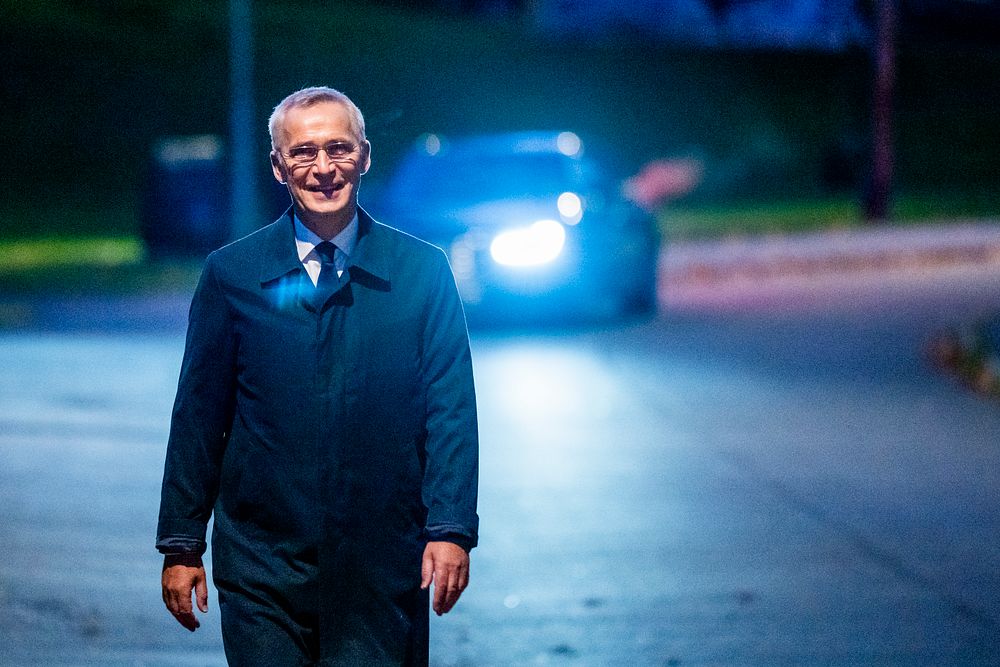
Jens Stoltenberg's presence at a conference in Germany highlighted his success as a finance minister in Norway over leading a conference abroad. The conference was crucial, though. Stoltenberg prefers practical politics and getting things done. The entire budget is presented at ten o'clock, but it's already clear that what's included reflects his touch.
The budget also displays the course adjusted by the party since tax shocks three years ago and the outcry over "ordinary people," who earned less than 750,000 kroner. Several examples illustrate how smaller tax cuts benefit those with higher incomes more. The budget was presented in a scenario where Norway's economy is doing poorly.
Unemployment is low, wage growth has been high in the last two years, and the interest rate has risen, but there's little indication of immediate overheating - overheating means that activity is so high that wages and prices rise because demand is so strong. Internationally, there's a risk of turbulence due to the war in Ukraine and the Middle East, which could further increase prices for energy, especially fuel, quickly triggering the most irritated among consumers.
At the same time, concerns grow about states with high government debt struggling as interest rates rise, which could further affect markets. However, overall, it's a year where the government should present a budget that's neutral, neither pushing the gas pedal nor applying the brakes. The macro figures presented by the Finance Department at eight o'clock indicate this.
Oil consumption will increase, but not dramatically. The budget neither applies the brakes nor provides weak stimulus. "Neutral" means that the government gives slightly more than it takes away. For those focused on interest rates, the budget will likely make no difference either way. There's no clear indication that it will push up the pressure on interest rates, but it is an important reservation: the Storting.
Negotiations with the other parties in the red-green coalition will cost. The budget will not cause the National Bank to reassess its interest rate forecast - or even lower it. The election campaign's Ap message about "lower interest for the many" may be far from what most people expect. There will be some clear cuts in the budget, but if that were to contribute to lower interest rates, the cuts would have to be massive.
They won't. Furthermore, Jens Stoltenberg is still grappling with the old dilemma of former Prime Minister Trygve Slagsvold Vedum and Jonas Gahr Støre. Old money from generous budgets is not being removed, but it still creates activity in the Norwegian economy. At the Storting, Stoltenberg will speak about responsibility, tax cuts, the Norgespris, the state of the Norwegian economy, and - according to what I've heard - provide a rare spark for those who prioritize feelings over facts and figures in the economic debate.
For now, there are only two things we can say with near certainty: the budget the government presents will not be adopted as it stands, and at the Storting, Jens Stoltenberg will face criticism from all other parties. It's like with daily newspapers: it's the bottom line on the cash register that counts, as colleague Sindre Heyerdahl says.
Written by urgent.news from E24 Norway's reporting — not their text. Machine-written — may contain errors; check the original before relying on it.