AKA-Tibz trial: Durban court allows reporting of witness evidence
The Durban High Court has amended its reporting directive, allowing journalists to publish witness evidence and admitted exhibits while prohibiting the disclosure of witnesses’ identities and personal details.
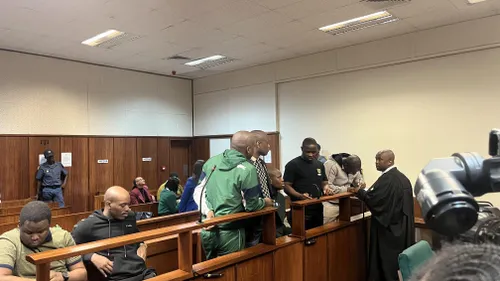
Durban High Court Judge Nomfundo Sipunzi altered her media guidelines for the AKA-Tibz murder trial on Wednesday. The updated ruling permits coverage of witness testimony as it transpires, while still barring witness identification. The trial proceeded at the Durban High Court post Sipunzi's approval of a request to separate trials.
Sipunzi approved six defendants, arguing that individual charges against Siyanda Myeza would cause undue delays. The defendants were Lindokuhle Mkhwanazi, Lindani Ndimane, Siyanda Myeza, Mziwethemba Gwabeni, Lindokuhle Ndimande, Malusi Ndimande, and Siyabonga Ndimande. Enhanced security was enforced following Tuesday's early adjournment due to security concerns.
Security intensified after an accused was reportedly given a phone the previous day. Measures included placing police inside and outside the courtroom, monitored by private security personnel on all sides of the defendants, and a bench moved to the front of the gallery. Court officials confined to the front of the courtroom, while media were relocated to the gallery, with the first bench behind the accused restricted.
Media houses and advocates were the only permitted individuals inside. The amended directive allows extensive media coverage. "All accredited media houses and other forms of media are permitted to attend, observe, report on and broadcast the trial proceedings," Sipunzi ruled. Witness evidence may be published or broadcast during testimony and any admitted exhibits.
Reporters covered plea arguments, rulings, orders, and judgments. Witness identities remain protected, with Sipunzi stating: "no media coverage shall disclose the identities or personal particulars of any witness called by either the state or the defence." Camera and photograph rules were also established. Video cameras, filming equipment, and audio-recording devices must remain stationary and positioned to avoid disrupting proceedings or distracting participants.
Photographs were limited to times when court was not in session. Sipunzi left room for further changes, stating that these directives may be altered, supplemented, or varied by further court order for justice.
Written by urgent.news from The Citizen's reporting — not their text. Machine-written — may contain errors; check the original before relying on it.
This story
This is one outlet's version. Read the fullest account.