AI takes the bench before the rulebook is ready
Lawyers present hallucinated cases, a judge had ChatGPT reconcile car payments and another tested it on dubious citations, while experts say judges must stay accountable.
KwaZulu-Natal High Court Judge Mokgere Masipa revealed that a draft policy for regulating the use of artificial intelligence (AI) in the legal system is currently under finalisation. This policy was initially presented at the Judges’ Conference in July and is being refined after concerns were raised over governance and data security.
The conference agreed that the Judiciary Administration and Information Technology Steering Committee should complete the Draft Policy on Artificial Intelligence, which must include clear rules on permissible and prohibited uses of AI, as well as maintaining human oversight and judicial decision-making as the central focus.
Alistair Pugin, the founder of Celyntis, a cloud technology enabler, stated that AI is already being employed across the legal sector, but its adoption is outpacing the establishment of formal standards. Governance and the need for defined standards are deemed crucial in the use of AI within the legal system.
World Wide Worx MD Arthur Goldstuck believes there is significant potential in using AI to reconcile evidence, as long as judges verify the AI's work against original records. He emphasizes the importance of checking what the AI left out and the assumptions it made in the process. However, it is premature to assume that South African judges are widely embracing generative AI, according to Vanessa Manson, a consultant and admitted attorney at Ellipsis law firm.
She points to a case, FJL v TGO, where Judge Ingrid Opperman noted the difference between AI as an assistant and AI as a decision-maker or verifier of last instance. Responsibility for accuracy lies with the author, Opperman emphasizes.
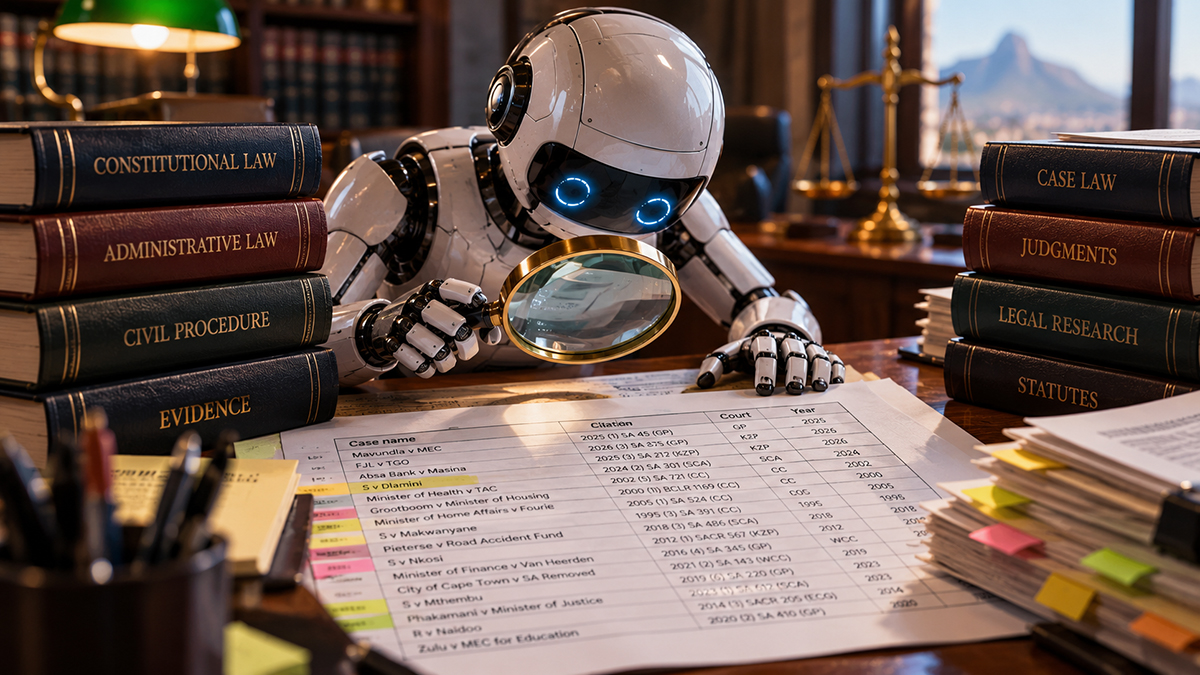
The judiciary has warned of risks associated with using public AI platforms such as ChatGPT, including privacy concerns and the need for judges to retain control over their rulings. In the case of Mavundla v MEC, Judge E Bezuidenhout tested ChatGPT after struggling to verify case law cited in an application for leave to appeal. Bezuidenhout found that the AI provided unreliable results, leading him to order personal costs for the attorneys and refer the judgement to the Legal Practice Council for investigation over the legal practitioners' conduct.
Goldstuck stresses a distinction between using AI to identify information and allowing it to make judicial decisions. Judges should disclose the use of AI to resolve disputes on evidence, while providing a record of the submission, output, model used, and checks performed for verification purposes. Training on AI's limitations and risks, including hallucinations and privacy concerns, is crucial for the judiciary and the broader legal community to make informed decisions on appropriate tool usage and necessary safeguards.
Rewritten by urgent.news; may contain errors — check the original.