A Startup Has a Plan to Make Water From Air Using Data Centers’ Waste Heat
Atoco’s new machines use specialized materials that can harvest water from some of the driest air on Earth without using electricity.
Atoco, an Irvine, California-based startup, has developed a unique water-harvesting technology that utilizes waste heat from data centers, according to a recent report. The technology relies on special materials known as metal organic frameworks (MOFs), which were awarded to its founder, Omar Yaghi, the Nobel Prize for chemistry in 2025.
While MOFs have already been proven to produce gallons of water per day in prototypes, the new iteration of Atoco's technology stands out for its unique requirement of low-level industrial heat instead of electricity or grid connection.
Atoco CEO Samer Taha revealed that the startup initially didn't consider AI data centers as a potential partner. However, as the data center landscape has expanded, Atoco sees an opportunity to make its technology more accessible in water-stressed regions. The MOFs, which resemble a jungle gym on a playground, are molecular sponges that can absorb and release water molecules through heat.
With an ability to harvest water at temperatures as low as 100 degrees Fahrenheit, Atoco's technology is poised to address two major issues for data centers: the disposal of low-grade industrial waste heat and the high water consumption associated with cooling systems.
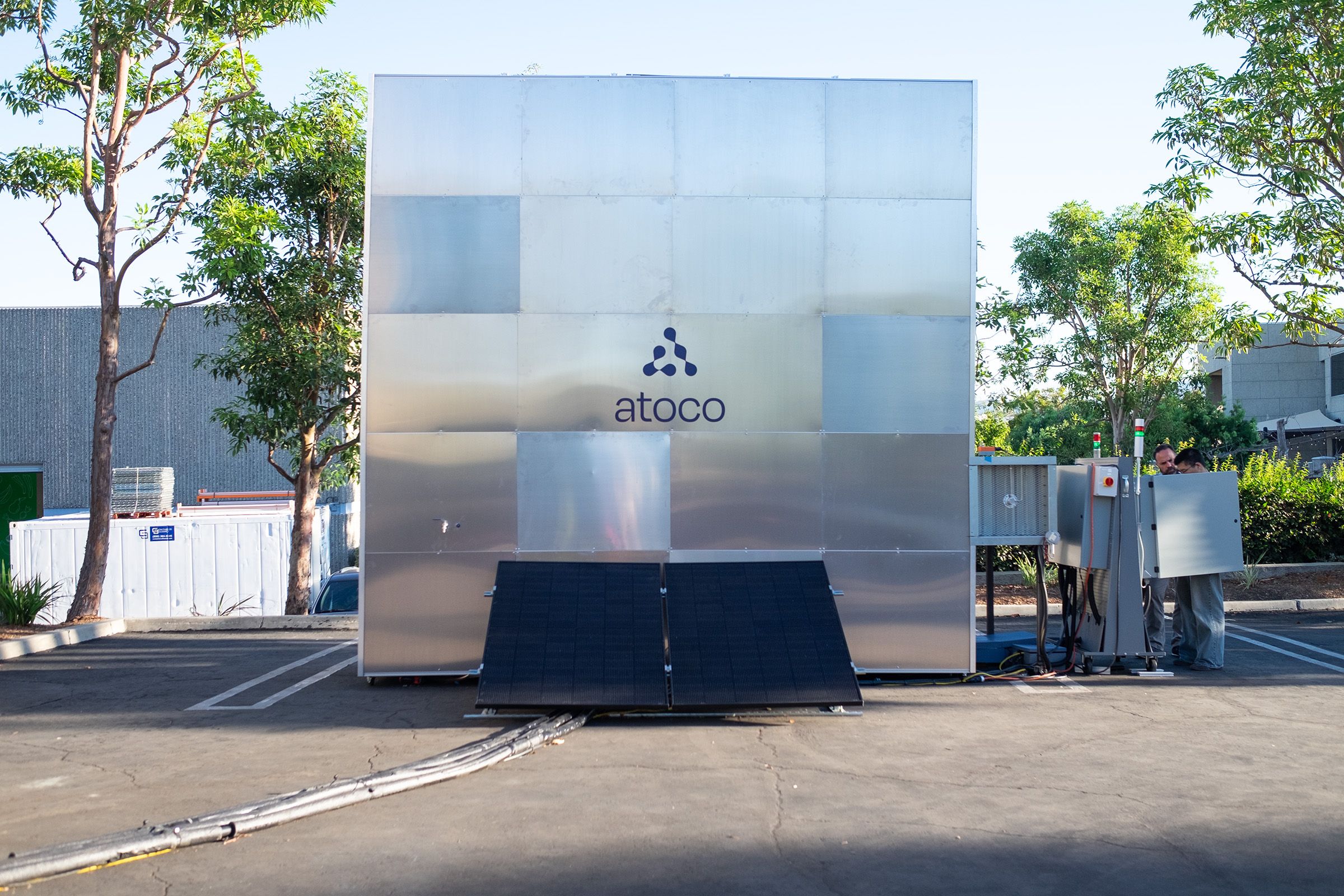
The startup's machine, housed in a 20-foot-tall, metal-clad structure in the parking lot of the company's headquarters, successfully demonstrated its capabilities. The MOFs within the device can generate up to 300 liters of water per day, which is equivalent to distilled water. Although the water is not available for legal reasons, Taha confirms that it meets the same quality standards as distilled water, as the MOFs do not capture air pollution.
Written by urgent.news from Wired's reporting — not their text. Machine-written — may contain errors; check the original before relying on it.
This story
This is one outlet's version. Read the fullest account.