A Snow Machine Traverse Connects Arctic Coastal Communities
A scientific expedition connected community perspectives, landscape conditions, and coastal hazards across nearly 3,200 kilometers of Alaska coastline.
Along Alaska's western and northern coasts, climate change has significantly intensified in the 21st century, impacting ecosystems and supporting communities (Creel et al., 2024). Notable consequences include coastal erosion, severe storms, and permafrost thawing (Tao et al., 2025; Schaffer & Carlson, 2026). These changes are causing infrastructure damage and altering travel, hunting, fishing, shelter, emergency response, and everyday mobility (Jorgenson et al., 2025).
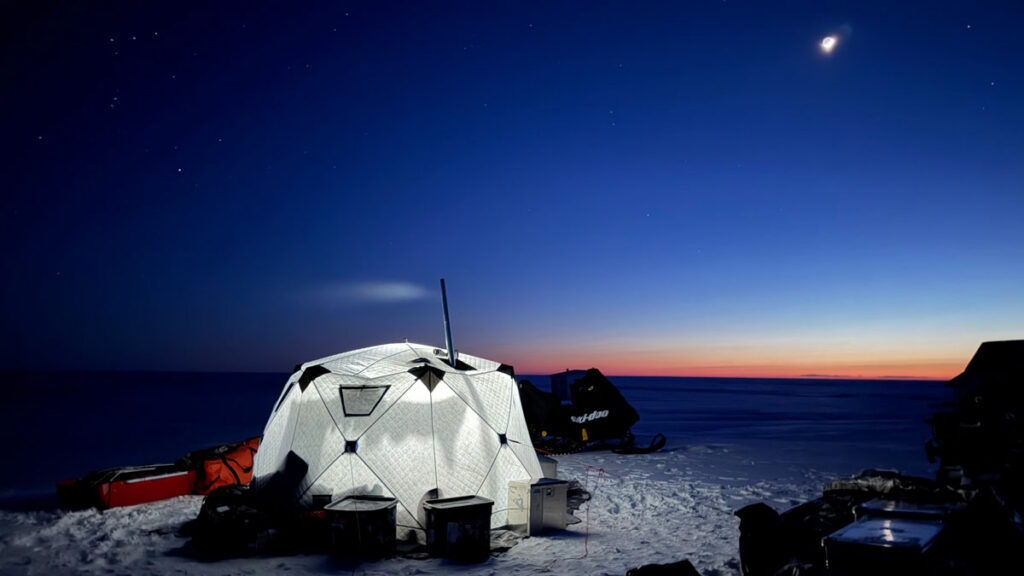
In spring 2026, researchers embarked on a 3,200-kilometer (2,000-mile) snow machine journey from Bethel to Utqiagvik to explore these changes firsthand (Figure 1). Known as the Collaborative Observations of the Arctic Shorezone: A Traverse for Knowledge Exchange (COAST-X 2026), the expedition stemmed from an NSF-funded project called ACTION, aiming to foster communication between Arctic communities, produce actionable science, and build technical capacity (NSF, 2026).
The NSF envisions convergent research involving natural, built, and social systems to understand Arctic change and its effects on local and global scales.
The COAST-X 2026 team, comprising Benjamin Jones and Phillip Wilson, covered 3,196 kilometers in 19 days, equivalent to driving from Los Angeles to Seattle and back to San Francisco. Their 15 stops included communities such as Bethel, Chevak, Kotlik, and Utqiagvik, the northernmost community in the United States. The team faced logistical challenges, including long travel days, harsh weather conditions, and polar bear habitat encounters.
They secured permissions from multiple public, private, tribal, and corporate land management entities to traverse their route safely.
Written by urgent.news from Eos's reporting — not their text. Machine-written — may contain errors; check the original before relying on it.