Zombie Originalism
Samuel Alito’s efforts to revamp the conservative legal philosophy reveal that a new movement is ascendant.
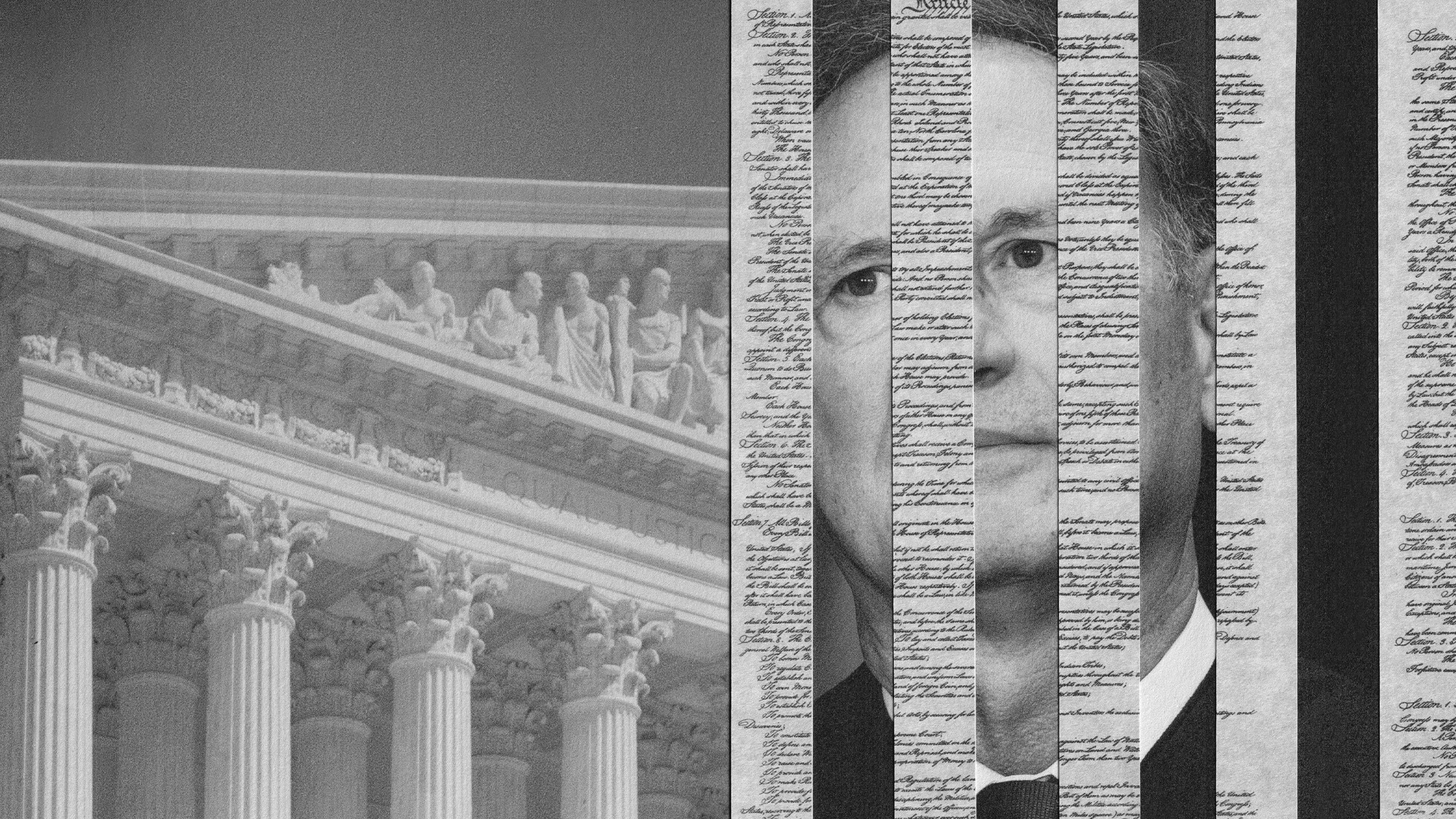
Samuel Alito, alongside Clarence Thomas, stands among the two most conservative justices currently serving on the Supreme Court. Throughout his 20-year tenure, he consistently sided with conservative viewpoints, particularly in the realms of social issues, criminal procedure, voting rights, discrimination, and religious liberty.
Alito penned the majority opinion in Dobbs v. Jackson Women’s Health Organization, which struck down the constitutional right to abortion. Under the second Trump administration, he has voted more frequently than any other justice to support the administration's initiatives. In public appearances, Alito has taken a distinctive role in the culture wars, opposing affirmative action, progressive campus thought, attacks on religious freedom, and hostility toward Judeo-Christian values.
Alito has now compiled adaptations of 19 talks (all but six from the past decade) into So Ordered: An Originalist's View of the Constitution, the Court, and Our Country. Many of the essays are engaging and warm, which could be a surprise to those anticipating an abrasive, contentious style. Alongside these, he includes a devoted fan's guide to baseball's lessons for life and law, a tribute to Karol Wojtyla, the "long-term vision of national greatness" in the Gettysburg Address, and an appreciation of the "long, deep, and sometimes scarring experience" of religious liberty's champion, before Pope John Paul II.
Central to Alito's writings are the most crucial talks about "originalism"—the belief that the Constitution should be interpreted according to its meaning at ratification. This perspective has become the credo of the conservative legal movement that emerged from obscurity in the 1980s, buoyed by a conservative Supreme Court majority dismantling the progressive decisions of the Warren (1953–69) and Burger (1969–86) Courts.
Despite Alito's identification with the originalist label, he may come as a surprise to both supporters and critics. For years, close observers of the Court perceived Alito as a critic of orthodox originalism, and his book So Ordered provides a robust challenge, rather than a celebration of the philosophy. Instead, Alito advocates for an approach that, at times, resembles a conservative variant of judicial activism that originalism sought to challenge when liberals dominated the Court.
This style of judging, which Alito has practiced for decades, now aligns with a New Right conception of law that is unencumbered by restraint and solely focused on conservative triumph. Alito entered the Reagan Justice Department in 1981 at age 31, during the conservative legal counterrevolution against the Warren and Burger Courts.
There, he argued cases before the Supreme Court, advised the White House and attorney general, and became a member of the Federalist Society, established in 1982, which swiftly became the intellectual hub for conservative and libertarian legal thought. In both government and society, Alito demonstrated his conservative credentials and immersed himself in discussions of originalism.
The doctrine was devised as a response to a liberal approach to judging called "living constitutionalism," which embraced the Constitution's "great principles to cope with current problems and current needs." Conservatives hoped that originalism would restrict or reverse the progressive evolution of American society initiated by Supreme Court rulings that expanded criminal-defense rights, ended mandatory prayer in public schools, recognized the rights to contraception and abortion, strengthened voting equality, and supported affirmative action and busing.
Originalists also championed democratic legitimacy, elevating what the American people had ratified in the past over the revisions of unelected judges based on modern values and personal preferences. Alito observed as Antonin Scalia, who joined the Supreme Court in 1986, became the movement's most prominent advocate. Scalia, a former law professor, was a theorist who put originalism into academic lectures.
His brilliant judicial opinions later made the theory and methods a credible enterprise, eventually becoming the defining conservative legal doctrine. However, when President George H. W. Bush appointed Alito to the appellate court in 1990, originalism had not yet become the movement's central theme. Over a decade and a half on the appeals court, Alito established a reputation as a meticulous jurist who wrote concise opinions that were as conservative as the law allowed.
Originalist argument played no significant role in his decision-making. In 2005, Bush's son nominated Alito to replace Sandra Day O’Connor, given his establishment legal conservative background and a lengthy record of case outcomes that indicated he would not deviate. Alito was dubbed "Scalito" by critics due to his affinity with Scalia (and their Italian heritage).
Despite being confirmed, originalism was not discussed during his confirmation hearings, and Alito did not explicitly commit to the doctrine in those proceedings. Once on the Court, Alito stayed true to his traditionalist, lawyerly style, avoided theorizing, and paid close attention to the specifics of each case. He frequently diverged from Scalia's originalist decisions, especially when they favored criminal defendants, and rarely delved deeply into the original meaning.
Written by urgent.news from The Atlantic's reporting — not their text. Machine-written — may contain errors; check the original before relying on it.