Supercomputing researchers document evolution of AI hardware
An ongoing survey tracks the latest AI accelerator systems to keep hardware relevant for Lincoln Laboratory staff and sponsors.
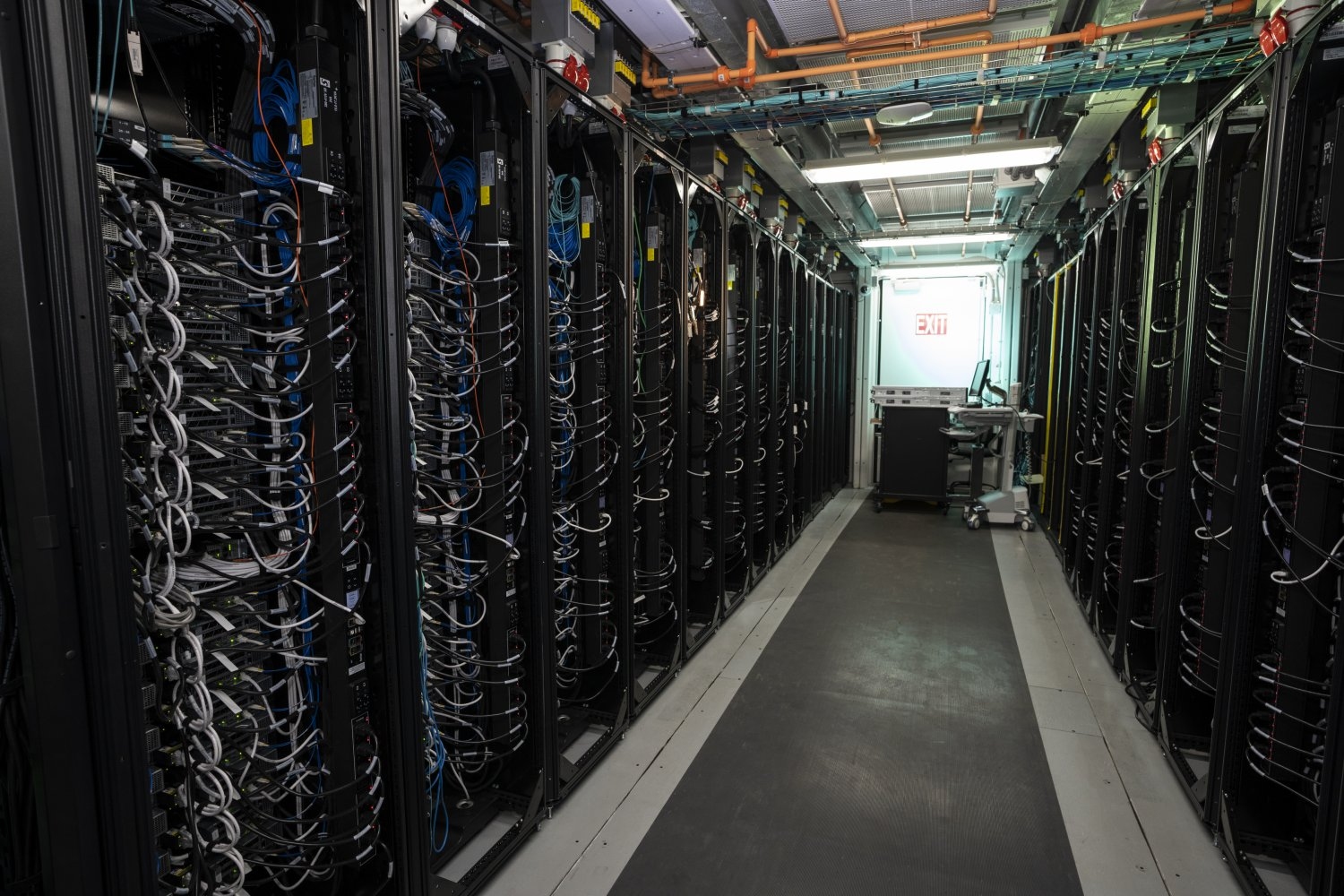
As artificial intelligence continues to revolutionize various industries and national security, it is crucial to comprehend the advancements in AI hardware capabilities. AI accelerators, specialized systems designed to enhance neural networks, deep learning, and machine learning, have been a significant focus of development for over a decade.
The Lincoln AI Computing Survey (LAICS), initiated by researchers at the Lincoln Laboratory Supercomputing Center (LLSC) in 2018, aims to document and compare these accelerators. Over six papers, LAICS has provided insights into commercial AI accelerators, their peak performance, and peak power. The team, led by Albert Reuther, includes members from LLSC and collaborates with various divisions to understand the role of accelerators in research and development.
LAICS began due to a surge in research AI accelerators and commercial announcements around eight years ago. Accelerators can take various forms, such as CPUs, GPUs, ASICs, FPGAs, and dataflow accelerators, each with unique capabilities and design optimizations. The LAICS team focuses on comparing accelerators based on peak performance and power, as well as their physical layout on a chip, card, or system.
Publicly available data is used for comparisons, despite some companies' reluctance to disclose performance and power figures. Daily searches for new technical press articles, company announcements, and industry presentations help keep the team updated on the latest developments. LAICS continues to evolve, with each new paper exploring a different aspect of the field.
For instance, previous papers have investigated performance increases, architectural choices, and the impact of parallel performance on system efficiency. Reuther anticipates continuing the survey, noting that six new startups have recently announced their first AI accelerators. AI hardware and technology are hot topics, and LAICS plays a vital role as an unbiased technical advisor for Lincoln Laboratory, helping sponsors and government colleagues make informed decisions about AI accelerators and their applications.
The full set of papers and datasets, along with useful resources, can be accessed at the provided link.
Written by urgent.news from MIT News AI's reporting — not their text. Machine-written — may contain errors; check the original before relying on it.
This story
This is one outlet's version. Read the fullest account.