Supercomputing researchers document evolution of AI hardware
An ongoing survey tracks the latest AI accelerator systems to keep hardware relevant for Lincoln Laboratory staff and sponsors.
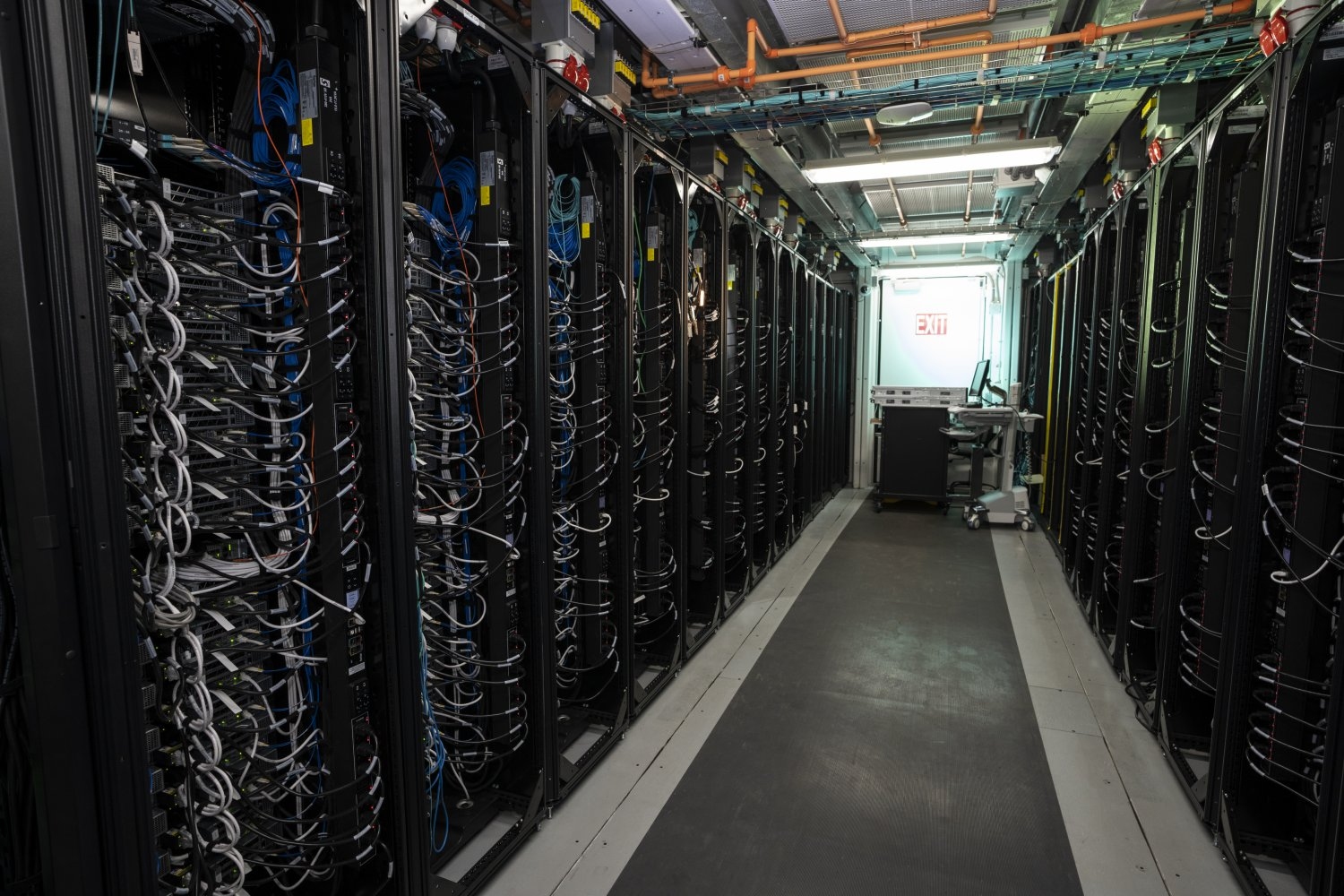
Artificial intelligence is revolutionizing various industries and national security, making it crucial to comprehend the latest hardware capabilities. AI accelerators, specialized systems designed to expedite tasks such as neural networks, deep learning, and machine learning, have seen significant advancements over the past decade. The Lincoln Laboratory Supercomputing Center's (LLSC) Lincoln AI Computing Survey (LAICS) has been documenting these developments since 2018.
LAICS, led by Albert Reuther, a staff member at LLSC, surveys current commercial AI accelerators and compares their peak performance and power. The team, which includes Michael Jones, Peter Michaleas, Jeremy Kepner, and Vijay Gadepally, examines various types of accelerators, including CPUs, GPUs, ASICs, FPGAs, and dataflow accelerators.
Each accelerator type offers distinct capabilities, with some being more flexible than others. Factors such as design and configuration can influence efficiency and performance across these accelerators.
Over the survey's six papers, LAICS has expanded from studying 57 accelerators in its initial publication to analyzing over 120 accelerators in the latest one. Researchers use peak performance and power as primary metrics for comparison, further categorizing accelerators based on their placement on a chip, card, or system. Public sources are the primary data collection method, although some companies keep performance and power data private.
Reuther notes the continuous introduction of new AI accelerators, with up to 10 startups each year announcing innovative products. The LAICS team explores performance increases, attributing them to smaller, denser transistor designs and lower numerical precision in calculations. The latest paper examines architectural choices, such as additional cores per processor or parallel performance, to understand their impact on the system.
Looking ahead, Reuther plans to continue the survey, acknowledging the increasing importance of AI and its hardware. The surveys have been invaluable for Lincoln Laboratory's sponsors and government colleagues in making informed decisions about AI accelerators, benefiting both external partners and LLSC users. The full set of papers and datasets are available for reference.
Written by urgent.news from MIT News Research's reporting — not their text. Machine-written — may contain errors; check the original before relying on it.