Middle East war sharpens focus on Asean energy security plans
MANILA: Southeast Asian energy ministers meeting in Manila this week face the prospect of a prolonged Middle East war that has exposed the region’s vulnerabilities to imported energy.
Southeast Asian energy ministers convening in Manila this week are under pressure to address the implications of a prolonged Middle East conflict. The US-Israeli war against Iran has exposed the region's susceptibility to imported energy, with ASEAN importing more than half of its refining crude from the Middle East at a time when oil prices hover around $100 per barrel.
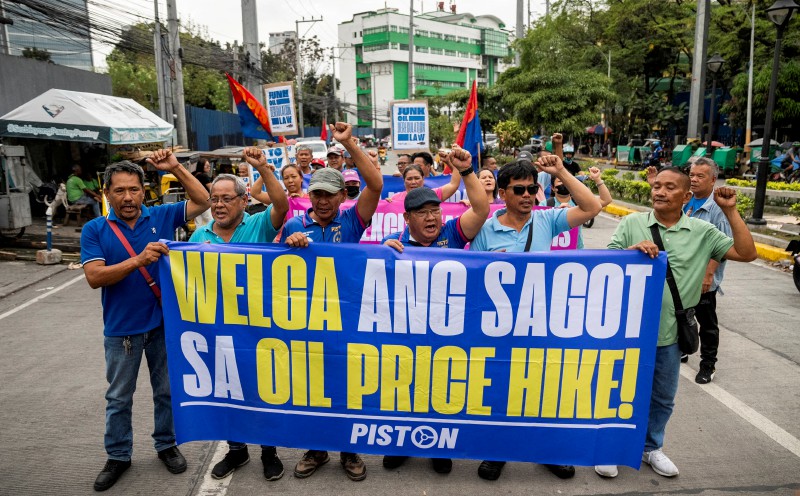
The crisis has heightened concerns about energy security, with Philippine Energy Undersecretary Felix Fuentebella noting that energy security has transitioned from a technical issue to a top priority for ASEAN ministers and leaders. The conflict has resulted in higher fuel costs for households and transport workers, with a jeepney driver in Manila reporting a surge in his fuel expenses.
The Asean Centre for Energy has warned that a severe disruption to Middle East supplies could jeopardize oil volumes equivalent to nearly 28% of ASEAN's final oil consumption. However, the region's limited storage capacity and inventories pose challenges to implementing the proposed Petroleum Security Agreement (APSA). Energy Secretary Sharon Garin has revealed that the Philippines is considering regional fuel-stockpiling arrangements and may host future storage projects.
Nevertheless, analysts emphasize that these measures are primarily aimed at preparing for future crises rather than directly addressing the current situation.
Ministers are also expected to deliberate on strategies to diminish long-term dependence on imported fuels. Renewable energy, electric vehicles, and energy efficiency are anticipated to be focal points for discussion. The International Energy Agency projects that Southeast Asia's energy import bill could escalate from over $80 billion in 2024 to approximately $245 billion by 2035 without substantial changes.
To mitigate oil demand and minimize exposure to volatile fuel imports, the IEA highlights that electrification, including electric vehicles and biofuels, along with cross-border integration through the Asean Power Grid, would require about $27 billion in investment by 2040. The consensus among experts is to leverage the present crisis as a catalyst to reduce exposure and bolster energy resilience.
Written by urgent.news from New Straits Times's reporting — not their text. Machine-written — may contain errors; check the original before relying on it.
This story
This is one outlet's version. Read the fullest account.
- World Bank says Middle East economy to contract 2.1% in 2026 on Iran war thenationalnews.com
- Markets ablaze as Middle East conflict continues hellenicshippingnews.com
- Oil prices ease as Middle East exports recover towards pre-war levels thevibes.com
- Middle East war sharpens focus on Asean energy security plans bangkokpost.com
- Banks weather Middle East shock with asset quality intact nst.com.my
- Middle East war sharpens focus on ASEAN energy security plans channelnewsasia.com
- Middle East war sharpens focus on ASEAN energy security plans thejakartapost.com
- Middle East oil flows of around 14 million barrels a day help ease price pressure: Vitol CEO businesstimes.com.sg