Making global public health more proactive with Google Earth AI
Google is helping health leaders overcome reporting lags, forecast disease outbreaks, and deliver care to vulnerable communities.

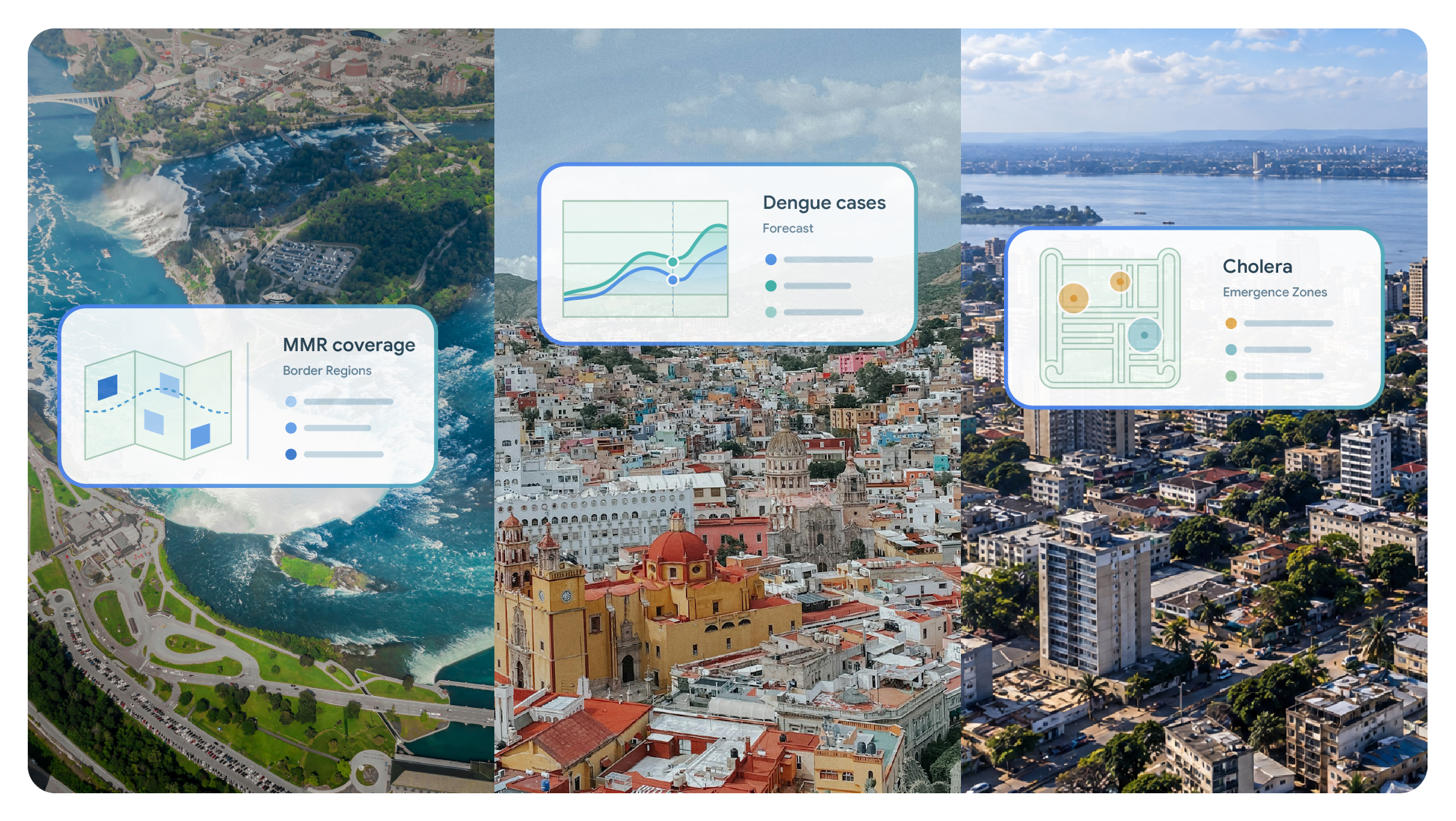
Google is leveraging artificial intelligence and satellite imagery to enhance global public health efforts. The technology enables health officials to predict and prevent disease outbreaks more swiftly and accurately than traditional methods. By mapping at-risk populations and forecasting health trends, these tools provide valuable insights to researchers and professionals in the field.
Google Earth AI allows teams to quickly identify remote communities at risk of diseases like Ebola, often within minutes. This proactive approach helps medical professionals and researchers protect people before health crises escalate. Recognizing the intricate relationship between a community's health and its geographic factors, such as climate patterns, infrastructure, and lifestyle, the technology aims to close geographic data gaps and streamline reporting processes.
Google has developed a series of tools to support this approach. Researchers and health professionals can request free access to data insights or apply for Google Earth credits to support their work. In practical applications, these technologies have been used during the Ebola outbreak in the Democratic Republic of Congo (DRC). World Health Organization (WHO) and local partners utilized these tools to improve their response efforts.
Google's Population Dynamics Foundation Model (PDFM) integrates environmental signals, satellite imagery, mobility data, and machine learning models, such as Google's AlphaEarth Foundations and PDFM, to create a dynamic, high-resolution view of communities. This comprehensive dataset offers valuable insights into population health trends, enabling researchers to complement existing health information and address health challenges more effectively.
To further support public health infrastructure, Google.org has provided funding to the National Institute of Biomedical Research in the DRC to modernize local testing and disease surveillance. By combining planetary intelligence with local expertise, Google, WHO, and other global health partners are working together to develop proactive, data-driven tools that can better protect communities worldwide.
Written by urgent.news from Google Blog's reporting — not their text. Machine-written — may contain errors; check the original before relying on it.