Landesweiter Aktionstag: Schülerproteste in Frankreich erreichen neuen Höhepunkt
Schüler, Studenten, Eltern und Gewerkschaften – die Proteste für bessere Schulen weiten sich aus. Warum der Innenminister den Einsatz von Granaten und Gummigeschossen verteidigt.
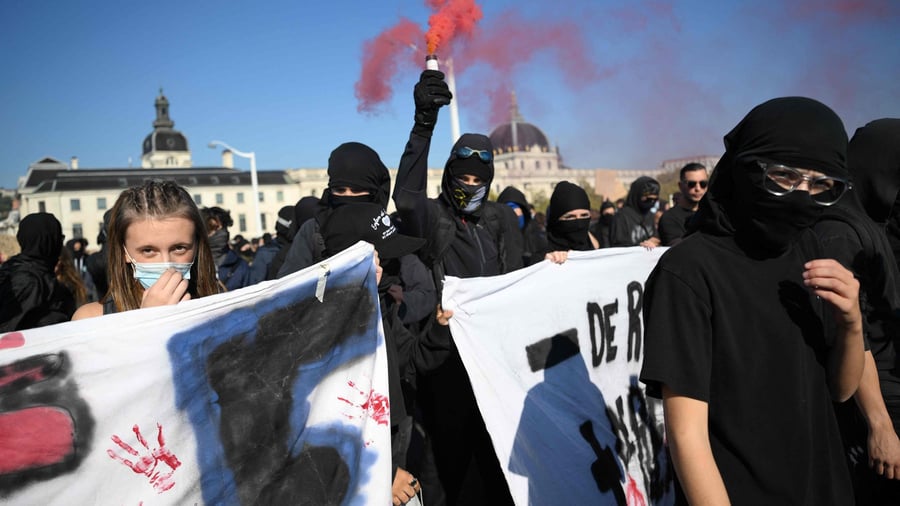
Protests by French students demanding better school conditions reached a new peak on a national action day. Blockades occurred at numerous gymnasiums and universities, while protests in Paris and major cities formed, with trade unions joining for the first time. Teachers and parents were present at the protests to protect their children.
Police mobilized a large contingent and confronted the demonstrators in many cities, facing accusations of excessive police force. The General Inspection of Police is investigating incidents where demonstrators were injured by officers. Gymnasiums and universities were blocked, with 1,800 schools closed and 90% of universities affected.
The Ministry of Education reported that 150,000 to 200,000 demonstrators were expected, according to BFMTV, citing the Interior Ministry. Protests in Paris, expected to have 20,000 to 40,000 participants, were one of many across cities like Lyon, Lille, Marseille, Toulouse, Bordeaux, Rennes, and Strasbourg. Demonstrators and police clashed beforehand, with protesters throwing objects and fireworks, and officers deploying water cannons and tear gas.
Expressions of outrage were evident among several politicians over the police's heavy-handed approach to the largely youthful demonstrators. Interior Minister Laurent Nuñez justified the use of explosives to disperse gatherings and rubber bullets at demonstrations, stating that such weapons were "proportional" if riots occurred.
"This is not repression," Nuñez said in an interview with France Inter. The protests that began a week ago in schools across Paris revolve around issues students have long complained about, such as excessive missed classes, insufficient substitute teachers, deteriorating school buildings, and a need for improved learning conditions.
Many young people feel marginalized in disadvantaged neighborhoods and believe their concerns are not being taken seriously. Prime Minister Sébastien Lecornu called on ministries on Sunday evening to initiate concrete improvements in schools and listen to students' justified concerns. Minister of Education Édouard Geffray launched an online platform on Monday where students can express their demands and problems.
However, the students are not satisfied. "We cannot understand this repression. The overwhelming majority of students condemn violence and property damage. We are pacifists," Iris and Louane, two students from Rennes, told a reporter from the newspaper "Le Monde". "We simply seek for our demands to be heard. The scale of these demonstrations will demonstrate how widely these demands are shared."
These massive protests caught France off guard seven months before a presidential election. The government, already grappling with a austerity budget, now aims to prevent the spread of the unrest to other areas, such as universities. Concerns exist that protests may escalate due to high fuel prices and living costs, potentially leading to a second Yellow Vest protest.
Written by urgent.news from Handelsblatt's reporting — not their text. Machine-written — may contain errors; check the original before relying on it.