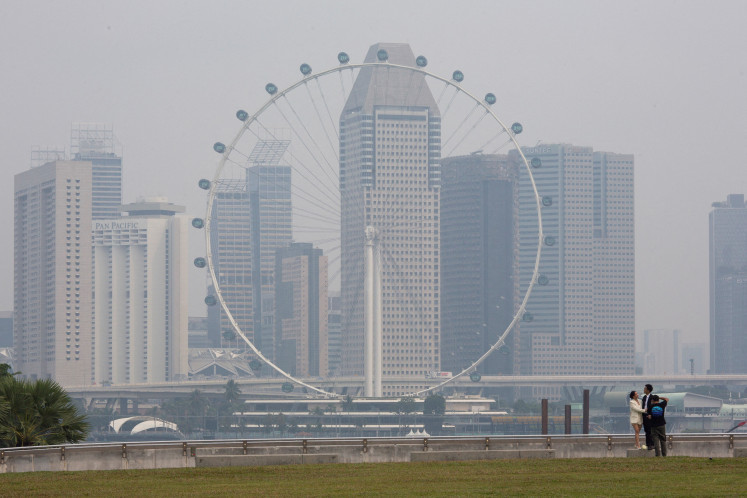
Breathing gets harder as haze blankets Southeast Asia
More than two months into haze crisis, worsening air quality and mounting health concerns are fueling frustration among residents and renewed calls for authorities to hold those responsible for the fires accountable.
The International Energy Agency (IEA) released a report on Tuesday highlighting the escalating risks to Southeast Asia's energy security due to surging electricity demand, which outpaces the region's ability to develop solutions. Southeast Asia exhibits an insatiable appetite for energy, but the current situation is strained as energy costs escalate, particularly due to the ongoing Iran war.
The fast-growing economies in the region require additional electricity to fuel data centers, and to maintain comfortable temperatures in homes and businesses. To enhance regional energy security, the report suggests sharing electricity among Southeast Asian nations and diversifying their energy sources. However, countries confront numerous obstacles, including territorial disputes with neighbors and diverse national energy market structures, as per analysts.
The IEA's executive director, Fatih Birol, emphasized that Southeast Asia, a dynamic economic region, is grappling with increasing energy needs amidst an unpredictable global energy scenario. With the Iran conflict now in its seventh month, the IEA predicts that energy security concerns within the Association of Southeast Asian Nations (ASEAN) will escalate as electricity demand outpaces power generation growth.
Rapid industrialization, urbanization, and rising living standards are driving Southeast Asia's energy demand, which has increased by nearly 30% per person over the past decade. The IEA projects that demand will grow at an average annual rate of 5.4% between now and 2030, primarily driven by the demand for cooling, data centers, and industrial activities.
The crisis stemming from the closure of the Strait of Hormuz has prompted a wake-up call for Southeast Asia, which has experienced fuel shortages and escalating costs. Unlike their more affluent East Asian counterparts, Japan and South Korea, Southeast Asian countries have limited energy reserves and fewer resources to cope with the crisis.
Some countries resorted to energy triage, conserving power while increasing coal consumption and purchasing Russian crude oil. As the conflict persists, new policies promoting cleaner power, such as nuclear energy agreements, solar power subsidies, and incentives for electric vehicle purchases, have emerged. These measures could contribute to diversifying the region's energy sector.
Amy Kong of Zero Carbon Analytics noted that the Iran war has provided governments with a reality check. If Southeast Asia aims to bolster its energy security, nations should continue to diversify their energy supply sources and routes, leverage domestically available resources, and expedite electrification alongside efficiency improvements.
Putra Adhiguna of the Energy Shift Institute in Jakarta stressed that Southeast Asia stands at a critical juncture, requiring more significant transformations in how the region embraces energy transition and diversifies its conventional energy sources.
Written by urgent.news from South China Morning Post's reporting — not their text. Machine-written — may contain errors; check the original before relying on it.
This story
This is one outlet's version. Read the fullest account.
- Southeast Asia's energy security at a crossroads as power demand surges, IEA warns channelnewsasia.com
- Rising electricity needs put Southeast Asia’s energy security at risk: report scmp.com
- South Asia growth holds firm, but energy, weather risks loom freemalaysiatoday.com
- Southeast Asia's haze crisis: Have lessons been learned? dw.com
- Southeast Asia’s energy chiefs meet against backdrop of Iran war aljazeera.com
- Rising electricity demand deepens Southeast Asia’s energy security concerns, IEA reports says winnipegfreepress.com