Impossibly fast-moving stars are revealing the Milky Way’s mysterious heart
Near the centre of the Milky Way, a swarm of stars hurtles around a supermassive black hole at extraordinary speeds. Studying them could be the key to understanding our galaxy
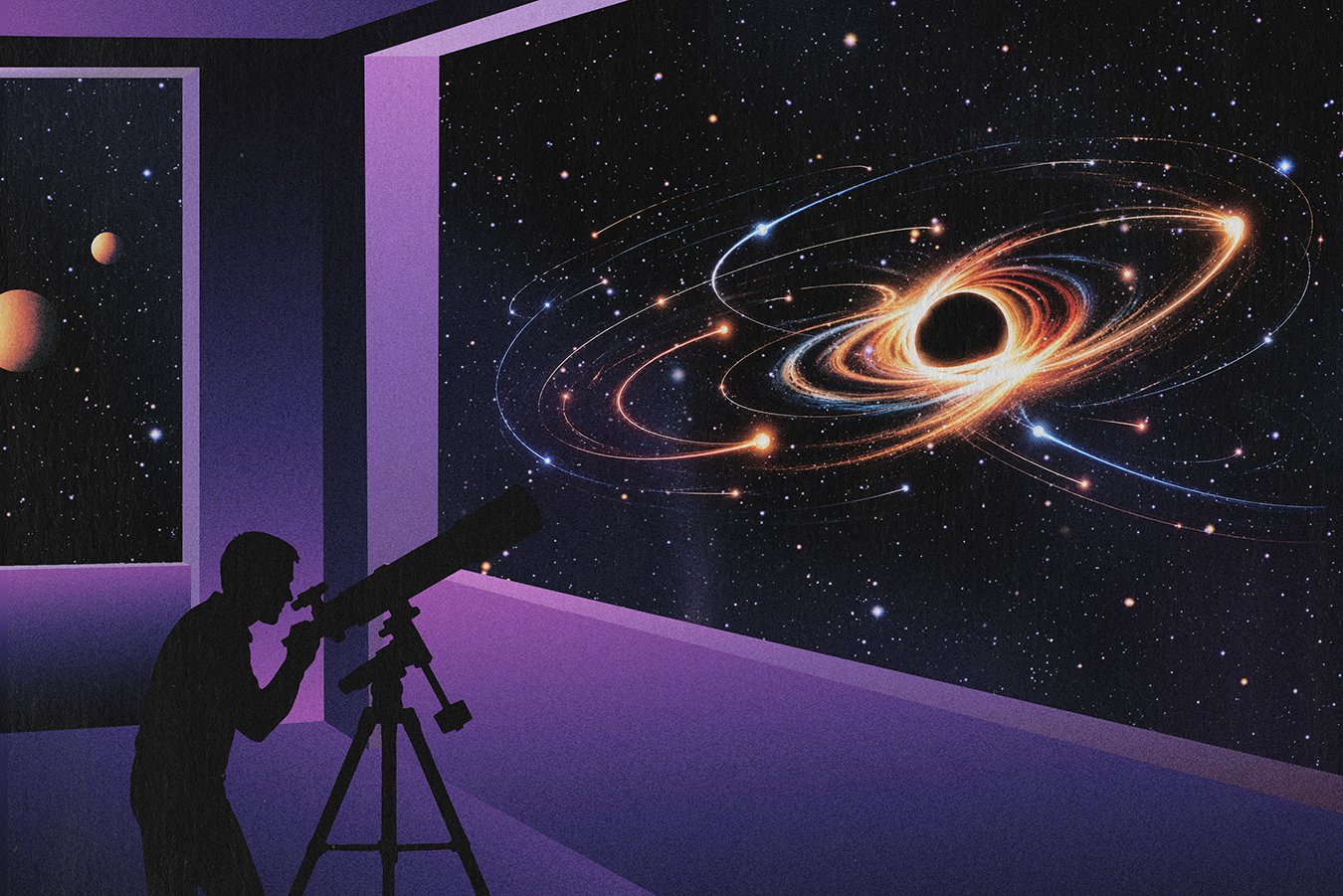
Astonishingly fast-moving stars are providing clues to the enigmatic heart of the Milky Way galaxy. The star known as S301 is traveling over 8 percent the speed of light, making it a highly unusual object. However, its most perplexing aspect is that it shouldn't exist at all, as it is part of a group of stars that form a "superhighway" swirling around the supermassive black hole at the galaxy's center.
Black holes typically tear apart the gas and dust from which stars form, yet these superfast stars are present and observable. The Milky Way's central region is so bright and crowded that, for decades, astronomers could barely discern any activity there. However, S301 and similar stars are changing this situation rapidly, offering new insights into the mysterious celestial phenomena.
The center of our galaxy is located about 26,500 light years from Earth, far into the galactic suburbs. Due to the brightness and compactness of the region, it is extremely difficult to observe individual stars. This challenge is compounded by Earth's atmosphere, which blurs the view, making tiny objects especially hard to resolve. Additionally, the central region is shrouded in massive clouds of dust and gas, which further obscures the stars.
S301 and its brethren were only recently seen through the haze by astronomers, thanks to advancements like adaptive optics and interferometry. These techniques allow telescopes to sharpen their view despite the atmospheric disturbance, enabling the observation of the ultra-close stars near the galactic center.
The discovery of these fast-moving stars has proven invaluable in understanding the properties of the supermassive black hole at the heart of the Milky Way, as well as the nature of objects lurking around it. The research has also allowed scientists to test gravity in one of the universe's most extreme environments.
Written by urgent.news from New Scientist's reporting — not their text. Machine-written — may contain errors; check the original before relying on it.