How Ukrainian AI-guided robotic turrets down Russian jet drones with shrapnel clouds
Robotic AI turrets destroy Russian jet drones on their final approach by creating shrapnel clouds, Air Force reserve officer and defense industry expert Anatoliy Khrapchynskyi told NV on Oct. 6.
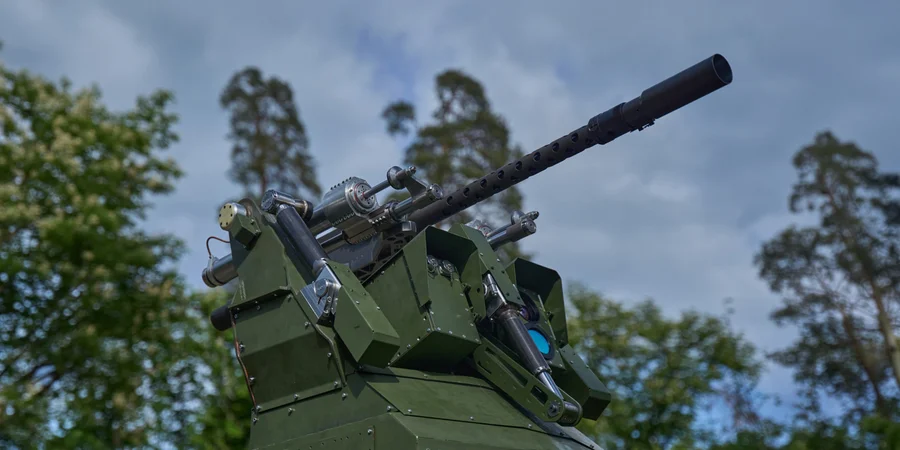
Anatoliy Khrapchynskyi, a reserve officer and defense industry expert, explained to NV on October 6 how Ukrainian AI-guided robotic turrets are effectively downing Russian jet drones on their final approach. These turrets create shrapnel clouds that destroy the drones when they fly at low altitude, thanks to a secondary optical targeting system that computes intercept coordinates along the drone's projected trajectory.
Khrapchynskyi emphasized that robotic gun turrets are a crucial component of Ukraine's air defense network, working alongside surface-to-air and air-to-air missiles, mobile anti-aircraft artillery, and robotic systems. He highlighted the effectiveness of systems such as Skynex and Gepard, even against high-speed jet-powered Shaheds.
Khrapchynskyi noted that these turrets are strategically positioned near critical infrastructure and civilian utilities, engaging incoming strike drones as they descend or loiter to improve terminal guidance accuracy. The reduction in speed by the enemy drone is a deliberate tactic to allow the turret to engage at the optimal moment.
While the turrets do cause falling wreckage, the two-wall rule and warnings against lingering near windows aim to minimize civilian casualties. Despite the potential for debris to impact residential structures, the turrets fire strictly into the air at moving aerial targets. President Zelenskyy announced the deployment of at least 12 heavy 50-caliber robotic turrets in Kyiv, with more slated for installation across Kyiv Oblast, and Ukrainian air defenses are already actively taking down advanced Russian jet-powered UAVs, including the Geran-5, using AI-driven robotic turrets.
Written by urgent.news from New Voice of Ukraine's reporting — not their text. Machine-written — may contain errors; check the original before relying on it.