How a Soviet physicist’s 1960 idea led to the birth of neutrino astronomy and this year’s Nobel Prize in physics
The 2026 Nobel Prize in Physics was awarded to Belgian physicist Francis Halzen for his “decisive contribution to the IceCube neutrino observatory and the discovery of high-energy neutrinos of astrophysical origin.” Neutrinos were long considered almost impossible to detect, especially those arriving from deep space. Tracing them to their cosmic sources is even harder here on Earth because the…
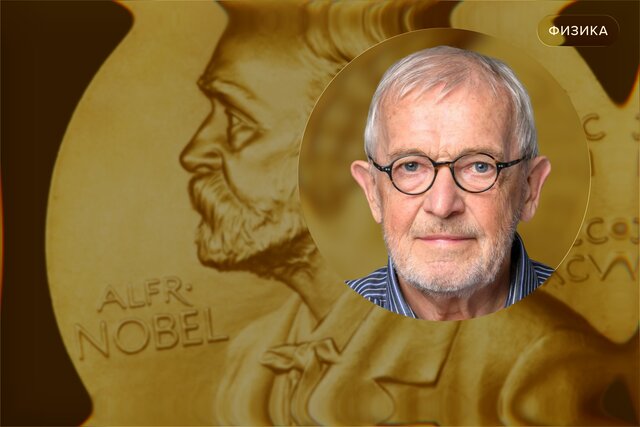
In 2026, the Nobel Prize in Physics was awarded to Francis Halzen for his "decisive contribution to the IceCube neutrino observatory and the discovery of high-energy neutrinos of astrophysical origin." Neutrinos, notoriously difficult to detect, especially those originating from deep space, were long considered almost impossible to detect.
The key to their detection lies in a project conceived in the 1960s by Soviet physicist Moisey Markov, and brought to fruition by Halzen's efforts over the past decades: IceCube, an observatory hidden deep within the Antarctic ice. Studying these particles can provide valuable insights into the cosmos.
IceCube consists of 5,160 detectors suspended from 86 separate cables, all submerged at a depth of approximately 1.5 kilometers beneath the surface. The data collected from these detectors is transmitted via satellite for analysis. In 2021, physicists Dmitry Naumov and Igor Ivanov of the Joint Institute for Nuclear Research's Laboratory of Nuclear Problems provided an in-depth explanation of neutrinos and the methods scientists use to search for cosmic neutrinos in Lake Baikal.
This project has roots in the Soviet Union, with the USSR beginning construction of a similar neutrino telescope in the early 1980s. Markov proposed the idea of searching for neutrinos in large bodies of water or ice at a conference in Rochester in 1960, a concept that was immediately recognized for its potential and embraced by physicists worldwide.
Halzen himself recalled this moment, remembering Markov alongside another prominent neutrino physicist. The neutrino detector, known as Cherenkov detector, operates by detecting particles that pass through the Earth, with neutrinos being the only particles that do so. When a neutrino collides with a proton, causing a nuclear reaction, the water around the collision site emits a brief flash of blue light, which can be detected by the observatory's sensors.
Written by urgent.news from Meduza (English)'s reporting — not their text. Machine-written — may contain errors; check the original before relying on it.