Commentary: As the planet warms, cities like Bangkok could be inundated by more deadly floods
The fingerprint of climate change is detectable in global extreme rainfall trends, says a researcher.
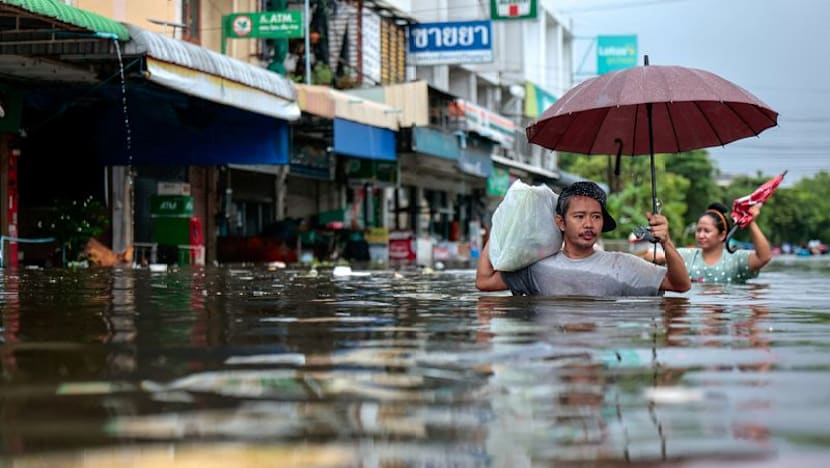
Southeast Asia's humid climate often brings afternoon thunderstorms, with cities like Bangkok and Singapore regularly experiencing heavy downpours. Bangkok typically receives about 344 millimeters of rain in September, spread across 18 rainy days. However, over the last week, the city received roughly 300 millimeters of rain in just 48 hours, far exceeding its usual pattern.
This caused authorities to declare Bangkok a disaster zone, as stagnant water flooded the city, leading to at least 31 deaths and thousands of evacuations.
The heavy rain was caused by a low-pressure system that remained over the Bangkok region for about three days. Low-pressure systems cause air to rise, resulting in moisture condensing into rain clouds. If such a system becomes stagnant, it can dump heavy rain over the same location for days, leading to severe flooding. The Gulf of Thailand's warm waters, around 30°C, provided ample moisture and energy for the storm to persist.
Bangkok has long been prone to flooding due to its location on a floodplain near the Chao Phraya River, which drains into the Gulf of Thailand. The city's flat terrain offers no natural topography to slow down or redirect vast volumes of water. Bangkok has also been sinking for decades due to extensive groundwater extraction, which caused the ground beneath the city to drop by more than 10 centimeters in 1988 alone.
This sinking is currently at a rate of 2-3 centimeters per year, but as sea levels rise, Bangkok's ability to drain floodwater into the Gulf of Thailand is further compromised.
Urbanization in Bangkok has also increased the city's vulnerability to flooding. As concrete replaces spongy soils, the ground absorbs less water during heavy rainfall. Over the past 30 years, urbanization has increased surface water runoff by 25% during bouts of extreme rainfall. Climate change is also contributing to more intense rainfall.
Global extreme rainfall trends show that extremely rainy days are getting wetter, with the heaviest rainfall day of the year increasing by 6-12 millimeters every decade in Bangkok. Research has also identified a strong increasing trend in pre-monsoon rainfall across Thailand.
While it is too early to determine the exact impact of climate change on this specific rainfall event, the atmospheric water vapor has reached a record high in August. Future rainfall is expected to be more intense due to rising global temperatures, meaning low-pressure systems when they form will likely bring more rain. Although the exact effect of climate change on stalling low-pressure systems is unknown, we can expect more intense rainfall when these systems do form.
Bangkok will likely face more extreme floods in the future due to a combination of climate, geography, and urbanization. To mitigate these risks, urban drainage systems must be designed to handle present-day extreme rainfall as well as future projections of intensifying rain. Promoting green infrastructure and permeable pavements can help reduce storm runoff and allow the ground to absorb more water.
Written by urgent.news from The Conversation AU's reporting — not their text. Machine-written — may contain errors; check the original before relying on it.
This story
This is one outlet's version. Read the fullest account.
- As the planet warms, cities like Bangkok could be increasingly inundated by deadly floods theconversation.com
- As the planet warms, cities like Bangkok could be increasingly inundated by deadly floods phys.org
- Bangkok braces for fresh chaos as possible floods threaten IMF-World Bank summit scmp.com
- Bangkok boosts flood contingency plans as delegates arrive for IMF-World Bank meetings thevibes.com