From Interstellar to Project Hail Mary: Eight space films that imagine a better future
As World Space Week celebrates humanity's achievements beyond Earth, cinema offers its own versions of where that journey might lead. Science fiction has often looked to space and found something to fear. The genre is full of abandoned ships, hostile planets, predatory aliens and futures in which humanity has carried its worst instincts beyond Earth. Yet some of the most enduring space films look…
From Interstellar to Project Hail Mary: Eight space films that imagine a better future
As World Space Week celebrates humanity's achievements beyond Earth, cinema presents its own visions of the journeys that might lie ahead. While science fiction often portrays abandoned ships, hostile planets, and predatory aliens, some of the most enduring space films focus on possibility. These stories emphasize scientific progress, cooperative problem-solving, and the potential for humanity to become more curious and humane as it explores the unknown.
Some of these films depict utopias, while others begin with environmental collapse or profound uncertainty, but they all reject the notion that humanity's future must be one of decline.
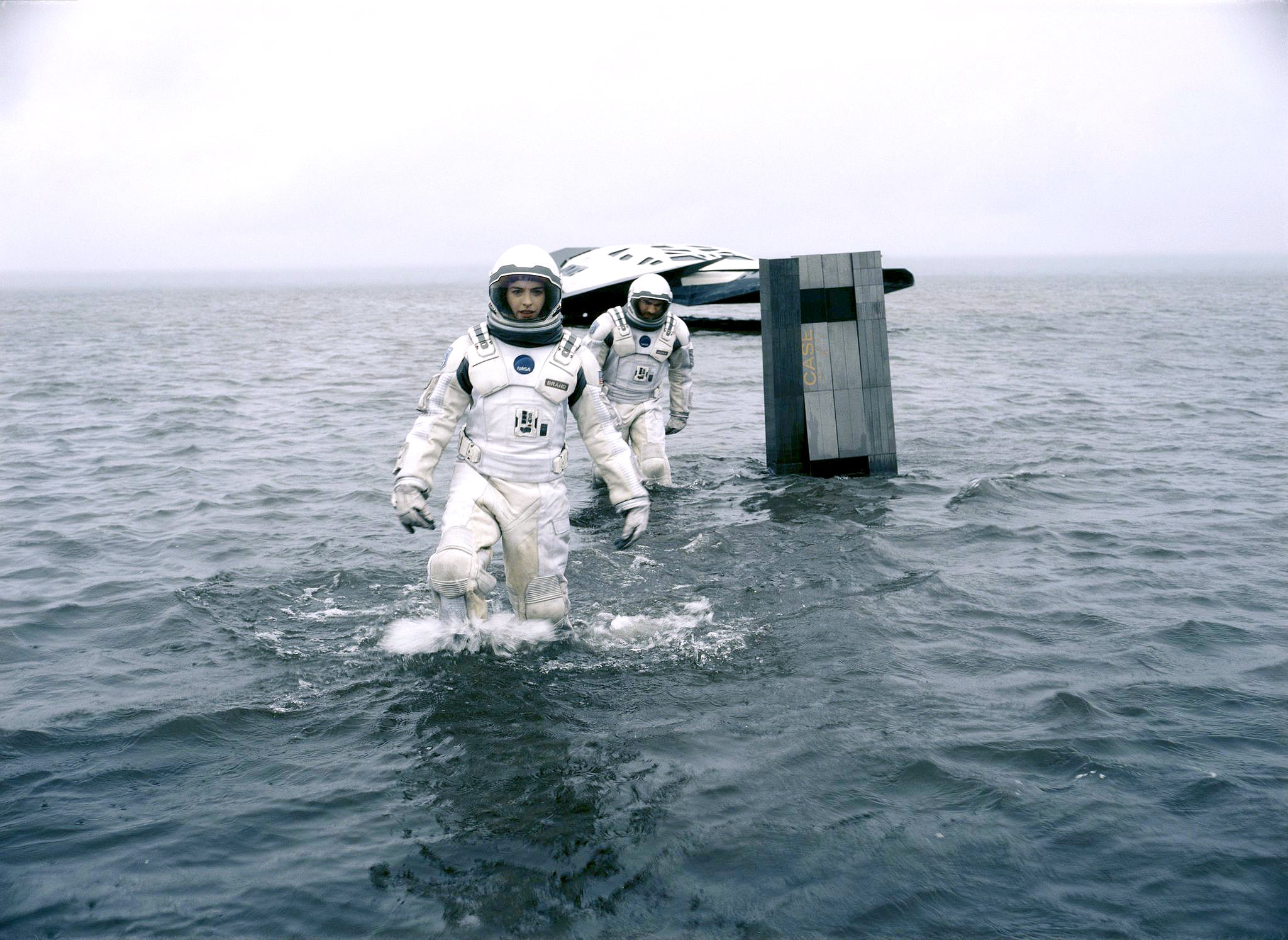
Interstellar (2014) explores a pessimistic future in which Earth's crops fail, dust storms worsen, and space exploration is no longer considered fashionable. However, the film's climax transforms its initial pessimism by showing humanity thriving aboard rotating habitats, with a new world waiting to be explored. Interstellar argues that exploration is essential, even in difficult times, as it can prevent decline from becoming permanent.
Star Trek: The Motion Picture (1979) takes a radical approach to the unknown, with the USS Enterprise dispatched to intercept a mysterious entity called V Ger. Rather than preparing for battle, the film focuses on exploration, with the camera lingering on the vastness of space separating Earth and V Ger. By the 23rd century, humanity has matured and formed a wider federation, with exploration driven by curiosity.
The film's climax reveals that what initially seemed threatening is actually something that needs to be understood, emphasizing the importance of inquiry over destruction.
The Martian (2015) tells the story of Mark Watney, stranded on Mars, whose greatest weapon is his competence. The film celebrates the joy of people being good at their jobs, with Watney calculating, growing food, and repairing equipment while NASA engineers test ideas. The eventual involvement of international partners widens the story, emphasizing that a seemingly impossible problem can be solved through collective effort. The Martian presents a hopeful future where catastrophe is met with expertise rather than panic.
Contact (1997) explores the possibility of humanity discovering it is not alone when a signal arrives from Vega. The discovery causes political, religious, and philosophical upheaval, but the film never loses sight of the wonder beneath the noise. Contact is more interested in the impact of extraterrestrial existence on humanity than the extraterrestrials themselves, emphasizing that the universe has become larger overnight.
The film's focus on collective effort in building the machine highlights the power of scientific collaboration in creating a better future.
Mission to Mars (2000) is a sincere portrayal of space exploration, free from cynicism. The film follows a rescue mission after the first crewed expedition to Mars encounters a mysterious structure. What initially appears to be a disaster movie gradually becomes something stranger, with the central revelation connecting humanity to a far older extraterrestrial civilization.
This reframes the journey to Mars as a discovery of part of humanity's own history, emphasizing the importance of scientific progress in answering the oldest question of our origins. Mission to Mars presents a charmingly earnest vision of scientific progress leading to one of the most fundamental questions imaginable.
Written by urgent.news from The National UAE's reporting — not their text. Machine-written — may contain errors; check the original before relying on it.