Farmers say no to early sugarcane crushing, demand compensation and higher sugar, ethanol prices first
Farmers' organizations in Maharashtra and Karnataka are resisting the government's early sugarcane crushing proposal. They demand compensation for low recovery and higher prices for sugar and ethanol. A meeting with Union Food Minister Pralhad Joshi has been scheduled to discuss these concerns. Crushing immature sugarcane may lead to substantial financial losses for both farmers and sugar mills.
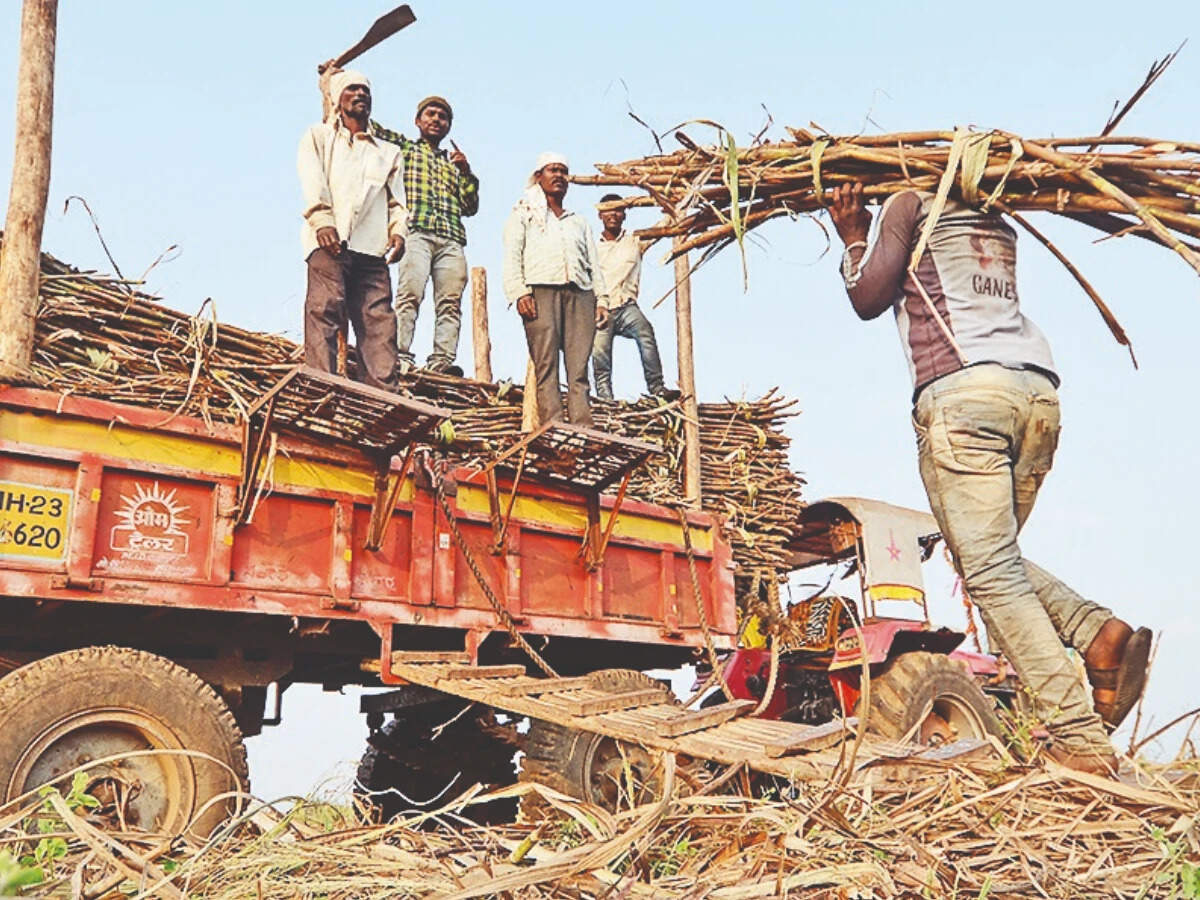
In Maharashtra and Karnataka, farmers' organizations are opposing the government's proposal for an early start to sugarcane crushing to guarantee sufficient sugar supplies for Diwali. They are demanding compensation for lower recovery rates and higher sugar and ethanol prices before mills commence operations. The farmers argue that crushing immature cane will lead to reduced output and sugar recovery, resulting in greater losses for farmers and sugar mills.
Pralhad Joshi, Union food and consumer affairs minister, has convened a meeting on October 12 to address these demands. Farmer leaders assert that an increase in the minimum support price (MSP) for sugar and higher ethanol prices would enable mills to pay farmers more for cane. Crushing immature cane could result in a loss of six tonnes per acre for farmers, equivalent to a monetary loss of approximately Rs 20,000 per acre, according to Raju Shetty, chairman of Swabhimani Shetkari Sangathana.
Early sugarcane crushing could also lead to lower sugar recovery, as sucrose content in cane increases after November. In the past six months, India transitioned from being a sugar exporter to an importer due to inaccurate production estimates and depleted domestic sugar stocks, causing prices to reach historically high levels. The central government has instructed sugar mills to advance their crushing operations by roughly a month to boost sugar availability across the nation.
Swabhimani Shetkari Sangathana and Karnataka Rajya Raitha Sangh recently protested outside Joshi's residence in Hubballi, demanding compensation for early crushing. Nearly 50% of India's sugar production is generated by sugar mills in Maharashtra and Karnataka, regions currently experiencing drought. If the sugar recovery rate declines this year, it could result in lower fair and remunerative prices (FRP) in the following year, as FRP is tied to the recovery rate.
Written by urgent.news from The Economic Times - Economy's reporting — not their text. Machine-written — may contain errors; check the original before relying on it.