Carbon tracking tower put on Scotland's largest saltmarsh
It will track how much carbon is being taken out of the atmosphere by the saltmarsh on the Solway Firth.
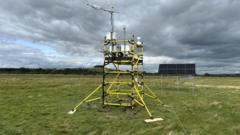
Scotland's largest saltmarsh, located at Caerlaverock on the Solway Firth, now hosts a carbon tracking tower. This technology aims to measure the amount of carbon dioxide being stored by the marsh. Approximately 85% of the UK's saltmarshes have disappeared since the mid-19th century due to land reclamation for agriculture, development, or flood defenses, pollution, and erosion from rising sea levels.
Corallie Hunt, a coastal habitats adviser for NatureScot, highlighted that the installation of the first saltmarsh flux tower in Scotland represented an important milestone. The project is a collaboration between the UK Centre for Ecology and Hydrology (UKCEH), the Scottish government, NatureScot, and WWF-UK. By providing real-time data on carbon exchange, the tower will enhance our knowledge of saltmarshes' carbon storage capabilities and the importance of preserving and restoring these habitats.
Annette Burden, a UKCEH wetland scientist, noted that the Solway flux tower is the most northerly addition to a network of similar installations along the UK coast. The data gathered will contribute to understanding the role of saltmarshes in climate change mitigation, offer evidence for including saltmarshes in the UK Greenhouse Gas Inventory, and bolster efforts to safeguard and restore this valuable habitat.
Tom Brook, an ocean conservation specialist at WWF, emphasized the significance of the Solway saltmarsh as a haven for thousands of migratory birds, the rare natterjack toad, and other wildlife. He also highlighted the marsh's role in absorbing wave energy, reducing flood and storm surge impacts, and its contribution to climate change mitigation.
Written by urgent.news from BBC Science's reporting — not their text. Machine-written — may contain errors; check the original before relying on it.