Artificial nests give Hong Kong’s cockatoos a home – and a chance to study their behavior
HONG KONG — “Spiderman … Tom Holland,” two secondary school boys repeated to each other as they watched conservationist Harry Wong nimbly climb a tall tree at their school, St. Louis School, in downtown Hong Kong. On a humid September afternoon, Wong installed a nest box for yellow-crested cockatoos (Cacatua sulphurea) on a candlenut tree […]
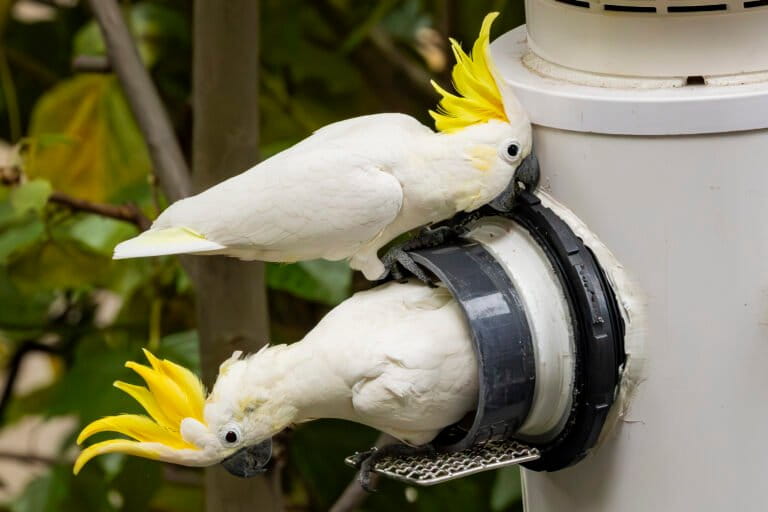
In Hong Kong, arborist and conservationist Harry Wong has been installing nest boxes for yellow-crested cockatoos on trees in the city, as part of the HK Cockatoo Watch conservation project. The project aims to protect the city's feral yellow-crested cockatoo population, which is estimated to be around 200 individuals, or about 10% of the global wild population. These cockatoos are considered critically endangered, with fewer than 2,000 remaining in their native range in eastern Indonesia and Timor-Leste.
The presence of yellow-crested cockatoos in Hong Kong is a result of released or escaped pets, and the city is believed to have the largest wild population of the species outside Southeast Asia. The population is stable due to the lack of natural predators and strict legal protection. A recent DNA analysis study by Astrid Andersson, a biologist and postdoctoral researcher at the University of Hong Kong, found that Hong Kong's feral cockatoos have unexpectedly high genetic diversity, which may make them key to the species' survival.
To install a nest box for the cockatoos, Wong climbs tall trees equipped with a harness and ropes, and quickly installs the box before rappelling back down. The installation of nest boxes provides a safe home for the cockatoos, while also offering researchers the opportunity to study their behavior.
Written by urgent.news from Mongabay's reporting — not their text. Machine-written — may contain errors; check the original before relying on it.