Which AMD CPUs were famously unlocked for overclocking using the "pencil trick"?
Fun fact: The "pencil trick" involved drawing over tiny laser-cut L1 bridges with graphite to re-enable locked multipliers on certain CPUs. Read Entire Article
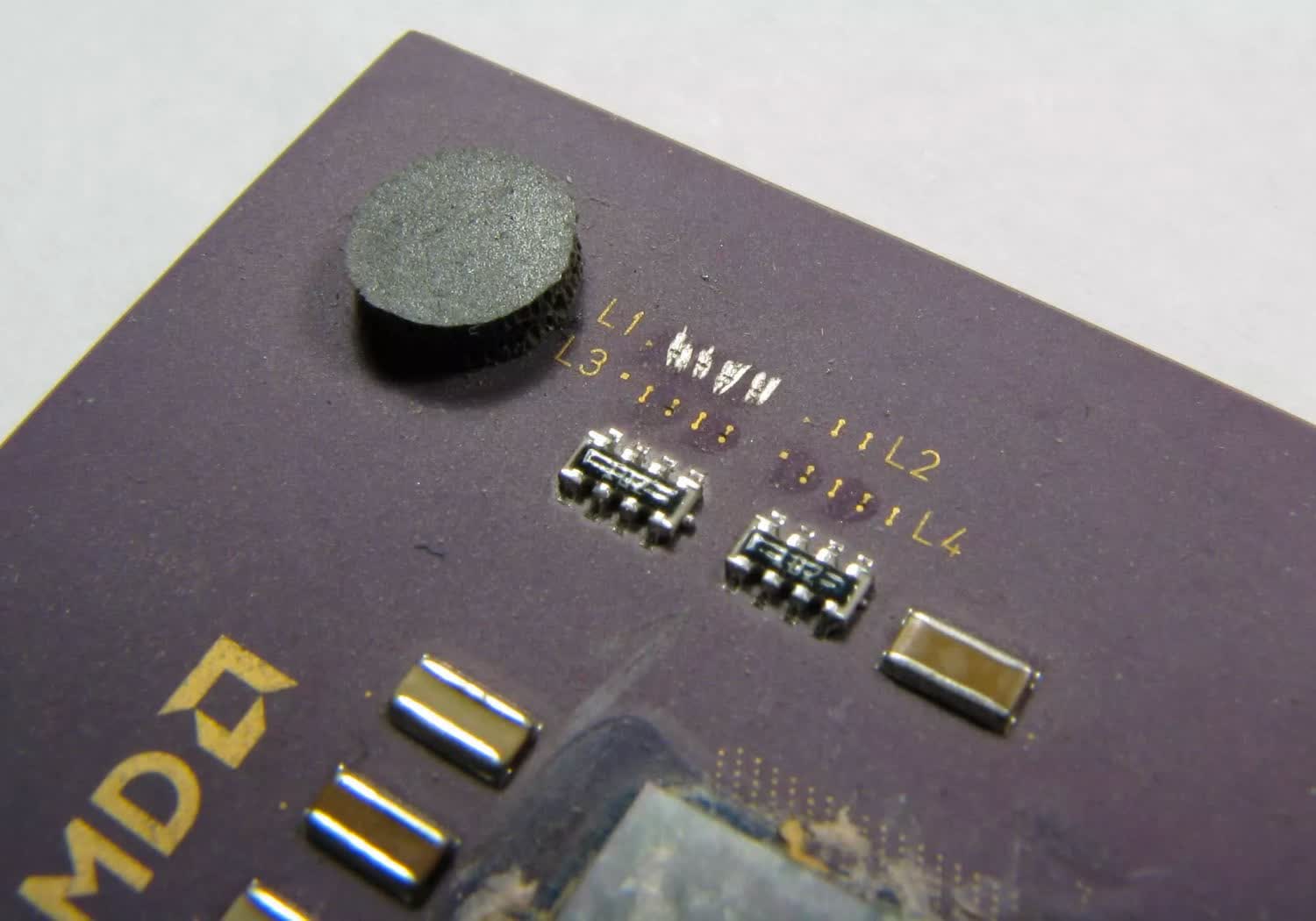
During the late 1990s and early 2000s, AMD Athlon processors, particularly those using the Thunderbird core, became famous for a unique feature that allowed enthusiasts to overclock them using a simple pencil. Initially released in the Slot-A format and later in Socket A (Socket 462), these CPUs were among the first from AMD to feature multiplier locking, which prevented users from overriding the factory-set clock speeds.
To enforce this lock, AMD used lasers to sever specific connections on the processor's surface, known as L1 bridges. This practice was partly a reaction to dishonest vendors who would overclock lower-end chips, rebrand them as higher-end models, and sell them at higher prices. However, clever users discovered a workaround. By using the graphite from a standard #2 pencil, they could reconnect the L1 bridges and regain access to the chip's clock multiplier settings within the system BIOS, effectively allowing them to overclock the CPU far beyond its original specifications.
This method, known as the "pencil trick," quickly became popular among PC enthusiasts for its low-cost and easy implementation. The pencil trick was especially attractive during a period when Intel was implementing more aggressive lock-down measures on its processors, giving AMD's more tweakable offerings a competitive edge among performance enthusiasts and budget-conscious gamers.
As AMD transitioned to different PCB packaging materials, such as organic materials in the Palomino core used for Athlon XP processors, the pencil trick became less effective. The newer designs created deeper pits in the L1 bridges that could not be bridged with graphite alone. Instead, specialized materials or kits were needed to successfully unlock these more recent models.
Despite these challenges, the pencil trick remains a legendary example of low-tech ingenuity in PC hardware customization and a testament to the resourcefulness of early overclockers.
Written by urgent.news from TechSpot's reporting — not their text. Machine-written — may contain errors; check the original before relying on it.