Pakistan, Taliban clash at Moscow talks
Tensions over cross-border terrorism derail joint statement
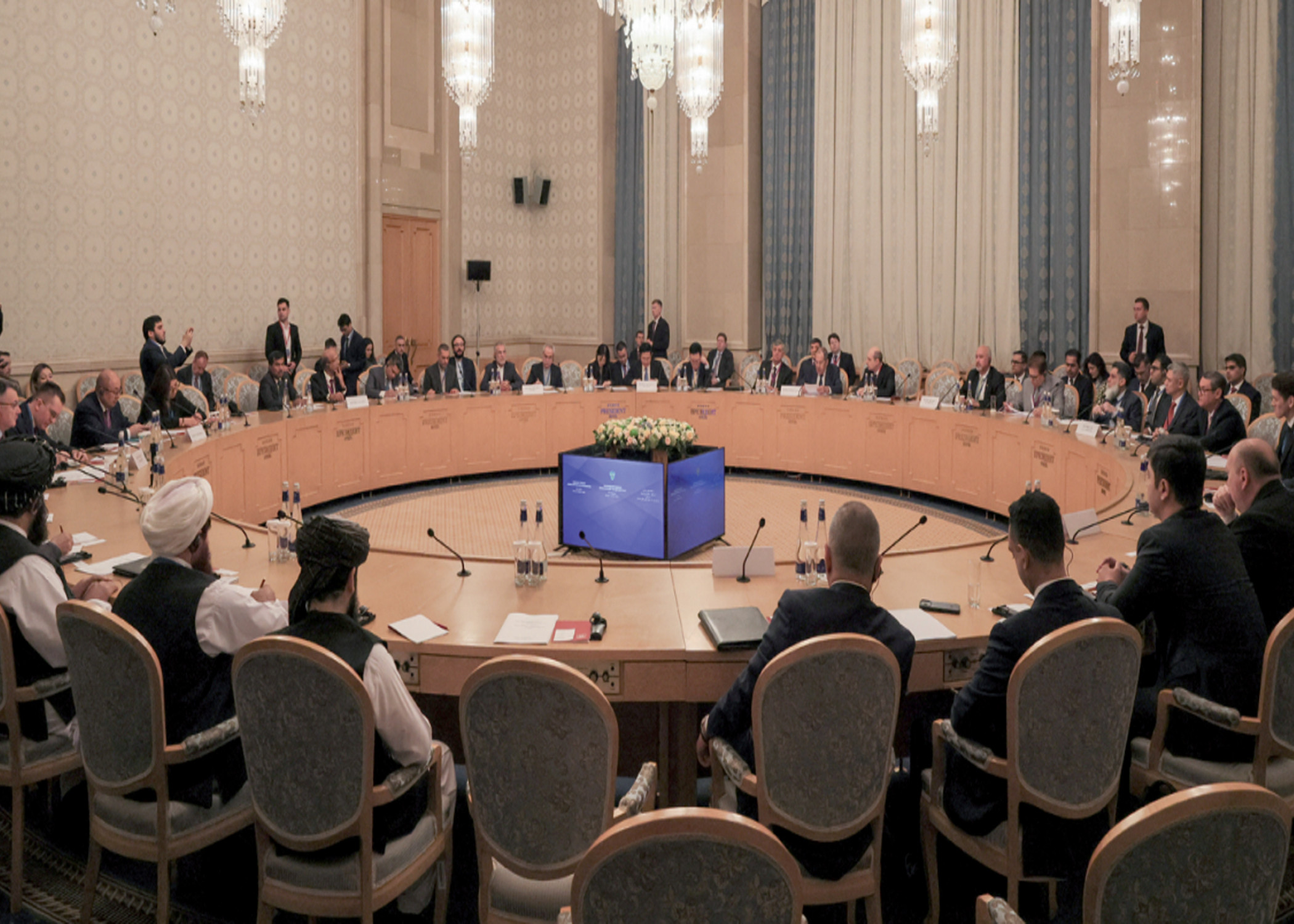
Tensions between Pakistan and the Afghan Taliban marred a regional conference on Afghanistan held in Moscow on Monday. The two nations disagreed over terrorism and cross-border attacks, preventing them from issuing a joint statement. This marked a significant setback for the Moscow Format, a Russia-led mechanism established in 2017 to build consensus on Afghanistan.
The eighth meeting, attended by senior representatives from Russia, Pakistan, Afghanistan, China, Iran, India, Central Asian states, Belarus, and Egypt, focused on Afghanistan's political, security, and economic situation, including counterterrorism and regional connectivity. Pakistan's Special Representative for Afghanistan, Ambassador Mohammad Sadiq, highlighted the security concerns, particularly terrorism emanating from Afghanistan, which had resulted in over 4,700 innocent Pakistani deaths in the last three years alone.
He accused the Taliban regime of being complicit in the issue and defended Pakistan's military operations inside Afghanistan as self-defense. In contrast, the Taliban delegation, led by Acting Foreign Minister Amir Khan Muttaqi, accused Pakistan of relying on military pressure instead of diplomacy and emphasized that Afghanistan had the right to defend itself against aggression.
Russia's special presidential envoy for Afghanistan, Zamir Kabulov, confirmed that the dispute between Pakistan and Afghanistan prevented the adoption of the final document, stating that the issue was due to the delegations' differing views on the language concerning terrorism. Despite the disagreement, Kabulov suggested that the Moscow Format could continue to function.
Russian Foreign Minister Sergey Lavrov praised the Taliban's performance since 2021 and highlighted the government's efforts against Daesh and drug trafficking. However, Lavrov's support for the Taliban contrasted sharply with Pakistan's concerns over the group's links to terrorist organizations. The failure to reach a consensus exposed a widening gap among regional powers regarding Afghanistan's future and how to deal with the Taliban regime.
Written by urgent.news from The Express Tribune - Pakistan's reporting — not their text. Machine-written — may contain errors; check the original before relying on it.
This story
This is one outlet's version. Read the fullest account.
- Trump says US is ‘open’ to Iran talks; Pakistan, Turkey to send forces to Saudi under Mecca pact gulfnews.com
- Khalid bin Salman: Makkah Alliance agrees to activate collective deterrence measures saudigazette.com.sa
- ‘Talks with US meaningless’ – Iran President dailypost.ng
- Iran interior minister arrives in Doha for talks on bilateral ties, security dohanews.co
- Turkey, Pakistan to deploy forces to S. Arabia amid Houthi attacks freemalaysiatoday.com
- Pakistan, Turkey to 'swiftly deploy' forces to Saudi Arabia amid Houthi attacks in key move under Mecca pact hindustantimes.com
- Turkiye, Pakistan to deploy forces to Saudi as Yemen fighting grows aljazeera.com