How India became dangerously addicted to Chinese imports
India’s toy shops provide an unlikely barometer by which to measure its economic relationship with China.
India has become dangerously addicted to Chinese imports, with the country importing over $112 billion worth of goods from its neighbor in 2020, more than double the $44 billion figure seen a year prior. Despite efforts to boost local manufacturing and reduce dependence on China, the combination of higher customs duties and quality control standards has worked, leading to a drastic decrease in toy imports to the tune of a third from nearly $300 million in 2020 to $100 million this year.
However, India continues to rely heavily on imports for critical products, with China supplying over 30% of its industrial imports and more than 100 essential items. Experts warn that if this trend continues, India's trade deficit with China could soar to $134 billion in the coming years, giving Beijing even more leverage over Indian industry.
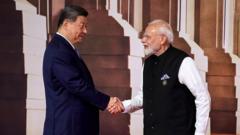
While Prime Minister Narendra Modi and Chinese President Xi Jinping recently vowed to address structural trade imbalances and supply chain issues during a summit in Delhi, experts caution that this will be a formidable task given how deeply entrenched Chinese imports have become. India's reliance on Chinese inputs, particularly in manufacturing and electronics, is a major concern, with electrical machinery and electronics alone accounting for 36% of imports.
To address this issue, India needs to strengthen its manufacturing sector through sector-specific industrial policy, affordable power and credit, efficient logistics, and stable regulations. Additionally, targeting specific sectors like pharmaceuticals for higher exports to China could help reduce the trade asymmetry and dependence on imports.
Written by urgent.news from BBC News's reporting — not their text. Machine-written — may contain errors; check the original before relying on it.
This story
This is one outlet's version. Read the fullest account.