‘Ghanaians are still selling their homes to save lives’ – GMTF Administrator warns as specialised healthcare crisis persists
Families are still selling homes, disposing of property, borrowing heavily and emptying their life savings to pay for specialised medical treatment, a stark reality that the Ghana Medical Trust Fund (GMTF) says must drive the country’s next phase of healthcare reform. Administrator of the GMTF, Adjoa Obuobia Darko-Opoku, said the painful sacrifices being made by […]
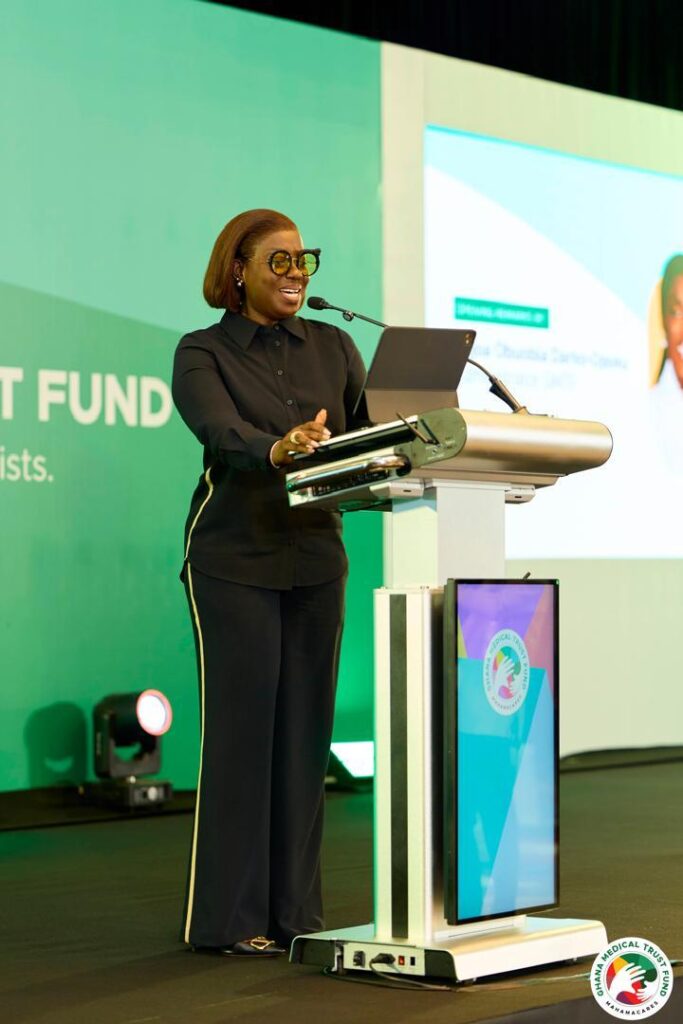
Families in Ghana are sacrificing their homes and life savings to secure specialized medical treatment, according to the Ghana Medical Trust Fund (GMTF) Administrator, Adjoa Obuobia Darko-Opoku. Despite progress in healthcare financing, Darko-Opoku warns that the country cannot afford to become complacent. She emphasizes that patients are still waiting, hospitals lack crucial equipment, and regions are underserved in terms of specialists.
In her speech at "One Year On – An Evening of Reflection," Darko-Opoku highlighted that while the GMTF has made strides in paying medical bills, it has realized that hospitals' lack of equipment, infrastructure, and specialists remains a significant challenge. To address this, the GMTF is adopting a broader approach, focusing on financial support for eligible patients, medical equipment and infrastructure, specialist training, and research in non-communicable diseases.
One of the fund's major interventions is the development of a US$10 million diagnostic and imaging center at the Greater Accra Regional Hospital, which will provide advanced diagnostic services. The GMTF is also expanding cardiology services at Komfo Anokye Teaching Hospital and Tamale Teaching Hospital and aims to decentralize specialized care.
Darko-Opoku stresses that where a patient lives should not determine their access to life-saving treatment. The Fund is committed to breaking the concentration of specialized healthcare in Accra and Kumasi, ensuring that patients across the country can access necessary care without the need for long and costly journeys. The GMTF has also begun a 50-patient pilot program to test its referral, clinical verification, claims processing, and payment systems before scaling up.
Despite some challenges with the GMTF Care digital platform, the system is now operational. Darko-Opoku emphasizes the need to shift the focus from simply counting the number of specialists to determining where they are located and how to distribute them more evenly across the country.
Written by urgent.news from Adom Online's reporting — not their text. Machine-written — may contain errors; check the original before relying on it.