Doha hosts conference on Holy Qur’an and human knowledge
The second conference on the Holy Qur’an and Human Knowledge convened in Doha Monday. The event aims to advance sound human knowledge when it comes to the Holy Qur’an. It was kicked off concurrently w...
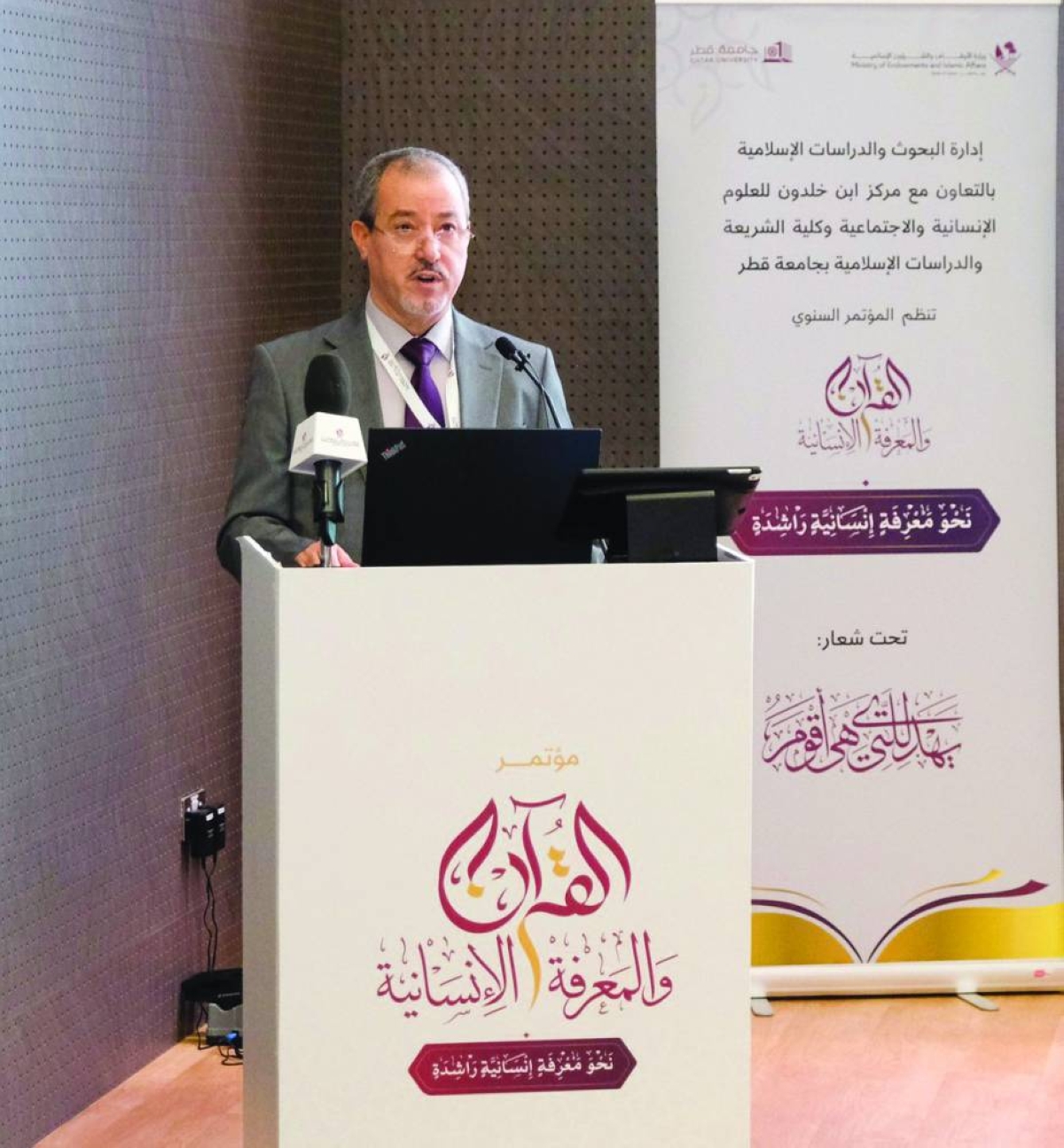
In Doha, a conference on the Holy Qur'an and Human Knowledge took place on Monday, aiming to promote sound human knowledge regarding the Holy Qur'an. This event was held in conjunction with the opening of the Book of the Ummah Forum, attracting researchers, academics, and specialists from nine countries, highlighting the significant academic interest in the occasion.
The conference, organized by the Ministry of Endowments (Awqaf) and Islamic Affairs, in collaboration with the Qatar University (QU) through the Ibn Khaldun Center for Humanities and Social Sciences, underlines their shared dedication to supporting scientific research and establishing a knowledge-based society. These initiatives align with Awqaf's 2025-2030 strategy and Qatar National Vision 2030, emphasizing the importance of scientific progress and knowledge-building.
Dr Ibrahim bin Abdullah al-Ansari, Dean of the College of Sharia and Islamic Studies at QU, expressed his appreciation for the Awqaf-QU scientific partnership, deeming it a prime national model for joint efforts to advance scientific research and knowledge acquisition. He emphasized the profound impact of studying the Holy Qur'an in various fields, noting that the Book of Allah has long served as a foundation for Islamic civilization and a source of inspiration for scholars and researchers, contributing to intellectual and cultural renaissances across diverse domains.
Al-Ansari stressed the importance of continuously strengthening the bond with revelation to foster human knowledge, ethical thinking, and the Ummah's contribution to a rapidly changing world.
Dr Badrane Benlahcene, Director of the Ibn Khaldun Centre for Social and Human Sciences, explained that the conference's goal is to reconnect sciences with their ethical and human objectives, going beyond merely citing Qur'anic texts to explore their epistemological structure and value system. The committee received around 2,000 research abstracts, covering the conference's four main areas: philosophy, linguistics, law, and politics.
After rigorous screening and peer review, 17 final papers were selected to be presented by researchers from Qatar, Morocco, Algeria, Egypt, Turkiye, Yemen, Oman, Iraq, and Sudan.
Sheikh Dr Ahmed bin Mohammed al-Thani, Director of Research and Islamic Studies at Awqaf, emphasized that both the conference and forum reflect Awqaf's commitment to utilizing Sharia knowledge to build individuals, highlighting that the current edition continues the tradition of the inaugural conference, which resulted in three scientific volumes.
Written by urgent.news from Gulf Times's reporting — not their text. Machine-written — may contain errors; check the original before relying on it.