China stockpiled 343 immersion DUV tools for advanced chipmaking
Centre for Technology & Statecraft (CTS) calls for banning exports of all immersion DUV tools to China, echoes the MATCH Act by U.S. legislators.
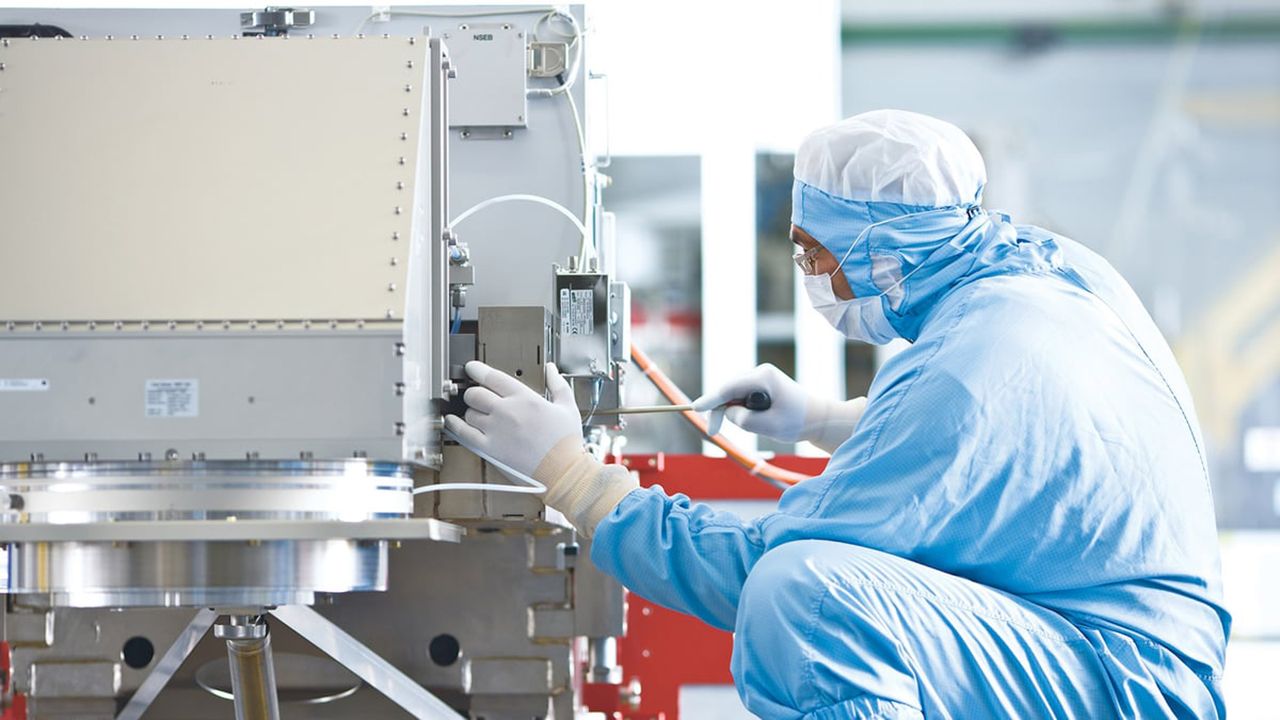
Chinese semiconductor manufacturers have reportedly acquired approximately 343 immersion deep ultraviolet (DUV) lithography tools from 2012 to early 2026, primarily for use in advanced chip manufacturing processes, according to a report by the Centre for Technology & Statecraft (CTS). The United States-based organization posits that these tools enable Chinese fabrication facilities (fabs) to produce sophisticated processors despite restrictions on acquiring more advanced Extreme Ultraviolet (EUV) systems from ASML, the leading vendor in this field. While the CTS's figure of 343 tools appears credible, other estimates appear to be less reliable.
The surge in Chinese procurement of wafer fabrication equipment can be attributed to the United States' imposition of various restrictions on the semiconductor industry. Since 2012, Chinese chipmakers, encompassing both logic and memory producers, have imported 343 immersion DUV lithography scanners from ASML, excluding shipments to ASML's own Chinese subsidiaries.
The CTS highlights that the current export controls create a significant loophole, as lithography equipment originally purchased for less advanced process technologies can be repurposed for more complex nodes, such as 7nm-class nodes (which entered widespread use in 2018-2019). This process, while costly, is often the only viable option if alternative solutions are unavailable.
The report identifies 270 of these immersion DUV tools as ASML's Twinscan NXT:1980i scanners, equipped with a 38nm resolution and a 2.5nm matched-machine overlay capability, crucial for multipatterning in 7nm-class nodes. This capability allows Chinese fabs to manufacture chips using 7nm-class fabrication techniques. Additionally, the CTS claims that Chinese fabs possess 22 NXT:2050i and six NXT:2000i systems.
However, the exact operational status of the 296 advanced immersion DUV scanners delivered to China remains uncertain.
Dutch authorities implemented licensing requirements for exports of ASML's NXT:2000i and more advanced immersion DUV scanners in September 2023, effectively barring their shipment to China. Consequently, Chinese chipmakers were compelled to opt for the less capable NXT:1980i. The CTS estimates that Chinese fabs acquired roughly 90 NXT:1980i scanners in 2024 and another 89 units in 2025, spending over $13 billion during that two-year period.
Although the Netherlands expanded export controls to the NXT:1980i in September 2024, individual exports of this model can still be approved. Furthermore, ASML may potentially supply its NXT:1965Ci systems to Chinese clients, although the availability of all necessary components for these older scanners remains uncertain.
ASML's own data reveals an extraordinary level of demand from China: the country accounted for 41% of ASML's net system sales by destination in 2024 and 33% in 2025. However, this share subsequently decreased to 19% in Q1 2026 and 14% in Q2 2026, a trend ASML had previously predicted. The CTS figures—approximately 90 NXT:1980i systems in 2024 and 89 in 2025—cannot be independently verified from ASML's published financial statements.
At best, ASML's disclosures offer a useful benchmark: China was indeed a significant destination for ASML's immersion DUV tools during those years, while the company sold 129 and 131 ArFi systems globally in 2024 and 2025, respectively. If the CTS's estimates are accurate, Chinese chipmakers acquired the majority, 70% and 68%, of ASML's immersion DUV tool output in 2024 and 2025, despite the export controls introduced in 2024. Meanwhile, NXT:1980i systems are readily available on the secondhand market.
Written by urgent.news from Tom's Hardware's reporting — not their text. Machine-written — may contain errors; check the original before relying on it.