Unterwegs aufladen: Elektroautos: Immer mehr öffentliche Ladepunkte
Wo in Deutschland stehen die meisten Ladesäulen? Und wo muss man unter Umständen länger fahren, bis man frischen Strom tanken kann? Die Auswertung einer Energiefirma gibt Aufschluss.
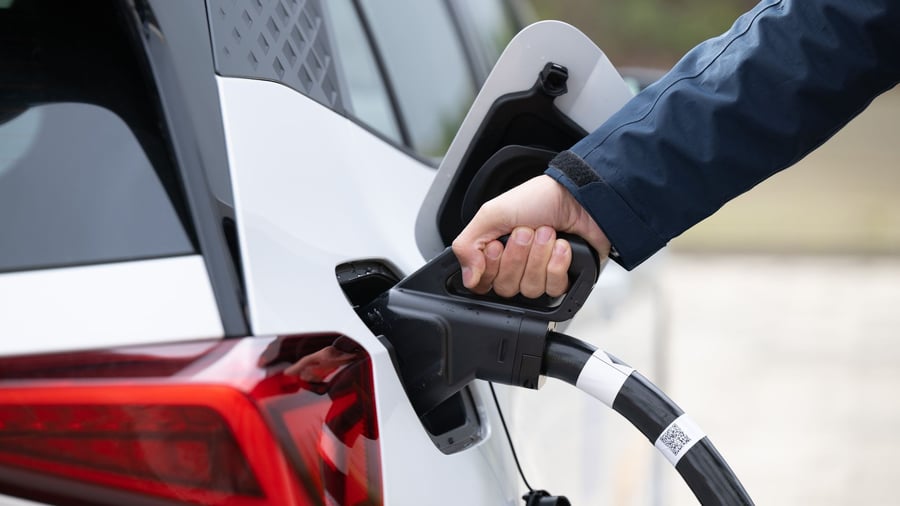
In Deutschland, the number of public charging stations for electric vehicles is growing rapidly, according to new data from the Bundesnetzagentur. As of September 1st, there were over 209,000 public charging points registered, a 24% increase from July 2025. Of these, around 150,000 were regular charging points, and just under 59,000 were fast chargers. The data was provided to the Deutsche Presse-Agentur dpa by 1Komma5Grad, an energy company.
Stuttgart leads the pack among the 107 independent cities, with 2,107 charging points per 100 square kilometers. This is 12% more than a year ago. Following Stuttgart are Regensburg with 1,452 charging points (+19%), and Munich with 1,179 charging points (+19%). At the other end of the spectrum are Brandenburg an der Havel with 59 charging points (+42%), Dessau-Roßlau with 55 charging points (+15%), and Suhl with 53 charging points (+6%).
The percentage growth in charging points was greatest in cities outside of major metropolitan areas. Schwabach saw a 112% increase, jumping to 172 charging points. Mülheim an der Ruhr saw an 89% increase, reaching 429 charging points per 100 square kilometers. In the 294 counties, the leading spot changed: Mettmann in North Rhine-Westphalia saw a 40% increase, bringing its 100 square kilometer count to 344 charging points, taking the top spot from Böblingen in Baden-Württemberg (+19%).
Main-Taunus-Kreis came in third with 281 charging points (+15%). However, Jannik Schall, the head of 1Komma5Grad, noted that the growth in charging points is uneven. While metropolitan areas are well-served, smaller towns and rural regions are lagging behind. "The upward trend in charging points is a positive sign," he said, "but there is still room for improvement in rural areas if the switch to electric vehicles is to be successful on a large scale."
Written by urgent.news from Handelsblatt's reporting — not their text. Machine-written — may contain errors; check the original before relying on it.