Hong Kong’s cancer research drawing global attention, says leading body’s chief
Hong Kong is playing a central role as part of a broader regional hub for research breakthroughs, the head of a leading global cancer organisation has said, adding that the city’s success in reducing its smoking rate has set an example for others to follow. Cary Adams, CEO of the Union for International Cancer Control, praised the city’s tobacco control efforts as the organisation held the World…
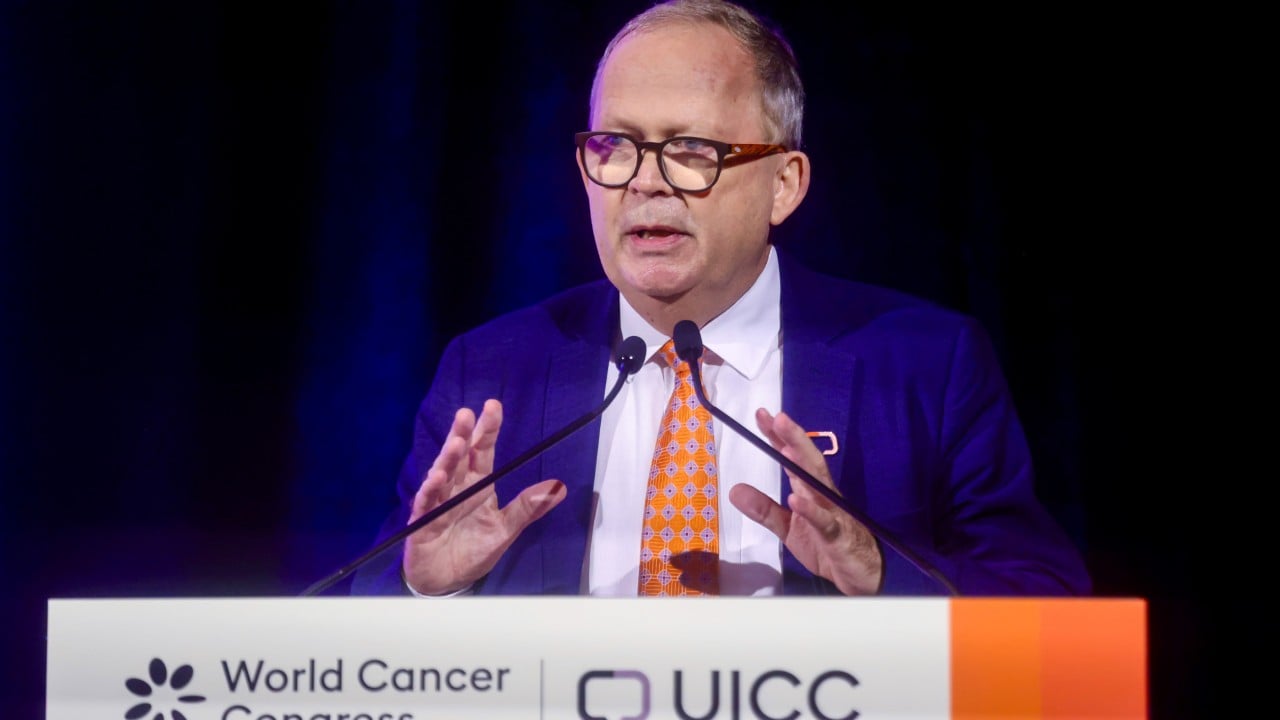
Cary Adams, CEO of the Union for International Cancer Control, has highlighted Hong Kong's pivotal role in the global cancer research landscape during the World Cancer Congress held in the city last September. Adams praised the city's tobacco control efforts, crediting them for reducing the smoking rate from 23.3% in 1982 to 8.5% in 2024, an achievement he believes other regions would like to emulate.
He emphasized the significance of Hong Kong's success in attracting global attention for its cancer research, stating that the city had become a hub for intense research activities and breakthroughs.
Adams' comments came amidst a broader trend, with global tobacco use falling from 32.7% in 2000 to 19.8% in 2025, according to WHO data. Despite this progress, 40 countries have yet to adopt evidence-based tobacco control measures. Hong Kong's efforts to become an international hub for health and medical innovation were underscored by the congress, which gathered over 2,000 healthcare delegates from more than 124 countries.
The event aimed to foster partnerships and ideas, potentially propelling Hong Kong's role in the global fight against cancer.
Professor Anne Lee Wing-mui, vice-chairwoman of the Hong Kong Anti-Cancer Society, echoed Adams' sentiments, stressing Hong Kong's potential to contribute significantly to global cancer research. Despite Hong Kong's small size, Lee pointed out that it has made a substantial impact, evidenced by over 12,000 cancer-related academic papers with at least one co-author from the city, with 15% of these papers published in top journals between 2021 and 2025.
Lee also noted the cost-effectiveness of conducting research in Hong Kong, citing the city's ability to attract a diverse patient population for clinical trials, an advantage that could be further amplified by leveraging the Greater Bay Area's population of 86 million. Collaboration with the mainland, she suggested, could enhance Hong Kong's position in cancer research.
Both Adams and Lee believe that Hong Kong's strategic position, bolstered by its robust research ties with the mainland, positions it well to lead in cancer research and treatment.
Written by urgent.news from South China Morning Post - Hong Kong's reporting — not their text. Machine-written — may contain errors; check the original before relying on it.
This story
This is one outlet's version. Read the fullest account.