Coral Reef-Like Rock Layers on Mars Reveal Ancient Climate Secrets
A landscape painted by rocks, wind, and water The post Coral Reef-Like Rock Layers on Mars Reveal Ancient Climate Secrets appeared first on Nautilus .
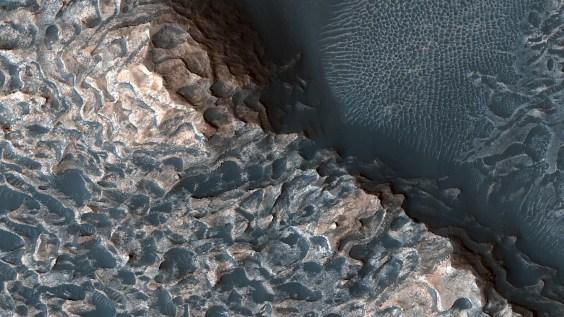
The landscape of Mars, shaped by rocks, wind, and water, may hold hints of Earth-like features, according to new findings. While there is no living organism there currently, the regular patterns etched into the layers of rock and dust suggest a cyclical formation process. This could be due to regular dust storms with groundwater mixed in before water vanished from the surface, leaving behind the arid Martian landscape we see today.
The Arabia Terra region, captured by the Mars Reconnaissance Orbiter, is a testament to this, with craters, canyons, and significant erosion after billions of years. Spanning 2,800 miles across Mars, roughly the length of the continental U.S., this area is particularly intriguing due to its colors. Enhanced from the HiRISE (High Resolution Imaging Science Experiment) camera, the image reveals a reddish-brown tint in real life, with darker volcanic basalt rich in iron and magnesium and lighter patches containing salt and clay.
The uneven, jagged edges of the rock are a result of wind and debris. Scientists are currently studying these rock layers to glean insights into Mars' past, as the solidified sediment reveals shifts in the surface and atmosphere over time, with water likely playing a role. However, we can only make inferences from space for now.
If a rover is eventually sent to Arabia Terra, it could provide more detailed information about these rocks' composition and formation.
Written by urgent.news from Nautilus's reporting — not their text. Machine-written — may contain errors; check the original before relying on it.