Can US, China cooperate to build AI for good of humanity?
WHAT is this AI race about? For Donald Trump, the US President, a win will constitute a strategic advantage in US’s quest to be the world’s super-power.
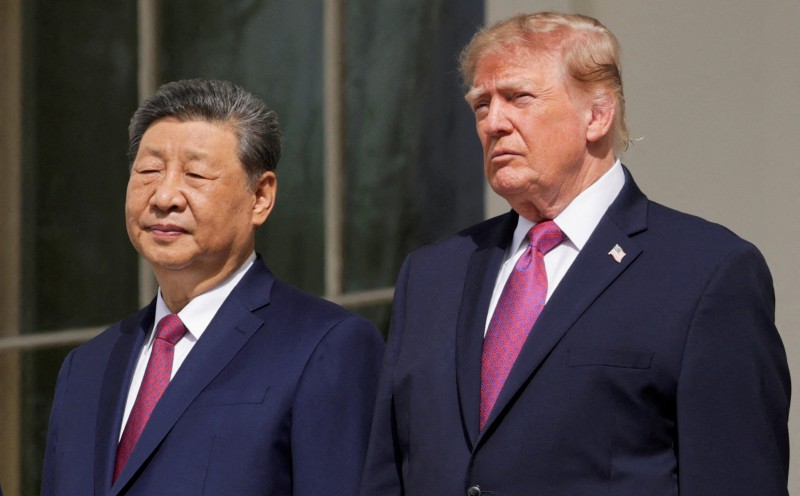
The artificial intelligence (AI) race between the United States and China is driven by strategic advantage, economic and technological dominance, and global tech supremacy. President Xi Jinping of China has allocated significant government funds and resources to advance AI, aiming for 90% of Chinese society to integrate AI applications by 2030.
Both countries have invested comparable sums in AI firms, with the US investing $286 billion in 2025 and China investing $145 billion, not including substantial government and state-owned bank contributions.
The competition extends to developing large language models (LLMs), with the US leading in frontier LLMs, while China has narrowed the gap in terms of capability and cost-efficiency. Chinese LLMs are cheaper and more adaptable to specific organizational needs due to their open-source nature. Additionally, China excels in robotics, producing and selling more humanoid robots than any other country, including the US.
The ultimate goal in the AI race is to develop artificial general intelligence (AGI), a super-intelligence that can think and learn like humans, if not better. The US currently leads in creating AI capable of performing a broad spectrum of intellectual tasks, while China is rapidly closing the gap. However, neither country has produced a universally accepted AGI that can reliably solve real-world problems without failure. In fact, over one-third of AGI prototypes fail in executing tasks.
Despite the fierce competition, the US and China have agreed to collaborate on making AI safe by sharing data when AI breaches protocols. This breakthrough in global AI security can serve as a foundation for greater collaboration in other aspects of AI development, ultimately accelerating the creation of an AGI that benefits humanity.
Written by urgent.news from New Straits Times's reporting — not their text. Machine-written — may contain errors; check the original before relying on it.