Bosnia votes as wartime divides drive campaigns
Voters will elect officials across multiple tiers of government, in a complex system that has held the partitioned country together since a 1995 peace deal.
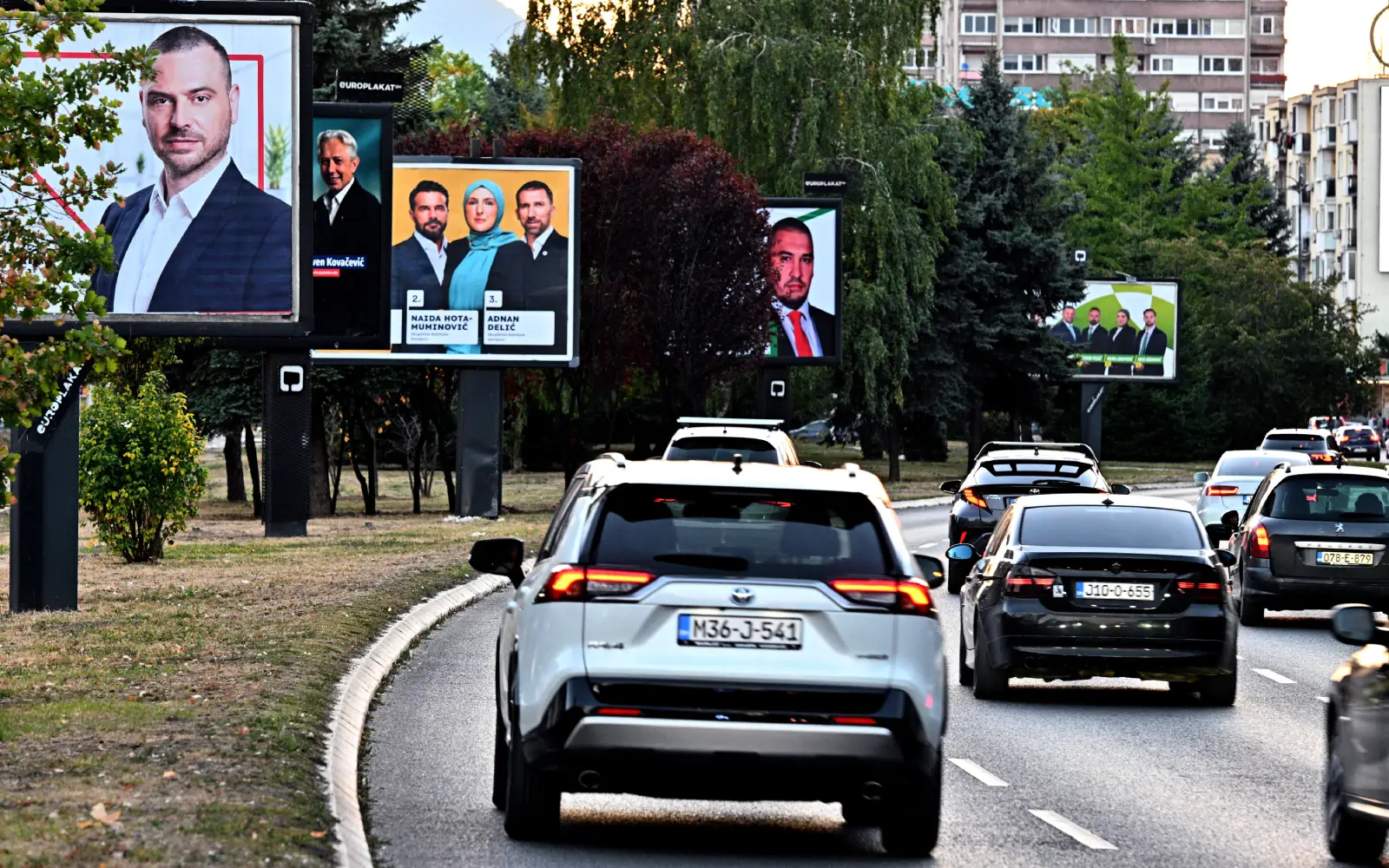
Bosnia prepares to vote in general elections on Sunday, following years of political turmoil and stalled reforms. The complex system, established since the 1995 peace deal that ended the 1992-1995 war, will see voters elect officials at multiple government levels. The key race involves the tripartite presidency, which is split between Bosniak (Muslim), Serb, and Croat ethnic groups.
Front-runners are offering contrasting visions: some advocating for a united country, while others seek greater autonomy for the Serb-run entity and increased political representation for Croats.
However, the campaigns are focusing heavily on war-era rhetoric and division, which has frustrated some voters. Activist Adi Selman of the Karton Revolucija protest group expressed frustration, stating that the choice is limited to parties that have been around for 30 years, who are merely exploiting war rhetoric to garner votes.
The Dayton Agreement, brokered by the US, ended the conflict but entrenched divisions that often hinder decision-making. Bosnia is divided into two semi-autonomous entities: the Serb-run Republika Srpska (RS) and a Muslim-Croat federation. Despite not being on the ballot, former RS president Milorad Dodik remains the central power figure in the RS, despite being convicted for power abuse and banned from the presidency for six years.
Dodik's separatist rhetoric has led to clashes with central authorities and hindered hopes for political cooperation.
The arrival of biometric identification and the scanning of paper ballots at thousands of polling stations could potentially impact the election outcome. In the Muslim-Croat federation, Bosniak parties are pushing for a stronger central state, while Croat nationalist parties demand a greater say in choosing the Croat member of the presidency.
Young activists express dissatisfaction with the political deadlock, noting that the situation has not improved in years and that many young people have left Bosnia in search of opportunities elsewhere.
Written by urgent.news from Free Malaysia Today's reporting — not their text. Machine-written — may contain errors; check the original before relying on it.
This story
This is one outlet's version. Read the fullest account.
- Bosnia votes as wartime divides drive campaigns freemalaysiatoday.com
- Bosnia votes as wartime divides drive campaigns nst.com.my